How to Check a Developer’s Reputation Before Buying Property in the UAE


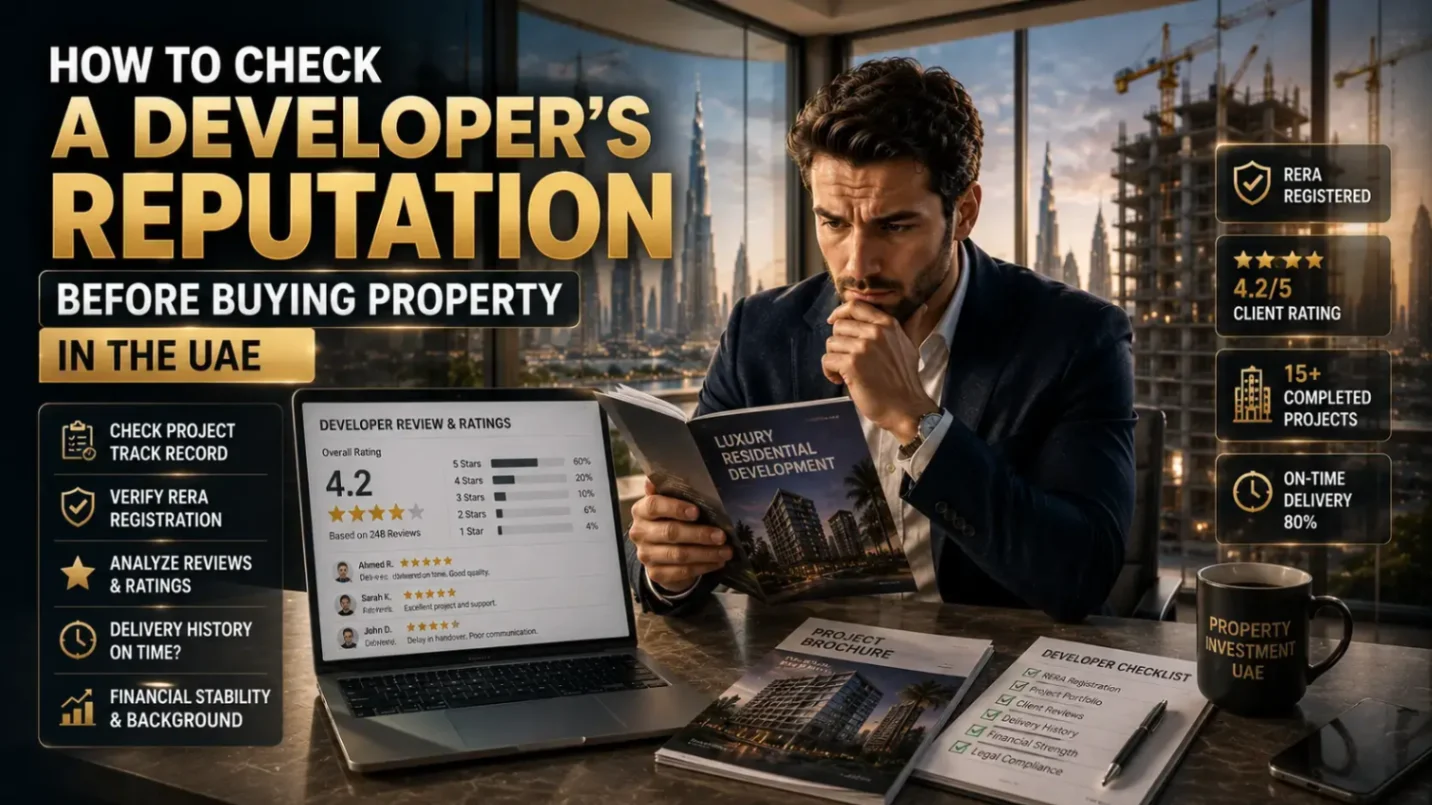
Buying property in the UAE is not just about location or price. The developer behind the project matters just as much. A strong developer can deliver quality and on time. A weak one can delay your project, cut corners, or create problems that affect your return.
Many buyers ignore this step. They trust marketing, visuals, and promises. That is where mistakes happen. This blog explains how to properly check a developer before you commit your money.
Why Developer Reputation Matters
When you buy a property, especially off-plan, you are trusting the developer to deliver what was promised.
If the developer has a poor track record, you may face:
project delays
quality issues
changes in layout or finish
resale problems
This is not rare. It happens more often than most buyers expect. A good developer reduces risk. A bad one increases it, no matter how good the project looks on paper.
Check Past Projects, Not Promises
The first step is simple. Look at what the developer has already built.
Visit completed projects if possible. Check build quality, maintenance, and how the building looks after a few years. A developer’s real reputation is not in ads. It is in their finished work.
Look for build quality, condition after handover and how well the project is maintained.
If older projects look poorly managed, expect similar results in new ones.
Delivery History Tells You Everything
One of the biggest risks in the UAE market is delay. Many developers promise timelines they cannot meet. Buyers then wait months or even years beyond the expected handover date.
Check if the developer has delivered projects on time in the past. If delays are common, you should treat that as a warning, not an exception.
Check Registration and Approval
Every developer in Dubai must be registered with the Dubai Land Department (DLD). You can also verify projects through the Real Estate Regulatory Agency (RERA) to confirm if they are approved.
If a project is not properly registered, you are taking unnecessary risk. This step is basic. Skipping it is careless.
Look at Escrow Account Compliance
In the UAE, off-plan projects must use escrow accounts. This means buyer payments are linked to construction progress. This protects your money.
Check if the developer follows escrow rules strictly. If there are issues or complaints related to fund handling, that is a serious red flag.
Online Reviews: Use Them Carefully
Most buyers either ignore reviews or trust them blindly. Both are wrong.
Reviews can give signals, but they are not always reliable. Some are biased, and some are fake.
Instead of focusing on ratings, look for patterns. If multiple buyers mention delays, poor quality, or bad service, that is not random. It shows a pattern.
The Hidden Factor Most Buyers Miss
Here is what most blogs miss. A developer’s reputation affects your resale value.
Buyers and agents know which developers are reliable. Properties from trusted developers are easier to sell. Unknown or poorly rated developers face more resistance in the market.
That means:
slower resale
more price negotiation
reduced buyer confidence
This is not about today. It affects your exit.
Popular Developers with Strong Track Records
Some developers in the UAE have built consistent trust over time.
Examples include:
These developers are known for large-scale projects and established delivery history.
But don’t assume every project from a big developer is perfect. Even strong brands have variations across projects.
Payment Plans Can Be Misleading
Attractive payment plans often distract buyers.
Low down payment and long-term plans look appealing. But they are often used to compensate for weaker demand or slower sales.
A good deal is not just about easy payment. It is about what you receive at the end. If the developer is weak, a flexible payment plan does not reduce your risk.
Site Visit vs Showroom Illusion
Many buyers rely on showrooms and model units. These are designed to impress you. They do not reflect real construction quality.
If possible, visit the actual site or completed projects. That gives a more accurate picture. If you only rely on presentation, you are making a decision based on marketing.
Questions You Should Ask Before Buying
This is where most buyers stay silent—and regret it later.
Ask direct questions:
How many projects has the developer completed?
Were they delivered on time?
Are there ongoing delays?
What happens if the project is delayed?
If you are not asking these, you are not doing proper due diligence.
What Most Competitor Blogs Miss
Most property websites give basic advice. They say check reviews, look at past projects, and verify registration.
That is surface-level. What they don’t explain is how developer reputation affects:
resale demand
price stability
buyer confidence
This is where real investment decisions are made.
Conclusion
Choosing the right developer is not optional. It is one of the most important parts of buying property in the UAE. A strong developer gives you better quality, fewer delays, and stronger resale potential. A weak developer creates risk that no payment plan can fix.
At PropertySeller, we focus on trust and clarity. Your data stays protected. You get real and verified information with no hidden gaps. Every listing goes through strict checks, so you avoid unreliable developers and misleading projects.
This helps you move forward with confidence, knowing exactly who you are buying from and what to expect.
FAQs
1. How can I check if a developer is registered in the UAE?
You can verify developers through the Dubai Land Department and RERA official records.
2. Are big developers always safe to invest with?
Not always. They are generally more reliable, but each project should still be checked individually.
3. What is an escrow account in UAE real estate?
It is a regulated account where buyer payments are linked to construction progress for protection.
4. Do developer delays happen often in the UAE?
Yes. Some developers have consistent delays, which is why checking past delivery history is important.
5. Why does developer reputation affect resale value?
Buyers prefer trusted developers, which increases demand and makes resale easier.