Hidden Problems in UAE Apartments Nobody Talks About


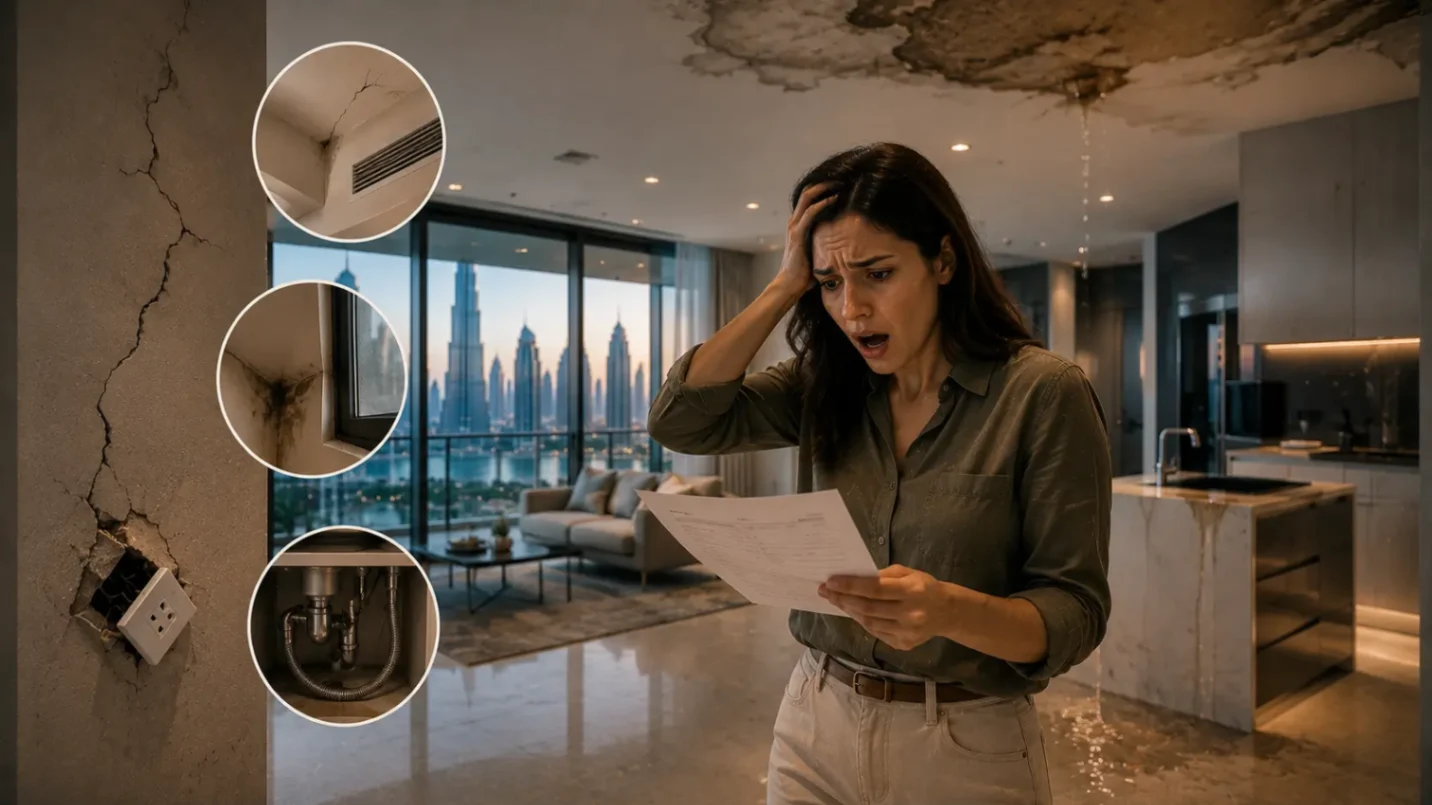
Most apartment issues don’t show up during a viewing. The unit looks clean, the building feels well-maintained, and everything appears in order. That’s exactly the problem. The real risks are structural, financial, and operational—and they only become visible after you’ve already bought.
This blog breaks down the hidden problems in UAE apartments that most buyers don’t discover until after purchase. More importantly, it explains how these issues affect your returns, resale value, and long-term ownership experience—because this is where most investment decisions quietly fail.
The Problem With How Most Buyers Evaluate Apartments
Most buyers focus on visible factors:
Price
Location
Amenities
Developer name
That’s incomplete. Apartments don’t fail because of what you see. They fail because of what you don’t check:
Long-term maintenance behaviour
Management quality
Cost structure
Building aging patterns
If you’re only evaluating the visible layer, you’re not investing—you’re reacting to marketing.
Service Charges That Don’t Stay Stable
Most buyers check current service charges and assume they’ll remain predictable. Almost no one checks how they change.
In many buildings:
Fees increase year after year
Unexpected maintenance costs get added
Poor budgeting leads to sudden spikes
This directly impacts your rental yield and buyer demand during resale.
A property that looks profitable today can become average—or worse—within a few years. Buildings with poor cost control or outdated systems tend to see faster escalation.
Poor Building Management (Even in Premium Projects)
Here’s a reality most platforms won’t tell you:
A well-built property can still perform badly under poor management..
Common issues include:
Overpriced vendor contracts
Delayed maintenance
Lack of cost control
Poor tenant handling
Two identical buildings can perform completely differently based on management alone. And no—you won’t see this in a brochure. You only feel it when the building starts aging.
Construction Quality That Only Shows Later
At handover, everything looks new. That’s the trap. Problems usually appear after 1–3 years:
Plumbing issues
AC inefficiencies
Cracks or water leakage
Frequent repairs
Developers who prioritize speed over durability create long-term cost problems for owners. You don’t detect this during a viewing. You pay for it later.
Building Design That Increases Cost
Not all buildings are equal in how they are designed to operate. Certain features increase long-term cost:
Extensive glass exteriors (frequent cleaning)
Large common areas
Multiple elevators
Complex layouts
These are not just design choices—they are cost multipliers. Buyers focus on aesthetics. Investors should focus on operational efficiency. Because ultimately, you pay for how the building functions, not how it looks.
Overbuilt Amenities That You Pay For but Don’t Use
Pools, gyms, lounges, concierge—sounds great. But here’s the part most buyers ignore: You pay for all of it, whether you use it or not.
Buildings overloaded with amenities:
Have higher service charges
Require more maintenance
Need larger operational budgets
The result? Lower net returns. Amenities sell the property. Costs stay with you.
High Vacancy in Investor-Dominated Buildings
Some buildings look active but are actually investor-heavy with low occupancy.
This creates:
Lower community engagement
Higher maintenance cost per occupied unit
Reduced rental stability
And here’s the impact most people miss: Vacancy affects perception. Perception affects resale.
If a building feels empty, demand drops—regardless of how good the unit is.
Occupancy Levels and Cost Pressure
Low occupancy creates hidden financial pressure.
If fewer units are occupied:
Costs are distributed across fewer owners
Service charges per unit increase
Building activity and demand weaken
This is common in:
Investor-heavy projects
Newly completed buildings
Over-supplied areas
A building can look premium—but if occupancy is low, performance suffers.
The “Silent Depreciation” Factor
Some buildings don’t crash in value—they slowly become irrelevant. Why?
Newer developments enter the market
Older buildings lose appeal
Facilities become outdated
Service charges increase
The result is silent depreciation:
Rents stagnate
Buyers lose interest
Value growth slows or stops
This doesn’t show up immediately. It builds over time. And by the time you notice it, your exit options are limited.
Developer Reputation vs Actual Performance
Many buyers rely heavily on developer brands. That’s lazy decision-making.
Even strong developers can have:
Underperforming projects
Management issues post-handover
Variations in construction quality
You should evaluate:
Specific building performance
Not just developer reputation
Brand gets you confidence. Data gives you accuracy.
The Liquidity Trap in “Luxury” Apartments
This is the part almost no one talks about. Luxury apartments often:
Have higher service charges
Require higher entry capital
Target a smaller buyer pool
This creates a liquidity problem.
When you want to sell:
Fewer buyers are available
Negotiation pressure increases
Time on market extends
So while luxury buildings look strong, they can become difficult to exit—especially in slower markets. This is not obvious when buying. It becomes obvious when selling.
What This Means for Your Investment
If you ignore these factors:
Your returns get distorted
Your costs increase over time
Your exit becomes harder
This is the difference between: Buying a property vs building an investment
Most buyers think they’re doing the second. In reality, they’re doing the first.
How to Identify These Problems Before You Buy
If you want to avoid these mistakes, shift how you evaluate properties:
Check service charge history, not just current cost
Understand occupancy levels in the building
Evaluate management quality
Review actual maintenance condition
Compare building performance, not just price
If you’re not doing this, you’re missing the variables that actually matter.
Final Thoughts
Most apartment problems in the UAE are not obvious at the time of purchase. They develop over time through management decisions, cost structures, and market positioning. That’s why surface-level evaluation is not enough.
The real risk is not buying the wrong property—it’s buying without understanding how that property behaves after you own it. Long-term performance is shaped by factors most buyers ignore, and those factors only become visible when it’s too late to adjust.
At PropertySeller, we focus on what happens beyond the listing. Every property is evaluated based on real performance indicators—service charge behaviour, occupancy trends, and long-term demand—so you’re not relying on assumptions when making a decision.
FAQ’s
What are common hidden problems in UAE apartments?
Hidden issues include rising service charges, poor building management, construction defects, and low occupancy levels that affect long-term value.
How do service charges impact property investment in the UAE?
High or increasing service charges reduce rental yield and make properties less attractive to future buyers.
Are new apartments in Dubai free from defects?
No. Many issues like plumbing, AC inefficiency, and structural wear appear after 1–3 years of usage.
How can I check if a building is well managed?
Review maintenance quality, service charge history, tenant feedback, and overall building condition before buying.
Why do some apartments lose value over time in the UAE?
Factors like aging buildings, increasing costs, new supply, and declining demand contribute to slow or “silent” depreciation.