Learn, Discover, Invest
Explore helpful reads, market perspectives, and property insights to help buyers stay informed.
Explore helpful reads, market perspectives, and property insights to help buyers stay informed.


Buying or selling property on Al Reem Island now requires an understanding of the registration framework following its inclusion in Abu Dhabi Global Market (ADGM) jurisdiction. The change has raised questions about property transfers, title deeds, registration procedures and whether transaction costs have changed for buyers and sellers. This guide explains how ADGM’s role affects Al Reem Island property transactions, how its registration system differs from the former Abu Dhabi Municipality process, and what buyers and sellers should verify regarding ownership records, transfer fees and registration requirements before proceeding. Why Did ADGM Expand to Al Reem Island? ADGM is Abu Dhabi’s international financial centre, with its own legal and regulatory framework. Its jurisdiction expanded to include Al Reem Island as part of Abu Dhabi’s broader efforts to develop its financial and business ecosystem. In September 2024, ADGM and the Department of Municipalities and Transport (DMT) announced arrangements to transfer real estate and municipal services within the expanded jurisdiction. The transition was completed in 2024, and the relevant real property regulations took effect on Al Reem Island from 1 January 2025. For apartment buyers, this means property transactions on Al Reem Island fall under ADGM’s real estate registration framework rather than the previous Abu Dhabi municipality registration process. The change covers property registration and related services, including ownership transfers, mortgages, leasing and off-plan transactions. It does not mean that every apartment has changed ownership or that existing owners must automatically purchase a new title. ADGM vs. Abu Dhabi Municipality: What Has Changed? Previously, Al Reem Island property transactions were handled through Abu Dhabi’s onshore property registration system. Under the new arrangement, ADGM’s Registration Authority administers property registration within its jurisdiction. ADGM offers digital property services through AccessRP, its online platform for owners, buyers, sellers, developers and tenants. Services include property transfers, mortgage registration, title deed certificates and lease registration. For buyers, the practical difference is the authority and process used to complete the transaction. Rather than assuming that the previous municipality procedure still applies, buyers should confirm the current requirements for their specific apartment through ADGM. Existing ownership interests registered on Abu Dhabi’s property register before 1 January 2025 are addressed by ADGM’s transitional provisions. These provisions allow existing interests to be registered in the new system using the relevant records. PropertySeller recommends checking the property's current registration status and ensuring that the seller’s ownership records match the documents required for the proposed transfer. Did Property Transfer Fees Increase to 4%? This is one of the most important questions for Al Reem Island buyers. Claims that property transfer fees automatically increased to 4% following ADGM’s expansion have circulated online. However, buyers should not treat these claims as confirmation of a blanket 4% fee. ADGM’s published Real Property Regulations (Fees) Rules specify a 2% transfer fee for covered transfers of interests in real property, calculated against the property value or fair market value determined by the Registrar, whichever is higher. Under those rules, the fee is payable by the transferor. This differs from the general Abu Dhabi onshore framework, where the applicable sale registration fee is set within a prescribed range and is generally divided equally between buyer and seller unless otherwise agreed. These frameworks should not be mixed when calculating the cost of an Al Reem Island transaction. The applicable fee depends on the governing rules and the nature of the transaction. Before proceeding, buyers and sellers should request a current fee breakdown from ADGM or their transaction representative. Confirm the transfer fee, who is responsible for paying it, and whether any additional registration or administrative charges apply. What Other Costs Should Apartment Buyers Budget For? The property transfer fee is only one part of the purchase cost. Buyers should also account for expenses that may apply to their individual transaction. Mortgage registration: Buyers financing an apartment should confirm the applicable mortgage registration fee and lender charges. ADGM’s published fee rules include a separate mortgage registration charge, so it should not be confused with the property transfer fee. Developer or seller requirements: A resale transaction may involve a developer’s no-objection certificate (NOC), outstanding service charges or other settlement requirements, depending on the property and transaction. Ongoing ownership costs: Apartment owners should budget for service charges, maintenance and other applicable community expenses. These costs are separate from the one-time fees associated with purchasing the property. PropertySeller recommends obtaining a complete transaction cost estimate before agreeing to a purchase price. This helps buyers understand the total cash required to complete the transaction rather than focusing only on the advertised price. What Should Existing Al Reem Island Owners Do? Existing owners do not need to assume that the jurisdictional change invalidates their ownership. ADGM’s transitional provisions address interests registered under the previous system, while the new framework governs relevant property registration within its jurisdiction. However, owners planning to sell, refinance or lease their apartments should confirm which registration procedures apply to their intended transaction. AccessRP provides property-related services, including ownership transfers, mortgage registration, title deed certificates and leasing services. Owners who are not UAE residents may also appoint representatives through a registered power of attorney where the relevant requirements are met. Keeping ownership documents, mortgage details and service charge records organised can help prepare for a smoother transaction. Conclusion ADGM’s expanded jurisdiction has changed the property registration framework on Al Reem Island, making it important for buyers to verify ownership records, follow the applicable procedures and understand transaction costs. Rather than relying on outdated municipality guidance or assuming a standard 4% transfer fee applies, confirm the current requirements and charges for the specific property before signing or paying. PropertySeller helps buyers explore property opportunities with a clearer understanding of the purchase process. When considering an Al Reem Island apartment, look beyond the asking price to include registration requirements, additional costs and ongoing ownership obligations before making a decision. FAQ’s 1. When did ADGM take over Al Reem Island property registration? ADGM’s real property regulations began applying to Al Reem Island on 1 January 2025. PropertySeller recommends checking the applicable registration requirements before starting a sale or purchase. 2. Can I register a mortgage on an Al Reem Island property through ADGM? ADGM provides mortgage registration services through AccessRP. Buyers financing a purchase should coordinate with their lender to confirm the required documents, registration process, fees and completion timeline. 3. Are existing Al Reem Island title deeds still valid? Existing ownership interests registered before the transition are covered by ADGM’s transitional provisions. Buyers and sellers should check the current property records and ensure the ownership details are correctly reflected before completing a transaction. 4. How can I register an Al Reem Island property transfer? Buyers and sellers can use AccessRP, ADGM’s digital real estate platform, to submit property transfer applications and complete applicable registration procedures. The required documents depend on the transaction. 5. Does ADGM registration apply to all properties in Abu Dhabi? No. ADGM’s real property framework covers properties within its jurisdiction, including Al Reem Island and Al Maryah Island. Other parts of Abu Dhabi follow their applicable registration frameworks, so buyers should verify which authority handles their specific property. 6. Can non-residents register property transactions through AccessRP? ADGM states that owners who are not UAE residents may appoint representatives through a registered power of attorney on the platform. Buyers and sellers should confirm the applicable identification, authorisation and documentation requirements before submitting an application.
Oct 17, 2026
Read More
Buying a ready apartment in Abu Dhabi with your spouse or another family member involves more than agreeing on the price and completing the payment. Buyers must ensure that ownership details, identification documents and any required Power of Attorney (POA) are correctly prepared for property transfer and registration. This is especially important when one buyer is overseas, a co-owner cannot attend the transfer appointment, or a representative is handling the transaction. This guide explains the key documents and requirements to consider when registering a ready apartment in Abu Dhabi under joint ownership or through a representative. It covers ownership arrangements, identity documents, POA requirements and the steps buyers should clarify before the transfer appointment to help avoid unnecessary delays in registration. Can You Buy an Abu Dhabi Property Jointly With Your Spouse? Yes. Abu Dhabi allows property registration in the names of multiple eligible buyers, subject to applicable ownership rules and the property’s location. Joint ownership can be a practical option for married couples purchasing a ready apartment together, particularly when both contribute financially or want their names recorded on the title deed. However, marriage alone does not automatically register both spouses as owners. Before signing the sale agreement, confirm how both names and any agreed ownership shares will be recorded, and whether additional documents are required for the transfer. What Should Couples Check Before Signing? Before paying a deposit or agreeing on a transfer date, couples buying a ready apartment in Abu Dhabi should confirm: Both buyers’ names match their identification documents. Each buyer meets the applicable property ownership requirements. The sale agreement reflects the intended joint ownership structure. Any required marriage certificate or supporting documents are ready. Transfer procedures and attendance requirements are confirmed with the relevant registration authority. Adding a spouse later may require additional documentation or a separate ownership transfer. Confirm the registration details before signing to avoid unnecessary delays. When Do You Need a Power of Attorney to Buy or Sell Property? A Power of Attorney (POA) allows an authorised representative to act on someone’s behalf within the powers specified in the document. In Abu Dhabi property transactions, it may be useful when a buyer or seller is overseas or unable to attend the transfer appointment in person. However, a general POA may not be sufficient for every transaction. The authorisation must cover the specific action required, such as signing a sale agreement, transferring ownership or arranging a mortgage. Before proceeding, confirm the POA’s scope, validity and registration requirements with the relevant authority to avoid delays. What Should a Property POA Include? A Power of Attorney (POA) for an Abu Dhabi property transaction must clearly define the authority granted to the representative. Before using one, check that it: Correctly identifies the property owner and representative. Specifically authorises the intended transaction, such as a sale, purchase or mortgage. Includes the required property details and transaction scope. Meets applicable notarisation and authentication requirements. Remains valid and is accepted for the intended registration process. The Abu Dhabi Judicial Department’s requirements emphasise specifying the type and location of the property-related act. Documents issued outside the UAE or in another language may also require additional authentication or translation. Confirm the applicable requirements before arranging the transfer. Can You Use a POA Issued Outside the UAE? Yes, a Power of Attorney (POA) issued outside the UAE may be accepted for an Abu Dhabi property transaction, provided it meets the applicable authentication and translation requirements. Documents issued abroad generally require the relevant attestation, while documents not in Arabic may need certified Arabic translation. Before preparing the POA, confirm the accepted format, authentication process and document submission requirements with the relevant Abu Dhabi authority or registration service provider. Start early, as authentication, translation or wording corrections can delay the property transfer. Why Can a Property Transfer Fail at the Trustee Office? A scheduled appointment does not guarantee that an Abu Dhabi property transfer will be completed. The parties must meet the registration requirements, and all supporting documents and authorisations must be valid and complete. Where a representative is involved, the POA must specifically authorise the required transaction. Common reasons for delays include: Insufficient POA authority: The document does not specifically cover the sale, purchase or mortgage. Mismatched details: Names or information differ across passports, identification documents, the POA and sale agreement. Incomplete authentication: An overseas POA lacks required attestation or certified translation. Incorrect ownership details: The documents do not reflect the intended joint ownership structure. Missing documents: The title deed or other required supporting paperwork is unavailable or incomplete. Before booking the transfer, confirm the document checklist and any case-specific requirements with the relevant registration service provider. The Abu Dhabi Real Estate Centre (ADREC) and DARI provide channels for property-related services and transactions. A Pre-Transfer Checklist for Joint Buyers and Overseas Owners Before completing a ready property purchase in Abu Dhabi, confirm the following with the relevant registration service provider: Ownership: Ensure the intended owners and ownership structure are correctly recorded. Identification: Check that all identification documents are valid and details match. Power of Attorney: Verify that the POA authorises the specific transaction and meets applicable requirements. Overseas documents: Complete any required attestation and certified translation. Property paperwork: Prepare the title deed and other required supporting documents. Mortgage arrangements: Confirm lender requirements and coordinate mortgage registration if applicable. Transfer appointment: Check attendance requirements, original documents, fees and any additional conditions. Requirements may vary depending on the property, parties and transaction type. Confirm the applicable checklist before the appointment to reduce the risk of delays. Final Takeaway Buying a ready apartment in Abu Dhabi with your spouse or through a representative requires careful preparation. Confirming ownership details, checking POA requirements and organising the necessary documents before the transfer appointment can help reduce delays and keep the transaction on track. At PropertySeller, we help buyers explore verified property options and make informed decisions. Start your property search with a clear understanding of your requirements and the steps ahead. Find your right property with one simple click. FAQ’s 1. Can a husband and wife jointly buy an apartment in Abu Dhabi? Yes. Eligible buyers can register a property jointly in Abu Dhabi, subject to the applicable ownership rules and the property’s location. At PropertySeller, we recommend confirming both names and the intended ownership structure before signing the sale agreement. 2. What documents are required for joint property ownership in Abu Dhabi? Buyers generally need valid identification documents and the property transaction documents required for registration. Depending on the circumstances, additional supporting documents may be requested. Confirm the exact requirements before the transfer appointment. 3. Can I buy a property in Abu Dhabi if my spouse is overseas? Yes, subject to the applicable ownership requirements and registration procedures. If your spouse cannot attend the transfer, check whether a Power of Attorney (POA) is acceptable and what authentication or supporting documents are required. 4. Is a general Power of Attorney enough to sell or transfer property in Abu Dhabi? Not necessarily. The POA must grant the specific authority required for the transaction. Before proceeding, confirm that its wording covers the intended sale, purchase or mortgage registration. 5. Can an overseas-issued POA be used for Abu Dhabi property registration? An overseas-issued POA may be accepted if it meets the applicable authentication and translation requirements. Non-Arabic documents may require certified Arabic translation, and foreign-issued documents may need attestation. Confirm the accepted process with the relevant authority before preparing the document. 6. Can I add my spouse's name to the title deed after buying a property in Abu Dhabi? Adding a spouse after the purchase may require a separate ownership transfer or other registration procedure, along with applicable documents and fees. Confirm the process with the relevant registration authority before assuming that adding a name is a simple administrative change.
Oct 16, 2026
Read More
The cost of buying a ready apartment in Abu Dhabi goes beyond the advertised property price. Buyers may also need to budget for transfer fees, broker commission, mortgage registration, bank valuation and other transaction-related expenses. These additional costs can significantly affect the upfront savings required, particularly for first-time buyers and those purchasing with a mortgage. This guide breaks down the main fees involved in buying a ready apartment in Abu Dhabi, explaining which costs buyers should prepare for and how mortgage expenses can differ from those of cash purchases. At PropertySeller, we recommend calculating these expenses before making an offer so you can plan your budget and avoid unexpected costs during the purchase process. 1. Property Transfer Fee: Usually Budget 2% Property registration is one of the biggest costs to account for when buying a ready apartment. Abu Dhabi Real Estate Centre (ADREC) lists transaction fees of 2% of the property value in its official mortgage calculator. For a ready apartment priced at AED 1 million, this amounts to AED 20,000. However, the fee may be shared equally between the buyer and seller unless they agree otherwise. At PropertySeller, we recommend confirming the applicable fee and payment arrangement with your agent or registration service provider before signing the sale agreement. 2. Broker Commission: Commonly 2% When buying a ready apartment through a real estate broker in Abu Dhabi, budget for a commission commonly set at 2% of the property value. For a AED 1 million apartment, this equals AED 20,000, excluding any applicable VAT. If 5% VAT applies, the total would be AED 21,000. At PropertySeller, we recommend confirming the agreed commission, who pays it and whether VAT is included before proceeding with the purchase. 3. Bank Valuation Fee: A Cost for Mortgage Buyers If you finance a ready apartment in Abu Dhabi, your bank may require a property valuation before approving or finalising the mortgage. The fee varies by lender and property, so confirm the current charge and whether VAT or additional processing costs apply. The bank’s valuation may differ from the agreed purchase price. If the accepted valuation is lower, the bank may calculate your loan based on that lower amount, leaving you to cover a larger share of the purchase price from your own funds. Budget tip: Request the bank’s valuation and mortgage fee schedule early, rather than comparing only interest rates and monthly repayments. You can also use PropertySeller’s Mortgage Calculator to estimate monthly repayments and plan your budget before committing to a property. 4. Mortgage Registration Fee: 0.1% of the Mortgage Value If you take out a mortgage to buy a ready apartment in Abu Dhabi, the mortgage must be registered. The published fee is 0.1% of the mortgage value, subject to applicable rules and caps. For example, a mortgage of AED 800,000 would incur a registration fee of AED 800. This is separate from bank valuation and lender processing fees. ADREC’s Trustee Office also lists service fees of AED 1,050 for mortgage services and AED 1,575 for a property transfer involving a mortgage, inclusive of VAT. Confirm which charges apply to your transaction to avoid overlooking or double-counting fees. See the ADREC Trustee Office fee schedule. 5. Developer Administration Fee: Check the Amount A developer may charge an administration fee for certain property-related services. Abu Dhabi Resolution No. 183 of 2017 sets a maximum of AED 5,000 for administrative fees developers receive from third parties in connection with real estate dispositions. However, this does not mean every ready-apartment purchase automatically incurs a AED 5,000 fee. The charge depends on the service and transaction. Before paying, confirm whether a no-objection certificate (NOC), transfer administration or other documentation is required. Request an itemised breakdown and verify what the fee covers. 6. ADDC/TAQA Distribution: Utility Connection and Deposits After buying an apartment, you may need to activate or transfer your water and electricity account with TAQA Distribution, formerly associated with the ADDC name. Costs depend on whether the property already has an active connection and what services are required. TAQA Distribution’s official connection charges page states that its published connection charges apply to new-build and renovated properties, not properties with an existing physical connection. For a resale apartment, confirm any applicable deposit, account activation or service charges directly with the provider. Do not automatically budget for new-build connection fees if the apartment is already connected. Keep a separate allowance for any utility-related costs before moving in. 7. Other Costs Buyers Should Include Beyond the main transaction fees, you may need to budget for additional costs depending on your purchase: Mortgage processing charges: Check your lender’s loan arrangement and processing fees. Legal or conveyancing assistance: If you use these services, request a quotation in advance. Outstanding service charges: Confirm whether the seller must settle unpaid building service charges before transfer and agree on responsibility in writing. Moving and setup costs: Include moving, internet activation, minor repairs and furnishing in your move-in budget. Home insurance: Your mortgage lender may require property insurance or other cover, depending on the loan terms. Not every buyer will incur every expense. Confirm which costs apply to your transaction before committing, so you can plan your total budget more accurately. What Does Buying a AED 1 Million Apartment Actually Cost? Consider a ready apartment priced at AED 1 million with an AED 800,000 mortgage. Based on the example fees above, the main costs could include: Transfer fee at 2%: AED 20,000, subject to the agreed split between buyer and seller. Broker commission at 2%: AED 20,000, plus applicable VAT if payable by the buyer. Mortgage registration at 0.1%: AED 800. ADREC Trustee Office mortgage-transfer service: Potentially AED 1,575, inclusive of VAT, depending on the service required. Other expenses: Bank valuation, lender processing, developer administration and utility-related charges, depending on the transaction. If the buyer pays the full transfer fee and broker commission, these costs total AED 40,800 before broker VAT, trustee service charges and other expenses. If the transfer fee is shared, the buyer's share will be lower. These figures are illustrative, not a final quotation. Confirm the applicable fees, payment responsibilities and lender requirements before calculating your total cash requirement. Remember that your down payment is separate from these costs. If you're buying with a mortgage, budget for both your required equity contribution and the applicable transaction expenses. Final Thoughts: Plan Your Budget Before Buying Before making an offer on a ready apartment in Abu Dhabi, request a written breakdown of the expected costs from your agent and lender. Confirm the transfer fee and its allocation, broker commission and VAT, mortgage-related charges, developer fees and any applicable utility costs. If you're buying with a mortgage, calculate the total cash required to complete the purchase, including your down payment and transaction expenses—not just your monthly instalment. This helps you assess affordability and avoid unexpected costs at the final stage. At PropertySeller, we encourage buyers to look beyond the advertised price and choose a property that fits both their investment goals and available budget. FAQ’s 1. What is the property transfer fee in Abu Dhabi? ADREC's mortgage calculator lists a 2% transaction fee. The amount payable by the buyer depends on the agreed allocation between buyer and seller. 2. How much is mortgage registration in Abu Dhabi? The published fee is 0.1% of the mortgage value, subject to applicable rules and limits. Bank valuation and processing charges are separate. 3. Does every buyer pay a developer administration fee? No. It depends on the service and transaction. Qualifying developer administrative fees are capped at AED 5,000 under published rules. Request an itemised breakdown before paying. 4. Do I need to pay ADDC connection charges when buying a ready apartment? Not necessarily. If the apartment already has a physical connection, new-build connection charges may not apply. Confirm account activation, transfer requirements and any deposits with TAQA Distribution. 5. How much extra should I budget beyond the apartment price? There is no fixed amount for every buyer. Your costs depend on transfer-fee allocation, broker commission, mortgage charges, developer requirements and utilities. Request a written estimate before committing to the purchase.
Oct 13, 2026
Read More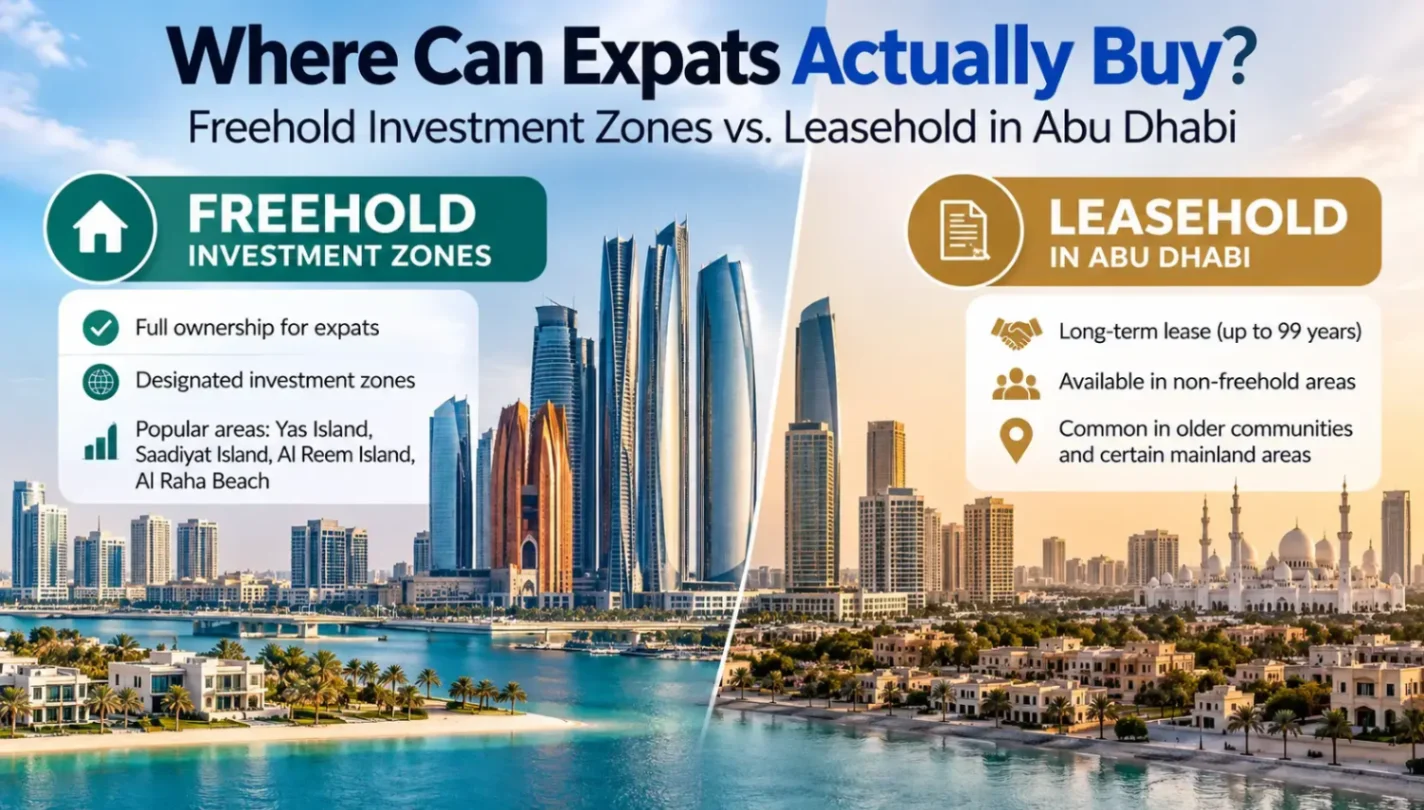
Buying property in Abu Dhabi as an expatriate involves more than choosing a community, comparing prices or finding a suitable apartment. Abu Dhabi permits foreign nationals to own property in designated investment areas, but freehold ownership is not the same as a 99-year usufruct or musataha right. Understanding these distinctions helps first-time buyers and international investors assess what they are actually purchasing. This guide explains Abu Dhabi’s designated investment zones, the differences between ownership rights, and what expats should check before buying property outside these areas. Where Can Expats Buy Property in Abu Dhabi? Abu Dhabi’s property ownership framework allows non-UAE nationals to acquire specified real estate rights in designated investment areas. Non-UAE nationals can acquire eligible property rights in Abu Dhabi’s designated investment areas, subject to the applicable laws and registration requirements. The framework is based on Abu Dhabi Law No. 19 of 2005, as amended by Law No. 13 of 2019. Abu Dhabi is commonly described as having 17 investment zones, including popular destinations such as Yas Island, Saadiyat Island, Al Reem Island, Al Raha Beach and Al Maryah Island. However, not every property in these communities necessarily offers identical ownership rights. Before purchasing, expats should verify whether the specific property qualifies for foreign ownership and whether the advertised rights can be registered in their name. The location alone does not guarantee eligibility. Freehold vs. Usufruct vs. Musataha: What Is the Difference? Abu Dhabi recognises different property rights, each with distinct ownership, usage and duration terms. Understanding these differences helps expats assess a property beyond its purchase price. Freehold: Ownership of the Property Freehold generally provides ownership without a fixed lease term. Eligible foreign buyers may acquire freehold property in designated investment zones, subject to applicable laws and registration requirements. Owners must still comply with title conditions, community rules and service charges. Usufruct: A Long-Term Right to Use a Property Usufruct allows someone to use and benefit from property owned by another party. In Abu Dhabi, registered usufruct rights may extend up to 99 years, subject to applicable rules and registration terms. Unlike freehold, it does not confer outright ownership of the underlying property. The agreement determines responsibilities, transfer conditions and expiry provisions. Musataha: Rights to Develop or Use Land Musataha can grant the right to use land and construct or own buildings on it, subject to the registered agreement and applicable law. In Abu Dhabi, these rights may extend up to 50 years, with renewal where legally permitted and agreed. Buyers should review development obligations, permitted use, renewal terms and what happens to buildings or improvements when the right expires. The distinction is straightforward: freehold concerns ownership, usufruct concerns the right to use and benefit from property, and musataha provides specified rights over land, including development rights. Top Freehold Areas to Invest in Abu Dhabi for Expats Abu Dhabi offers foreign buyers a range of property options, from city apartments to waterfront villas and family-friendly communities. The right location depends on your budget, preferred property type and investment goals. Here are five established areas expats can consider, subject to confirming the ownership eligibility of the specific property. 1. Yas Island: Lifestyle and Rental Potential Yas Island combines residential communities with major attractions, shopping, leisure facilities and entertainment venues. Buyers can explore apartments, townhouses and villas in communities such as Water’s Edge, Yas Acres and Ansam. Best suited for: Investors seeking rental demand and buyers looking for a lifestyle-focused community. Compare purchase costs, service charges and the specific property's rental prospects before investing. 2. Saadiyat Island: Premium and Waterfront Living Saadiyat Island is known for its beaches, cultural attractions and premium residential developments. Property options include luxury apartments, beachfront residences and villas, generally targeting buyers with larger budgets. Best suited for: High-budget investors and buyers seeking premium homes with a long-term investment horizon. Higher entry prices mean expected returns should be assessed against the total acquisition and ownership costs. 3. Al Reem Island: Apartments and City Convenience Located close to central Abu Dhabi, Al Reem Island features high-rise apartments, waterfront developments, retail facilities, schools and parks. Its location makes it an option for professionals and investors considering long-term residential rentals. Best suited for: First-time apartment buyers and investors seeking an established urban residential market. Check building-specific service charges, maintenance standards and comparable rents before purchasing. 4. Al Raha Beach: Waterfront Family Living Al Raha Beach offers waterfront apartments, villas and townhouses in communities such as Al Bandar, Al Muneera and Al Zeina. Its location between central Abu Dhabi and Yas Island provides access to residential amenities, retail facilities and major road connections. Best suited for: Families and buyers seeking waterfront living with access to everyday amenities. Compare individual communities, commuting needs and ongoing ownership costs. 5. Al Reef: A More Accessible Entry Point Al Reef offers apartments, townhouses and villas in a suburban residential setting near Zayed International Airport and major road links. It is often considered by buyers looking for alternatives to Abu Dhabi’s higher-priced island communities. Best suited for: Budget-conscious first-time buyers and investors comparing more accessible purchase prices. Assess the condition of the property, community facilities, maintenance costs and achievable rent rather than relying on purchase price alone. PropertySeller recommends comparing these areas based on your budget, intended use and investment timeline. Before committing, verify that the specific property is eligible for foreign ownership and confirm whether the registered interest is freehold, usufruct or another permitted right. What Happens If an Expat Tries to Buy Outside an Investment Zone? Foreign buyers do not have unrestricted access to every property in Abu Dhabi under the same ownership terms. Outside designated investment zones, a property may not be available for foreign freehold ownership, even if it is advertised for sale. Depending on the applicable rules, another form of property right may be possible, but eligibility must be confirmed. If the proposed transfer cannot be registered, buyers may face delays, extra legal costs or an inability to complete the purchase as intended. Before paying a deposit, verify the eligible ownership structure and registration requirements with the relevant Abu Dhabi authority. If the position is unclear, seek independent legal advice. What Should Expats Check Before Buying? Location is only the starting point. Before purchasing an Abu Dhabi property, expatriate buyers should verify the following: Ownership eligibility: Confirm that the property can be acquired by a non-UAE national under the proposed ownership structure. Registered title: Check whether the property is freehold or subject to usufruct, musataha or another legal interest. Remaining term: For a time-limited right, establish the start date, expiry date and any applicable renewal conditions. Transfer and inheritance: Understand the rules governing resale, transfer, succession and registration. Additional obligations: Review service charges, maintenance responsibilities, community restrictions and any development-specific conditions. These checks are particularly important for overseas investors who may be assessing properties remotely. Marketing descriptions such as “freehold investment” should always be checked against the actual title and registration documents. Final Takeaway For expats investing in Abu Dhabi, understanding ownership structures is as important as comparing property prices. Freehold, usufruct and musataha offer different rights, durations and responsibilities. PropertySeller helps buyers explore property opportunities and make informed decisions. Before purchasing, verify ownership eligibility, registered rights and title obligations to understand what you can own and how your investment may be affected over time. FAQ’s 1. Can expats buy freehold property in Abu Dhabi? Yes. Foreign nationals can buy eligible freehold properties in designated investment zones. PropertySeller recommends verifying ownership eligibility before paying a deposit. 2. Which areas in Abu Dhabi allow foreigners to buy property? Popular areas include Yas Island, Saadiyat Island, Al Reem Island, Al Raha Beach and Al Maryah Island. PropertySeller recommends confirming the specific property's ownership eligibility before purchasing. 3. What is the difference between freehold and usufruct in Abu Dhabi? Freehold generally provides ownership without a fixed expiry date, while usufruct grants the right to use and benefit from a property for up to 99 years. PropertySeller recommends checking the registered rights before investing. 4. How long does a musataha right last in Abu Dhabi? Musataha rights can generally last up to 50 years, with renewal possible where permitted and agreed. PropertySeller recommends reviewing the agreement's terms and expiry conditions. 5. Can expats buy property outside Abu Dhabi's designated investment zones? Foreign freehold ownership is generally restricted outside designated investment zones. PropertySeller recommends confirming the permitted ownership structure with the relevant authority before proceeding. 6. Can expats sell or transfer property they own in Abu Dhabi? Yes, subject to applicable laws, registration requirements and contractual conditions. PropertySeller recommends checking transfer rights and any remaining term before purchasing a property.
Oct 10, 2026
Read More
Selling a Dubai apartment as an international investor does not end when the property is transferred to the buyer. The next step is understanding how to transfer the sale proceeds to your home country and what tax, banking and currency considerations may apply. This guide explains Dubai property sale proceeds and money repatriation, including UAE sale documentation, cross-border bank transfers, home-country tax rules, Double Taxation Agreements (DTAs), foreign exchange costs and bank compliance checks. PropertySeller recommends planning the repatriation process before selling, rather than treating it as an after-sale issue. First: Is the Sale Proceeds Taxed in the UAE? The UAE does not generally impose personal income tax in the same way many investors' home countries do. However, the UAE Corporate Tax regime can apply to businesses and certain investment structures, so the tax position depends on how the property is owned and whether the activity is treated as a business. The Federal Tax Authority states that capital gains from asset disposals can form part of taxable income for Corporate Tax purposes where applicable. For an individual investor holding a Dubai apartment as a personal investment, the UAE tax position can therefore differ from that of a company actively conducting a real estate business. PropertySeller recommends confirming the ownership structure and tax position with a qualified tax adviser before assuming that a property sale is completely tax-free. Your Home Country May Still Tax the Gain This is where international investors need to look beyond Dubai. Being outside the UAE does not automatically mean that the profit from selling a Dubai property is exempt from tax in your country of residence or tax domicile. The UK, US, India and EU countries have their own rules for residents reporting overseas property income and capital gains. The treatment can depend on factors such as tax residency, ownership structure, holding period and whether the property was an investment or business asset. The UAE has an extensive network of Double Taxation Agreements designed to allocate taxing rights and reduce instances of the same income or profit being taxed twice. The UAE Ministry of Finance maintains a treaty database where investors can check agreements with individual countries. A DTA does not automatically mean “no tax.” Instead, it can determine which country has taxing rights and whether relief, an exemption or a foreign tax credit may apply. UK, EU, US and Indian Investors Need Different Checks There is no universal tax rule for “foreign investors.” A UK tax resident, for example, should check UK rules for overseas property gains. An Indian tax resident may need to consider Indian taxation and foreign-income reporting. A US taxpayer has additional reporting considerations because the US generally taxes its citizens and residents on worldwide income. EU investors also cannot rely on one single EU-wide property-gain rule. Tax treatment is determined largely by the individual's country of tax residence and its agreement with the UAE. PropertySeller therefore recommends checking your country-specific tax position before selling, rather than waiting until the proceeds arrive in your home bank account. Keep Your Dubai Sale Documents Ready When transferring Dubai property sale proceeds abroad, your bank or home-country tax authority may ask for proof of where the funds came from. Dubai Land Department sale transactions generate documents such as the title deed and transaction records, while additional documents may apply depending on the transaction. Keep a complete file containing the documents such as: Original purchase and sale documentation Title deed Sale agreement DLD transaction receipts Evidence of the purchase price Evidence of the sale price Applicable DLD fee receipts Mortgage settlement documents, if relevant Bank statements showing the movement of funds Evidence of major property-related costs The exact requirements vary by country, but the goal is simple: show how much you invested, how much you sold for and where the sale proceeds came from. The Bank Transfer Is Not Just a Button Transferring Dubai property sale proceeds abroad can involve more than initiating a bank transfer. Cross-border payments may pass through correspondent banks and can be subject to routine compliance checks. Your bank may ask for documents confirming the source of funds and purpose of the transfer, particularly for a large transaction. This is a normal part of international banking. Keep your property sale documents organised and double-check the sender, beneficiary and bank details before transferring the funds. Being prepared can help avoid unnecessary delays when repatriating your Dubai property investment proceeds. Don't Ignore the Exchange Rate For international investors, the exchange-rate spread can be a bigger cost than the bank's transfer fee. When converting Dubai property sale proceeds from AED into GBP, USD, INR or another currency, even a small difference in the exchange rate can significantly affect the amount received. Before transferring funds, compare the total cost, including: Transfer fees Exchange-rate spread Intermediary bank charges Receiving-bank fees The lowest advertised transfer fee does not always mean the lowest overall cost. Comparing the full conversion cost can help investors keep more of their Dubai property sale proceeds. Should You Send Everything at Once? There is no universal requirement that investors must repatriate property-sale proceeds in a single transfer. However, investors should not split transactions merely to avoid compliance requirements. Financial institutions monitor cross-border transfers and may request information about the source and beneficiary regardless of how funds are structured. If you genuinely need to make multiple transfers for legitimate financial reasons, discuss the process with your banks beforehand and maintain clear documentation. What About a Dubai Mortgage? If the Dubai apartment was purchased with a mortgage, the outstanding loan and settlement costs may need to be cleared before the remaining sale proceeds can be transferred abroad. Before selling, obtain the lender’s settlement figure to understand how much of the sale proceeds will actually remain. PropertySeller’s Mortgage Calculator can also help buyers estimate financing costs when planning a property purchase. The key point is simple: the sale price is not the same as the amount you ultimately take home. Calculate Your Real Profit Before Selling International investors should distinguish between property sale proceeds and actual investment profit. A simple starting point is: Sale price − purchase price = headline gain However, the final return may also depend on acquisition and selling costs, financing, renovations, service charges and other applicable expenses. Taxable gains may be calculated differently depending on the investor’s home country. PropertySeller recommends estimating these costs before accepting an offer so investors have a clearer idea of the amount available for reinvestment or repatriation. Plan the Exit Before You Buy For international investors, money repatriation should be considered before buying a Dubai property, not only when it is time to sell. PropertySeller recommends understanding your ownership structure, potential tax treatment, record-keeping requirements and the costs of converting AED sale proceeds into your home currency. PropertySeller can help buyers navigate the property transaction and assess the financial implications of a sale. However, tax liability and cross-border tax rules should always be confirmed with a qualified tax professional in the relevant jurisdiction. The goal is not just to sell successfully, but to understand what you will actually receive, which documents you may need and how efficiently you can transfer the funds home. Final Takeaway For international investors, selling a Dubai apartment involves more than completing the transaction. Home-country tax rules, DTA considerations, bank compliance, documentation, currency conversion and transfer costs can all affect the final amount received. PropertySeller recommends planning repatriation early, keeping complete transaction records and confirming tax obligations with a qualified adviser in your country of residence. PropertySeller helps international buyers compare properties and understand the costs, returns and considerations involved from purchase to exit. The goal is not just to help you buy in Dubai, but to make the wider investment journey clearer. FAQ’s 1. Do I have to pay tax in the UAE when I sell a Dubai apartment? PropertySeller recommends not assuming that every property sale is completely tax-free. The UAE tax treatment can depend on how the property is owned and the nature of the investment. Investors should confirm their specific position with a qualified UAE tax adviser. 2. Will my home country tax me when I sell my Dubai property? PropertySeller recommends checking the tax rules in your country of tax residence before selling. Some countries can tax overseas property gains or require reporting of foreign assets and income even when the property is located in Dubai. 3. Does a Double Taxation Agreement mean I do not have to pay tax? Not necessarily. PropertySeller points out that a DTA generally determines how taxing rights are allocated between countries and may provide mechanisms such as tax credits or exemptions. The actual treatment depends on the specific treaty and the investor's circumstances. 4. What documents should I keep after selling my Dubai apartment? PropertySeller recommends retaining the title deed, sale documentation, DLD transaction records, fee receipts, mortgage settlement documents where applicable, purchase and sale evidence, and bank statements showing the movement of funds. These records can help demonstrate the source and history of the proceeds. 5. What happens if I still have a mortgage on the Dubai property? PropertySeller recommends obtaining the lender's settlement or redemption figure before completing the sale. Any outstanding mortgage and related settlement obligations can affect the amount of money remaining for repatriation.
Oct 5, 2026
Read More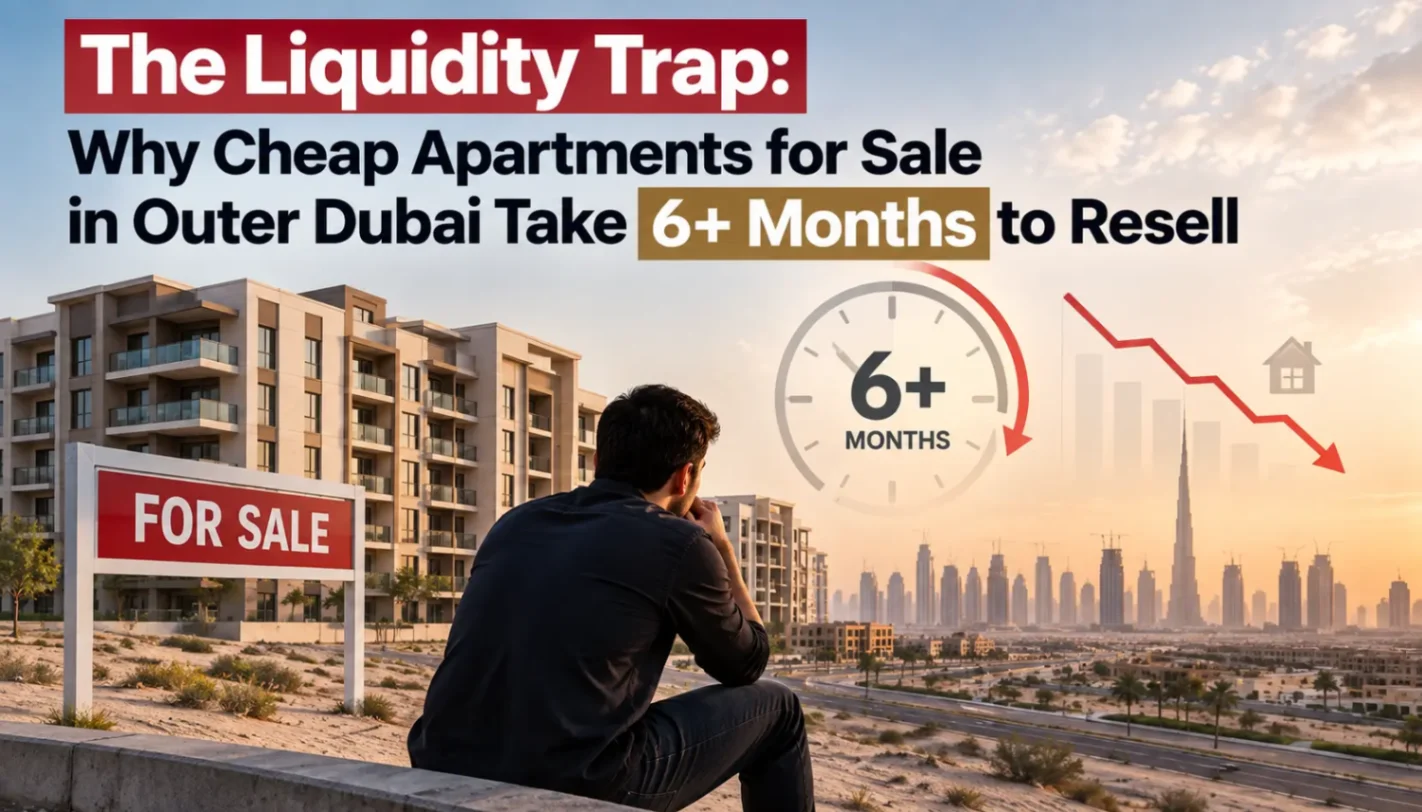
A cheap apartment in Dubai can look like an attractive investment, especially when it offers a lower entry price and a strong rental yield. But purchase price and rental return do not tell the full story. Resale liquidity—how easily and quickly you can sell the property—can be just as important, particularly in outer Dubai locations where many similar units may compete for buyers. This guide explains why some affordable apartments in Dubai can take months to resell and how investors can assess property liquidity before buying. It covers prime areas versus fringe locations, transaction volume data, oversupplied master-planned communities and the apartment types that may have stronger resale demand. Cheap Does Not Always Mean Liquid Property liquidity refers to how easily an asset can be sold at a reasonable market price within a reasonable period. In Dubai, a lower purchase price can attract investors looking for affordable entry points. But affordability alone does not guarantee strong resale demand. PropertySeller recommends looking beyond the asking price and asking three questions: How many properties are actually selling in this area? How much competing supply is available? And which unit types are buyers choosing? These questions can tell you more about future resale potential than a low price tag. Prime Areas Benefit From Deeper Buyer Demand Prime locations such as Downtown Dubai, Dubai Marina, Business Bay and Dubai Hills Estate generally have a wider pool of potential buyers and investors. That does not mean every property in these locations is automatically liquid. A poorly priced unit or an unusual layout can still take time to sell. However, established communities typically benefit from several demand sources: owner-occupiers, investors, tenants looking to buy, international buyers and existing residents upgrading within the area. Outer communities may have fewer competing demand sources. If a master development has a large amount of similar stock available, sellers can end up competing heavily on price. For an investor, this distinction matters when the goal is capital appreciation as well as rental income. Transaction Volume Tells You More Than Listings When assessing property liquidity in Dubai, actual transaction activity can be more useful than simply counting properties listed for sale. Platforms such as DXBInteract allow investors to review transaction data by location, building and property type. The key question is not how many apartments are available, but how many similar properties are actually selling. A community with hundreds of listings but few completed transactions may have weaker resale liquidity than an area with fewer listings and consistent sales activity. PropertySeller recommends reviewing transaction volumes over a longer period rather than relying on a single active month. This gives investors a clearer picture of buyer demand and potential resale liquidity. Watch Out for Oversupplied Master-Plans Oversupply can affect property resale liquidity, especially in large master-planned communities with thousands of apartments and multiple projects offering similar units. A low-priced apartment may look attractive at purchase, but reselling it can become difficult when buyers have dozens of comparable units to choose from. This can create strong competition between sellers and put pressure on resale prices. Before buying, review existing inventory and future property supply. Understanding how many similar units are already available and how much new supply is expected can help investors assess future buyer demand and resale potential. The Unit Type Can Decide Your Exit Location is only one part of liquidity. Within the same building, some unit types can be considerably easier to sell than others. Studios and one-bedroom apartments can attract investors because of their relatively accessible purchase prices and potentially broad rental demand. Larger units may appeal more strongly to families and owner-occupiers. But the right choice depends on the specific community. PropertySeller recommends comparing transaction activity for the same unit type, rather than looking only at overall project sales. For example, if a building has strong sales activity but most transactions involve one-bedroom apartments, that does not automatically mean a three-bedroom unit in the same building will have the same resale liquidity. Don't Confuse Rental Yield With Exit Potential A high rental yield does not always mean a better property investment. An apartment may generate strong rental income but take longer to resell, face heavy competition or require a price reduction to attract buyers. For yield-focused investors, both rental income and resale liquidity should be considered. PropertySeller’s Rental Income Calculator can help estimate potential rental income, while transaction data can help assess the property’s resale demand. For capital appreciation investors, exit potential becomes even more important. A stronger investment analysis looks at both sides: Income during the holding period + buyer demand when you sell. A Simple Liquidity Check Before You Buy Before buying an apartment in outer Dubai, investors can use a simple liquidity check: 1. Check recent transactions: See how many comparable units have actually sold. 2. Review current and future supply: Identify competing units already available and upcoming projects. 3. Compare unit types: Check whether studios, one-bedroom or larger apartments have stronger transaction activity. 4. Assess price competition: Compare similar properties and identify what gives your unit an advantage. 5. Consider the buyer pool: Properties that appeal to both investors and end-users may have a wider resale market than units targeting a narrow buyer group. The Cheapest Apartment May Not Be the Best Deal A lower entry price can certainly be attractive. Outer Dubai communities can provide investors with opportunities that may not be available at prime-location price points. But PropertySeller recommends looking beyond the question of “How much does it cost?” The more important investment question can be: “How many buyers will want this property when I am ready to sell?” A property with slightly lower rental yield but stronger transaction activity, limited competing supply and broader buyer demand may ultimately provide a better risk-adjusted investment than a cheaper apartment with a higher headline yield. For yield-chasers, liquidity protects the exit. For capital appreciation investors, liquidity can help turn paper gains into an actual sale. And before buying any supposedly “cheap” apartment, PropertySeller recommends checking the transaction data first—not after you have already bought it. Conclusion: Buy for Liquidity, Not Just for Price A low-priced apartment can offer an attractive entry point, but the real test of an investment is what happens when you want to exit. PropertySeller recommends looking at transaction activity, competing supply, unit-level demand and the potential buyer pool before choosing a property. A slightly higher purchase price in a more liquid location may be a stronger investment than a cheaper unit that takes months to resell. PropertySeller helps buyers compare properties based on location, price, property type and investment potential, making it easier to look beyond headline yields and assess whether a property fits their investment strategy. FAQ’s 1. What does property liquidity mean in Dubai real estate? PropertySeller defines liquidity as how easily a property can be sold at a reasonable market price within a reasonable period. Transaction activity, buyer demand, competing supply and property type can all influence how liquid an apartment is. 2. Are cheap apartments in outer Dubai difficult to resell? Not necessarily. PropertySeller recommends assessing each location and project individually. A lower-priced apartment can still have good resale demand if the community has consistent transactions, limited competing supply and a broad pool of buyers. 3. How can investors check property transaction volumes in Dubai? PropertySeller recommends reviewing actual completed transactions rather than relying only on current listings. Platforms such as DXBInteract can help investors examine transaction activity by location, project and property type. 4. Why does transaction volume matter when buying an investment property? Transaction volume provides an indication of how actively properties are changing hands. PropertySeller recommends comparing recent transaction activity for similar units because a large number of listings does not necessarily mean strong buyer demand. 5. Is a high rental yield enough to make a Dubai property a good investment? Not always. PropertySeller recommends considering both rental income and exit potential. A property with a strong headline yield can still be less attractive if it has weak resale demand, substantial competing supply or a limited pool of buyers. 6. Should investors choose prime areas over outer Dubai locations? PropertySeller does not treat location as a simple prime-versus-outer decision. Investors should compare purchase price, rental potential, transaction activity, future supply and buyer demand to determine whether a specific property suits their investment strategy.
Oct 5, 2026
Read More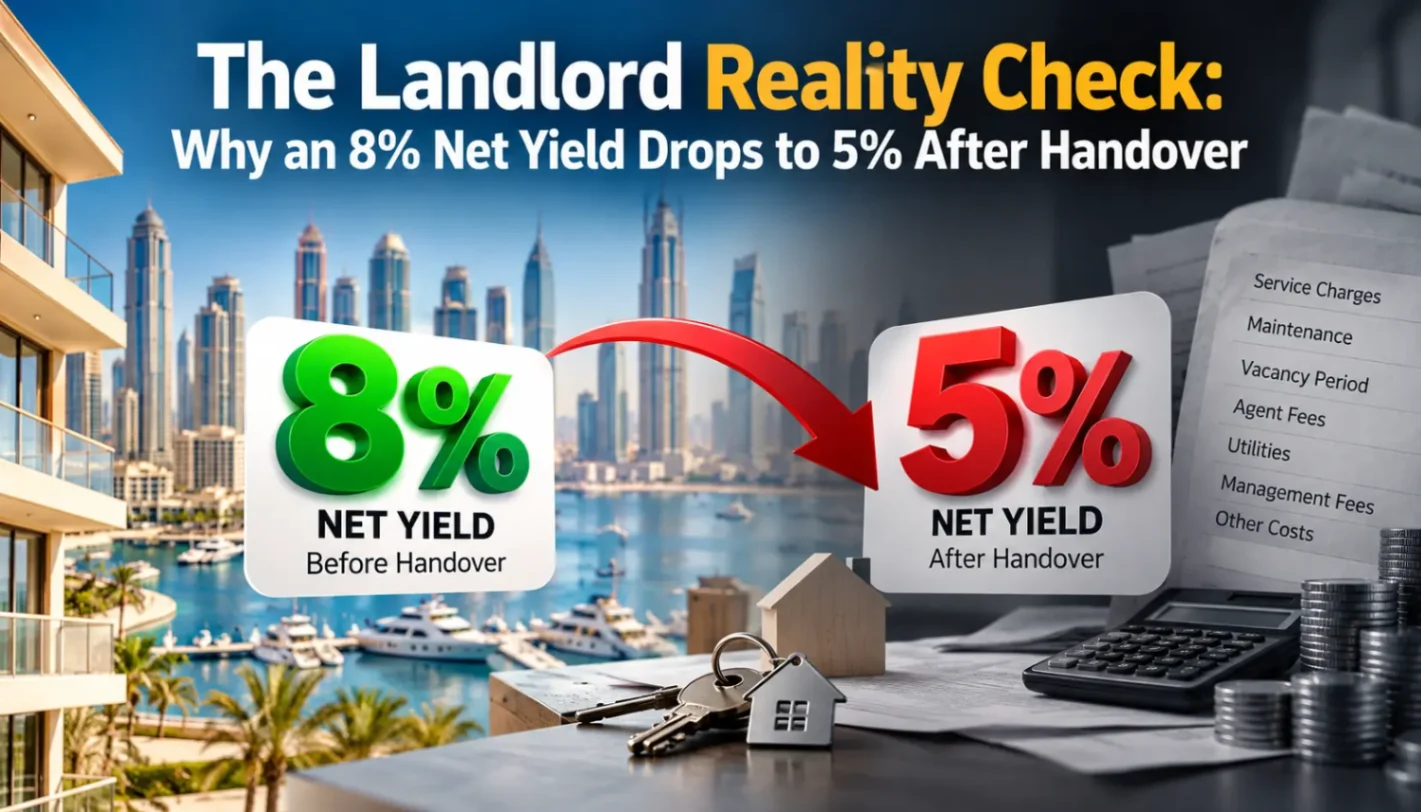
An 8% rental yield in Dubai can look highly attractive on an investment sheet, especially for overseas buyers. But the advertised figure may not reflect the actual return an investor receives after the property is handed over. Once service charges, maintenance, vacancy periods, property management and other ownership costs are factored in, an 8% rental yield can move much closer to 5% net yield. This guide breaks down why Dubai rental yields can fall after handover, what costs can reduce your rental income, and how to calculate a more realistic net rental return. It also explains what overseas and absentee landlords should check before buying an investment property, so the expected rental income is based on the actual cost of owning and operating the property, not just the headline yield. Gross Yield Is Not the Same as Net ROI An 8% gross rental yield in Dubai does not mean the investor keeps 8% as profit. Gross yield is calculated before expenses. For example, a AED 1 million property earning AED 80,000 in annual rent has an 8% gross rental yield. After handover, landlords may pay service charges, maintenance, property management fees and vacancy costs, reducing the actual return. Net rental income = Annual rent − vacancy − service charges − maintenance − management costs − other expenses The resulting net rental yield gives a more realistic view of Dubai property investment returns. This is why an advertised 8% yield can fall closer to 5% once the actual cost of owning and managing the property is considered. The First Adjustment: Vacancy Periods A property is rarely occupied continuously for every day of every year. Even in a strong rental market, a landlord may experience a gap between tenants, delays during renewal, time required for cleaning or maintenance, or a longer marketing period if the asking rent is too high. Using the previous example, an annual rent of AED 80,000 assumes the property is occupied throughout the year. If the unit remains vacant for one month, the rental income falls to approximately AED 73,333 before any other expenses are deducted. That single vacant month reduces the gross return from 8% to roughly 7.3% on a AED 1 million purchase price. For absentee investors, vacancy can be especially expensive because they may not be available to approve repairs, adjust the asking rent, attend viewings or coordinate a quick handover between tenants. A property manager can reduce the administrative burden, but management fees should be included in the calculation rather than ignored. Investors should therefore model at least one realistic vacancy scenario instead of assuming uninterrupted rent every year. Service Charges Can Change the Calculation Dubai property service charges are a major recurring cost for apartment owners. They cover expenses such as security, cleaning, maintenance, insurance and management of shared facilities. Buildings with pools, gyms, landscaped areas and concierge services may have higher service charges. The actual charge should be checked for the specific project rather than estimated only from the property size or price. Service charges can also change over time. Before buying, investors should check the Dubai Land Department’s Service Charge Index for the approved charge applicable to the project and year. For example, AED 80,000 in annual rent with AED 12,000 in service charges leaves AED 68,000 before vacancy, maintenance and property management costs. This can significantly reduce the net rental yield. Maintenance Is Not Always a Fixed Annual Amount Property maintenance costs are another expense that can reduce rental income after handover. Repairs may become more frequent as air-conditioning systems, plumbing, appliances and fixtures age. Landlords should budget for: Routine repairs and replacements AC servicing Plumbing and electrical work Appliance replacement Painting and cleaning between tenants Maintenance costs can vary from year to year, so assuming a fixed amount may give an unrealistic net rental yield. For overseas property owners, the cost is not the only concern. Managing repairs remotely can also make it harder to check whether the work is necessary, reasonably priced and completed properly. These costs should be considered when calculating the real return on a Dubai property investment. Protecting Against Padded Repair Invoices Overseas landlords may be more vulnerable to inflated repair costs because they cannot easily inspect the property themselves. A simple leak or AC issue can become expensive without proper checks. To control property maintenance costs: Request Evidence Ask for photos or videos of the problem and a clear explanation of the required repair. Compare Quotations For non-emergency work, compare at least two quotes to check whether the price is reasonable. Check the Invoice Make sure labour, materials, call-out charges and taxes are clearly listed. Set an Approval Limit Set a spending limit for routine repairs and require approval for larger expenses, while allowing genuine emergencies to be handled quickly. Keep Records Maintain records of repairs, invoices, photos and contractors. This helps track recurring issues and unnecessary spending. These simple checks can reduce avoidable expenses and give absentee property owners better control over their rental investment and net returns. Ejari Registration and Administrative Costs Ejari registration costs should also be considered when calculating the ongoing expenses of a Dubai rental property. The Dubai Land Department lists registration and service charges, with the final cost depending on the registration channel. Landlords should confirm: Who handles Ejari registration and renewal Whether the agent or property manager charges a handling fee Whether the cost is included in the management agreement Whether the previous Ejari is cancelled when a tenant leaves For absentee landlords, these small administrative costs can add up over time. Including them in the rental expense calculation gives a more realistic view of the property’s net rental yield. A More Realistic 8% to 5% Example Consider a AED 1 million Dubai property generating an 8% gross rental yield: Cost Annual Amount Gross annual rent AED 80,000 One-month vacancy −AED 6,667 Service charges −AED 12,000 Maintenance −AED 3,000 Management and administration −AED 5,000 Net rental income AED 53,333 This leaves a net rental yield of around 5.3%, before financing and major unexpected costs. This is only an illustration. Actual Dubai rental yields depend on the property, service charges, vacancy, maintenance, management fees and other ownership costs. In some cases, the net return may be higher or lower than 5%. How Absentee Investors Can Protect Their Net Yield Absentee investors should treat property management as a way to control costs, not just manage tenants. Before hiring a property manager, check the management fee, renewal charges, inspection schedule, repair approval process and reporting system. A monthly report should clearly show rent received, vacancy periods, service charges, maintenance costs and other deductions. Keeping records of major expenses helps investors track the property’s actual performance. Owners should also review the rent against current market data. The Dubai Land Department Rental Index can help investors assess rental values based on factors such as location, property type, number of rooms and current rent. Regularly reviewing income and expenses can help overseas property investors protect their net rental yield and avoid unnecessary costs. The Final Reality Check An 8% advertised rental yield is only a starting point. Vacancy, service charges, maintenance and other costs can significantly reduce the actual net rental yield. For absentee investors, a lower headline yield with transparent costs and strong tenant demand may offer more sustainable returns. Before buying, calculate a conservative net yield and account for unexpected expenses. PropertySeller helps buyers compare property details and investment considerations. Use our Rental Income Calculator to estimate potential rental income and expected returns before making an enquiry. FAQ’s 1. Is an 8% rental yield in Dubai really 8% net? PropertySeller recommends treating an advertised 8% rental yield as a gross yield, unless the listing clearly states otherwise. Vacancy, service charges, maintenance, management costs and other ownership expenses can reduce the actual net return. 2. What costs can reduce my rental income after handover? PropertySeller recommends accounting for potential vacancy periods, annual service charges, maintenance and repairs, property management fees, Ejari-related costs and other applicable ownership expenses when estimating your net rental return. 3. How does vacancy affect rental yield? Even a short vacancy can reduce annual rental income. PropertySeller recommends calculating returns based on a realistic occupancy period rather than assuming the property will remain rented for all 12 months. 4. How should I account for service charges when calculating net yield? PropertySeller recommends checking the applicable service charges for the specific property and community before calculating returns. Service charges can vary by building and may change over time, so they should not be treated as a fixed percentage of the purchase price. 5. Who is responsible for maintenance costs in a Dubai rental property? Responsibility can depend on the tenancy agreement and the nature of the repair. PropertySeller recommends clearly defining maintenance responsibilities and keeping records of repair requests, invoices and approvals to avoid unexpected costs. 6. Does Ejari registration affect rental investment returns? Ejari-related registration costs are relatively small compared with major ownership expenses, but PropertySeller recommends including applicable administrative costs when calculating the full cost of renting out a property.
Oct 2, 2026
Read More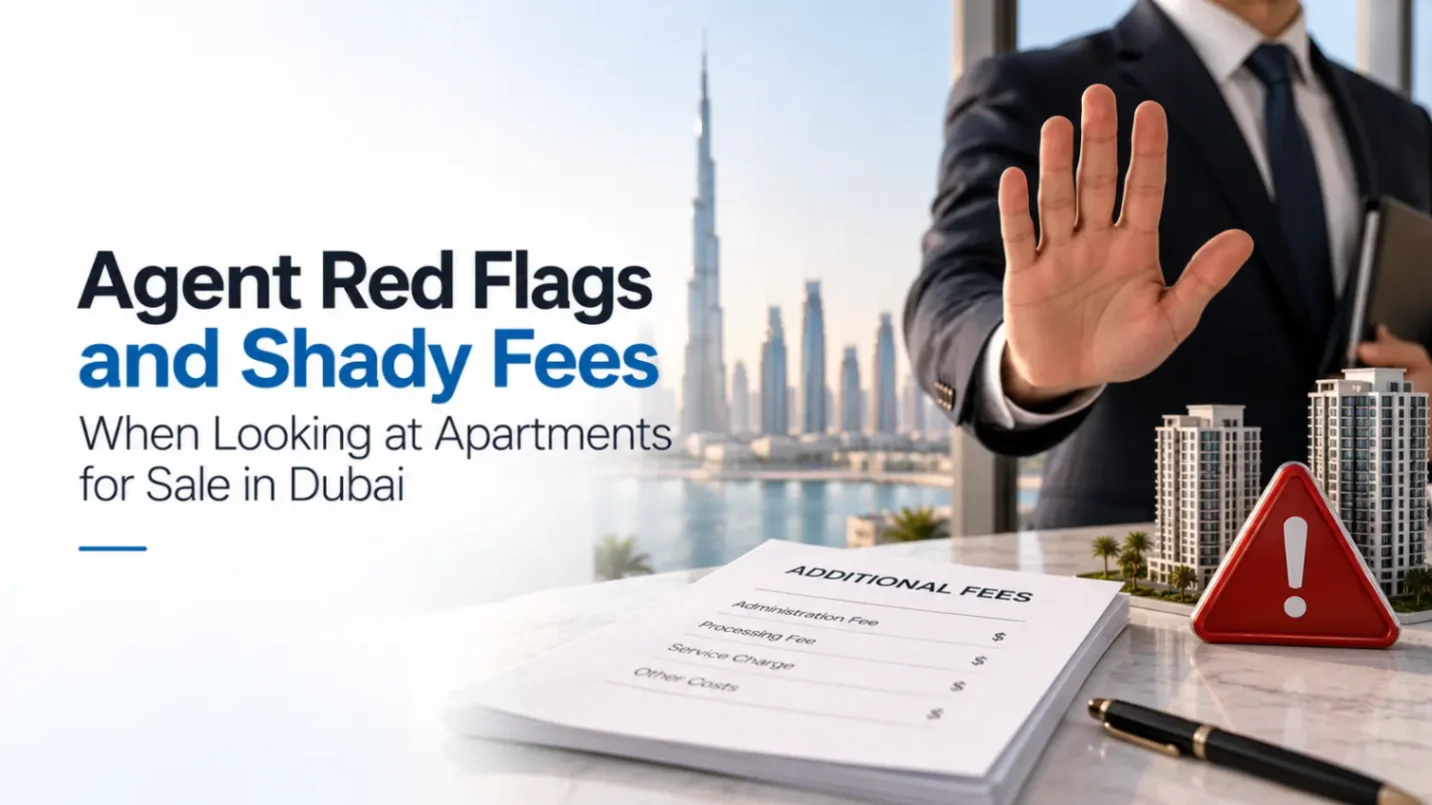
Buying an apartment in Dubai involves more than finding a property, negotiating the asking price, and arranging a viewing. Buyers also need to understand the fees involved and watch for warning signs such as unclear charges, pressure to make a quick decision, or agents who are unwilling to explain the full cost of the transaction. An apartment advertised at AED 1.5 million, for example, can involve additional expenses such as the DLD transfer fee, agency commission, mortgage-related costs, and applicable developer or NOC charges. This guide explains the key agent red flags and hidden fees to watch for when buying apartments for sale in Dubai, including which costs should be confirmed before committing, what questions buyers should ask agents, and when an unexplained fee should raise concerns. It also looks at how buyers can assess the total purchase cost rather than focusing only on the advertised property price. 1: The Agent Avoids Giving a Clear Fee Breakdown One of the first warning signs is an agent who gives you a property price but avoids explaining the additional costs. A professional agent should be able to explain which costs apply to the transaction and who is responsible for paying them. When looking at properties for sale in Dubai, ask for a written breakdown covering the purchase price, agency commission, DLD fees, mortgage-related costs if applicable, and any other known transaction charges. If an agent repeatedly says things such as "we'll discuss that later" or introduces new charges only after you have become emotionally attached to the property, slow down. The problem is not necessarily that a fee exists. The problem is lack of transparency about it. 2: A "Special" Fee That Was Never Mentioned Buyers should be cautious when an agent suddenly introduces an administration, processing, documentation, viewing, registration, or "service" fee that was never discussed. Not every additional charge is automatically illegitimate. Some costs can arise from specific transactions or services. The question is whether the charge has a legitimate basis, was properly disclosed, and is clearly documented. Do not pay an unexplained fee simply because the agent tells you it is "standard." Ask: What exactly is this fee for? Who receives it? Is it mandatory? Is it included in the agreed transaction costs? Can I receive an official invoice or written confirmation? 3: Pressure to Pay a Deposit Immediately "Pay today or someone else will take it" is one of the oldest sales tactics in property. Sometimes there genuinely is competition for a desirable apartment. But artificial urgency is different. An agent may use pressure to stop you from comparing the property with alternatives, checking documents, reviewing the SPA, or calculating the total cost. Buying an apartment in Dubai is a major financial decision. You should have enough time to verify the property's ownership, terms, outstanding obligations, and transaction costs. If an agent discourages reasonable due diligence because they want a deposit immediately, treat that as a warning. 4: The Agent Won't Show You the Full Property Details A serious buyer should be able to understand what they are purchasing. Be cautious if an agent refuses to provide essential information about the apartment, including its exact size, title or ownership details where appropriate, building information, service charges, completion status, or other relevant documentation. This is particularly important when comparing apartments for sale in Dubai because two apartments with similar asking prices can have very different ownership costs and investment prospects. A cheap apartment with high service charges, poor rental demand, or significant outstanding obligations may not actually be cheap. Guaranteed Rental Returns Without Evidence PropertySeller recommends treating guaranteed rental claims with caution. Statements such as “you will definitely get 8%” or “this apartment will rent for AED X” are projections, not guaranteed outcomes. Rental income depends on location, property condition, size, tenant demand, competition, furnishing, and market conditions. Our Rental Income Calculator helps buyers estimate potential income using their own assumptions rather than relying solely on an agent's claims. The key difference is between potential rental income and guaranteed income. The Agent Pushes You Toward One Developer or Project If an agent immediately dismisses every alternative and insists that one particular development is "the only property worth buying," ask why. There may be a legitimate reason for recommending a specific project. However, buyers should compare properties based on price, location, developer reputation, payment terms, service charges, rental demand, handover status, and resale potential. This is particularly important for off-plan apartments, where marketing claims can strongly influence buyer decisions. The agent's recommendation should be supported by evidence rather than urgency or emotional selling. Asking You to Pay Into the Wrong Account Payment instructions deserve particular attention. Buyers should verify who is receiving the money and why before transferring funds. Do not rely solely on bank details sent through an informal message. For significant payments, verify the recipient, documentation, transaction terms, and relevant official instructions independently. If an agent asks you to transfer money to a personal account, an unrelated company, or an account that does not match the documented transaction without a clear explanation, stop and verify everything before paying. What Fees Should You Expect When Buying an Apartment in Dubai? Understanding legitimate costs makes questionable charges easier to spot. Buyers may need to budget for the 4% Dubai Land Department transfer fee, agency commission, mortgage registration and lender-related costs where applicable, along with other transaction or developer charges. The exact costs depend on the property, transaction structure, and whether financing is involved. PropertySeller recommends calculating the total acquisition cost rather than focusing only on the advertised apartment price. How to Protect Yourself From Shady Agent Fees The simplest way to protect yourself is to make every cost clear and traceable. Before making any payment, ask for the fee in writing, understand what it covers, who receives it, and whether it is mandatory. Keep records of property details, offers, agency agreements, fee breakdowns, invoices, payment instructions, and transaction documents. Avoid relying on verbal promises for major financial commitments. PropertySeller also recommends comparing multiple properties rather than relying on one agent. This can help you spot inflated prices, unusual fees, and unrealistic rental or investment claims. The Biggest Mistake: Focusing Only on the Asking Price The most dangerous assumption is that the cheapest apartment is automatically the best deal. Buyers should consider the full ownership cost, including purchase price, transaction and financing costs, service charges, maintenance, furnishing, and potential vacancy. A discounted apartment may have weaker rental demand, high service charges, poor accessibility, or limited resale appeal. The goal is not to find the cheapest property, but one where the price, costs, location, quality, and expected returns make financial sense. Conclusion Buying an apartment in Dubai should be based on clear information, not pressure from an agent. Buyers should always check the property details, understand every fee, and avoid paying unexplained charges. At PropertySeller, we help buyers explore apartments in Dubai with greater clarity and transparency. Our Mortgage Calculator, Mortgage Eligibility Checker, and Rental Income Calculator help buyers understand affordability, financing, and potential rental income before making a decision. Take your time, compare your options, and make sure the complete cost of the property fits your budget before you commit. FAQ’s 1. What are the biggest agent red flags when buying an apartment in Dubai? At PropertySeller, we recommend caution when an agent avoids giving a clear fee breakdown, pressures you to pay immediately, makes unrealistic rental or capital-growth promises, withholds important property information, or introduces unexplained charges during the transaction. 2. Are high-pressure sales tactics a reason to walk away? PropertySeller recommends stepping back when pressure prevents proper due diligence. A genuine property purchase should allow buyers to review the costs, documents, property condition, and financial implications before making a commitment. 3. How can I protect myself from unclear payment instructions? At PropertySeller, we recommend verifying the recipient, payment purpose, agreed amount, invoice or supporting documentation, and transaction terms before transferring money. Buyers should retain written records of payments and important communications. 4. What is the biggest mistake buyers make when dealing with agents? PropertySeller considers focusing only on the advertised property price one of the biggest mistakes. Buyers should assess the total cost of purchase, including transfer fees, commission, financing, service charges, developer or NOC charges where applicable, and other ownership expenses. 5. Is an unusually low-priced apartment always a good deal? PropertySeller recommends investigating unusually low prices rather than assuming they represent an opportunity. A lower price may reflect location, condition, outstanding costs, weaker rental demand, restricted use, or other factors that affect the property's actual value.
Sep 25, 2026
Read More
Buying a ready apartment in Dubai gives you the opportunity to inspect the actual property before committing. Unlike an off-plan purchase, you can check the walls, flooring, windows, plumbing, air conditioning, electrical points, cabinets, and overall condition before making a decision. But a quick viewing is not the same as a proper snagging inspection. This guide covers the key areas to inspect when buying a ready Dubai apartment, from hidden leaks and AC problems to poor finishes, electrical faults, plumbing issues, and sound insulation. It also explains which defects could become expensive repairs and when hiring a professional snagging company may be worth considering. What Is Snagging for a Ready Apartment? Snagging is the process of identifying defects, unfinished work, damage, or faults in a property before taking possession or completing a purchase. For a ready apartment, snagging can cover everything from paintwork and doors to plumbing, electrical systems, air conditioning, windows, bathrooms, kitchens, and built-in equipment. The purpose is simple, to find problems before they become your responsibility. A small paint defect may not matter much. A hidden pipe leak behind a bathroom wall is a different story. Start With the Walls, Floors and Ceilings Start with the basics, as visible defects can point to bigger issues. Check for cracks, water stains, peeling paint, damp patches, uneven flooring, loose tiles, damaged skirting, and gaps around doors and windows. Do not ignore stains just because they have been repainted. Fresh paint can hide a problem without fixing its cause. Pay extra attention to ceilings below bathrooms, kitchens, balconies, and AC units, where water damage is more likely to appear. Check for Water Leaks and Plumbing Problems Plumbing issues can be expensive and may stay hidden until after the purchase. During the viewing, test the main fixtures instead of relying only on visual inspection. Check water pressure, hot water, drains, toilets, and areas under sinks for leaks, moisture, corrosion, stains, or unusual smells. Also inspect seals around showers, bathtubs, sinks, and toilets. Swollen cabinets or damp areas can indicate previous or ongoing water damage. Test the Air Conditioning Dubai's climate makes AC performance more than a comfort issue. Turn on the AC in each room and allow it to run long enough to assess performance. Check whether: Each room cools properly Airflow is consistent The system makes unusual noises There are unusual smells Thermostats respond correctly Water is leaking around AC units Air vents are damaged or loose Ask about recent AC servicing and maintenance records where available. A system that appears to work during a short viewing may still have drainage, cooling, or maintenance issues. Inspect Windows, Doors and Balconies Windows should open, close, and lock properly. Look around window frames for gaps, damaged seals, or signs of moisture. For balconies, check the door locks, flooring, and drainage. Water should flow away properly rather than collect near the apartment entrance. Also check door hinges, handles, frames, and alignment throughout the apartment. Test Electrical Points and Lighting Do not assume that every electrical point works because the apartment has functioning lights. Test as many switches and sockets as possible. Check: Light switches Power sockets Kitchen outlets Bathroom switches Appliances Intercom Doorbell Internet points TV connections If appliances are included in the sale, test them individually rather than assuming they are operational. Look for damaged sockets, loose switches, exposed wiring, or unusual buzzing sounds. Electrical problems should not be treated as simple cosmetic defects. Check the Kitchen Carefully The kitchen combines plumbing, electrical systems, cabinets, appliances, and drainage, so it deserves careful attention. Open cabinets and drawers and look for water stains, swelling, broken hinges, damaged countertops, leaks, and poor drainage. Run the tap and check underneath the sink at the same time. If appliances are included in the sale, confirm what stays with the property and test them where possible before completing the purchase. Check Noise and Sound Insulation Noise may not be obvious during a short daytime viewing, but it can significantly affect your living experience. Spend a few quiet minutes listening for corridor noise, traffic, lifts, neighbouring apartments, building equipment, and nearby construction. If possible, visit at different times of day. Ask about known noise issues, but also rely on your own inspection rather than the seller's or agent's response. Inspect Bedrooms and Living Areas Bedrooms and living rooms should be checked beyond their appearance. Look for cracks, stains, damaged flooring, loose fittings, faulty windows, and poor AC performance. Check built-in wardrobes by opening doors and drawers. Look for moisture, mould, damaged shelves, and poor installation. If furniture is included, move items where possible to inspect the walls and flooring behind them. Furniture can hide stains, scratches, dampness, or damaged surfaces. Check Common Areas and Building Condition The apartment is only one part of the purchase. Inspect the lobby, corridors, lifts, parking, gym, pool, waste areas, and other common facilities. Poor maintenance can indicate wider building management issues and potentially higher costs. Also review the service charges and what they cover, as high ongoing costs can affect the property's overall value. What Should You Photograph During Snagging? Take clear photos of every defect you find during the inspection. Focus on: Cracks, stains, and damp patches Damaged flooring or tiles Water leaks Faulty fittings Broken doors or windows Electrical issues Damaged cabinets AC problems Bathroom defects Photographs provide a useful record when requesting repairs, documenting the property's condition, or negotiating with the seller. When Should You Hire a Professional Snagging Inspector? A professional inspection can be useful when buying a high-value apartment, especially if you are not familiar with structural, plumbing, electrical, or HVAC systems. A qualified inspector may identify problems that are easy to miss during a normal viewing. The inspection cost can be small compared with the potential expense of discovering a major defect after purchase. However, a professional inspection should support—not replace—your own checks. Ask questions and investigate anything that looks unusual. Should You Walk Away From a Property Because of Snags? Not necessarily. Minor cosmetic defects are common and may be easy to fix. The bigger concern is the type, cost, and seriousness of the problem. Repeated water damage, major plumbing or electrical faults, serious AC problems, structural concerns, or costly unresolved defects deserve careful consideration. Before deciding, estimate the repair cost and confirm whether the seller will fix the issue before completion. A low asking price is not a good deal if expensive defects come with it. Conclusion At PropertySeller, we help buyers evaluate apartments for sale in Dubai beyond the asking price. Before purchasing, check the property's condition, service charges, maintenance needs, rental potential, and total ownership cost. Our Mortgage Calculator, Eligibility Checker, and Rental Income Calculator can support the financial side of the decision. Inspect the plumbing, AC, electrical points, walls, floors, bathrooms, kitchen, windows, and common areas before completion. A property may look perfect but still hide expensive defects. Inspect carefully, understand the costs, and know exactly what you are buying. FAQs 1. What is snagging when buying a ready apartment in Dubai? At PropertySeller, we consider snagging an important inspection step before purchasing a ready apartment. It involves checking the property for defects such as leaks, cracks, damaged flooring, faulty electrical points, AC problems, plumbing issues, and poor finishes. 2. What should I check when viewing a ready apartment? PropertySeller recommends checking the walls, ceilings, floors, windows, doors, plumbing, bathrooms, kitchen, electrical points, AC system, balconies, built-in wardrobes, appliances, and overall building condition. 3. Should I test the AC before buying an apartment in Dubai? Yes. PropertySeller recommends switching on the AC in every room and checking cooling performance, airflow, unusual noises, smells, and signs of water leakage. AC problems can become an important ownership expense in Dubai. 4. Can I negotiate the price because of defects? Potentially. PropertySeller recommends documenting significant defects and estimating the likely repair cost before negotiating. Buyers can then determine whether the asking price still makes financial sense or whether repairs should be completed before purchase. 5. Should I hire a professional snagging inspector? PropertySeller recommends considering a professional inspection for high-value apartments or properties where you notice potential structural, plumbing, electrical, or HVAC problems. A professional may identify issues that are difficult to detect during a normal viewing.
Sep 23, 2026
Read More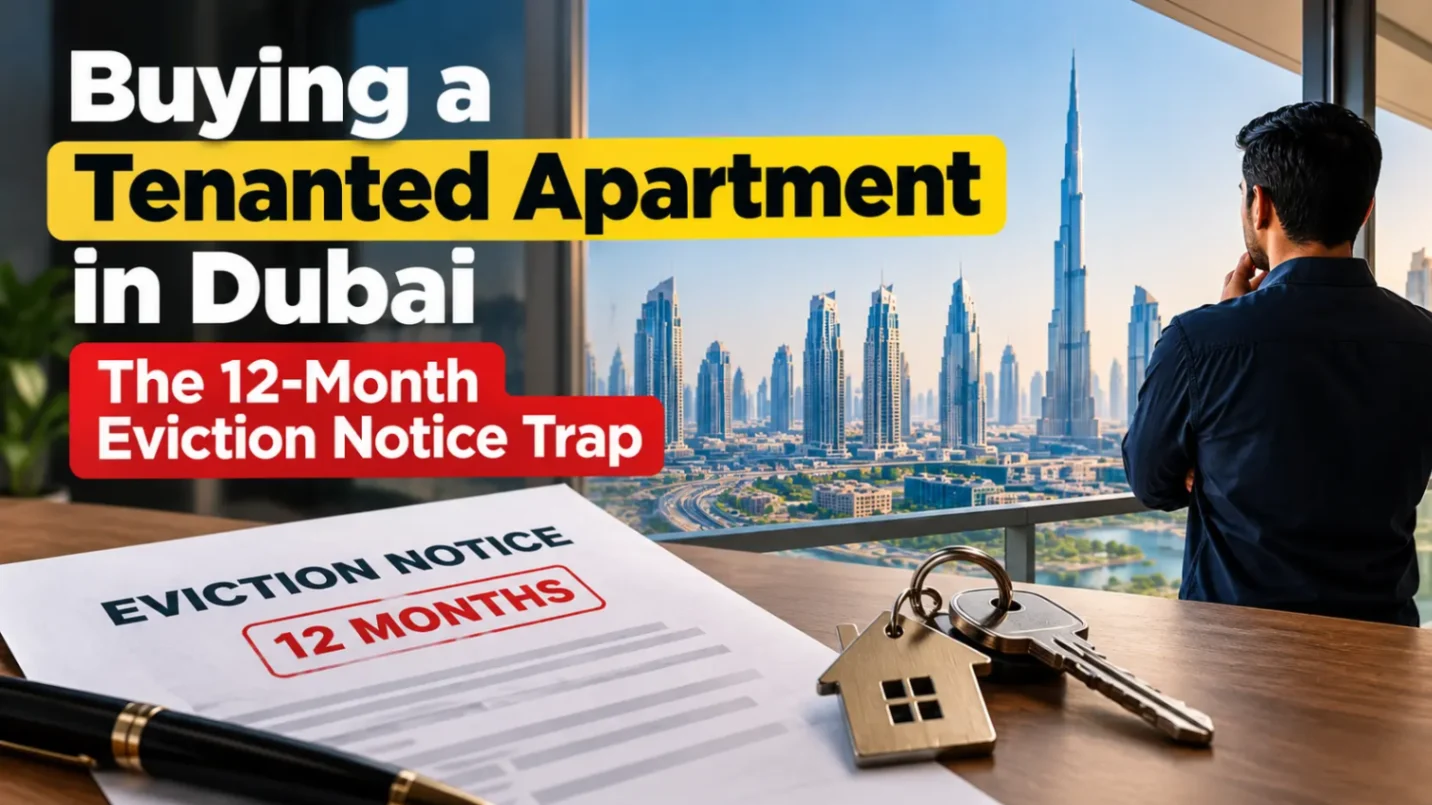
Buying a tenanted apartment in Dubai can provide immediate rental income, but it also comes with important legal and practical considerations. A new owner does not automatically have the right to remove an existing tenant simply because ownership has changed. If the buyer wants the apartment vacant for personal use, sale, or another legally permitted reason, the 12-month eviction notice requirement can significantly affect the timeline. This guide explains how the 12-month eviction notice works, what happens to the tenancy after a property is sold, what buyers should verify before completing the purchase, and how to avoid common mistakes when buying a tenanted apartment in Dubai. What Happens When You Buy a Tenanted Apartment in Dubai? Buying a tenanted apartment does not automatically end the existing lease. A valid fixed-term tenancy generally continues after the property changes ownership, meaning the buyer effectively becomes the new landlord and takes on the relevant obligations under the existing lease. At PropertySeller, we recommend treating the tenancy as an important part of the purchase. For investors, an existing tenant can provide continuing rental income, while owner-occupiers need to consider the actual possession timeline before buying. The tenancy terms, rent, expiry date, and any existing notices should be checked before committing. Why Is the 12-Month Notice Important? Dubai's tenancy rules allow eviction in certain situations, including when an owner intends to sell the property or use it personally or for a first-degree relative. For these grounds, the tenant generally must receive at least 12 months' notice, served through the required legal method. At PropertySeller, we recommend that buyers do not assume “buy the apartment, give notice, and the tenant leaves.” The timing and validity of the notice matter, so buyers should verify whether notice has already been served and understand the expected possession timeline before purchasing. Can the New Owner Evict the Tenant? A new owner may pursue eviction where permitted by Dubai tenancy law, but simply becoming the owner does not automatically terminate an existing tenancy. The required conditions and notice procedures must be followed. For eviction based on sale or personal use, the tenant generally needs at least 12 months' notice before the requested eviction date. For personal use, additional conditions may also apply. The buyer's purpose is important. Investors may benefit from keeping the tenant and continuing rental income, while owner-occupiers should carefully check the tenancy, notice status, and expected possession timeline before purchasing. The Biggest Trap: Assuming the Apartment Will Be Vacant One of the biggest mistakes buyers can make is assuming a tenanted apartment will be vacant immediately after purchase. For example, you may buy an apartment for AED 1.6 million expecting to move in soon because the seller says the tenant's lease is ending. However, if the tenancy remains valid and the required eviction process has not been properly completed, possession could take much longer than expected. This can mean paying for your new property, existing accommodation, mortgage, service charges, and moving expenses at the same time. Vacant possession should always be treated as a specific transaction requirement and verified through the proper documentation—not based on a verbal promise. What If the Seller Has Already Given the 12-Month Notice? A seller saying “the tenant has already been served notice” should not be accepted without evidence. Buyers should verify when the notice was served, the reason stated, the method of service, the requested eviction date, current Ejari details, and any related correspondence or disputes. The remaining notice period should then be compared with the expected completion and possession dates. A notice served several months earlier can create a very different timeline from one served shortly before the sale. PropertySeller recommends asking for evidence of the notice, including: The date the notice was served The reason stated in the notice The method of service The requested eviction date Supporting documentation Current tenancy and Ejari details Any relevant correspondence or dispute information Does the Tenant Have to Leave When the 12 Months End? The end of the 12-month notice period should not automatically be treated as a guaranteed handover date. Depending on the circumstances, the landlord may need to seek a ruling from the Rental Disputes Center. Buyers should therefore avoid basing their financial or moving plans on an assumed eviction date without checking the actual tenancy and notice status. What If You Buy the Apartment With the Tenant Staying? Buying a tenanted apartment can work well for investors because the existing tenant may provide rental income from the start. The current rent should also be compared with realistic market rents rather than being treated as guaranteed future income. But PropertySeller recommends checking the tenancy carefully before treating the existing rent as an investment advantage. Review: Current annual rent Lease expiry date Ejari registration Security deposit Payment schedule Tenant payment history Renewal terms Outstanding disputes Service charges Property condition What If You Want to Move Into the Apartment? If the goal is personal occupation, the tenancy becomes an important part of the purchase decision. Buyers should confirm whether a valid 12-month notice has been served, when it was issued, the stated reason, when it expires, the current lease expiry date, and whether any dispute exists. If the possession timeline is unclear, the apartment should not be treated as immediately available. Can You Negotiate a Tenanted Apartment's Price? Yes. The tenancy can form part of the negotiation, particularly when the buyer needs vacant possession. For an investor, an occupied apartment with reliable rental income may be attractive. For an owner-occupier, a long waiting period can create additional accommodation, financing, and ownership costs. The better comparison is not simply tenanted price vs vacant price. Buyers should consider: Purchase price + waiting costs + ownership costs − rental income + possession timing. What Buyers Should Check Before Signing Before buying a tenanted apartment in Dubai, buyers should review the tenancy as carefully as the property itself. Check the Ejari, lease expiry, annual rent, payment history, security deposit, notice status, and any existing disputes. If vacant possession is important, make it a clear requirement in the transaction documents and seek appropriate professional advice on the legal wording and process. Do not rely only on an agent's verbal promise that the tenant “will leave.” The tenant has legal rights, and the new owner takes over the existing landlord relationship when ownership changes. Buying a Tenanted Apartment: Investment vs Owner Occupation The right approach depends on why you are buying. For investors, a tenanted apartment can provide ongoing rental income. Buyers should focus on rent, tenant reliability, service charges, market rent, vacancy risk, and potential net returns. For owner-occupiers, possession is much more important. A property may look attractive financially but still be unsuitable if the buyer must wait for the required notice period. The key is to decide your objective first. Do not expect immediate vacant possession from an investment property, and do not treat an existing tenant as a minor detail when buying a home. Final Takeaway When buying a tenanted apartment, buyers should verify the tenancy, check whether any notice has been served, understand the 12-month notice rule, and calculate the cost of waiting. The right purchase is one where the property, finances, rental position, and possession timeline all make sense. At PropertySeller, we help buyers look beyond the purchase price and understand the full ownership and possession picture. Our Rental Income Calculator can help estimate potential rental income, while the Eligibility Checker can provide an initial indication of financial suitability. FAQ: 1. Can I buy an apartment that already has a tenant? At PropertySeller, we help buyers evaluate tenanted apartments based on the existing lease, rental income, tenancy expiry, property condition, and intended use. Buyers should understand that selling the property does not automatically end a valid tenancy. 2. Can I evict the tenant after buying the apartment? PropertySeller recommends checking the specific circumstances before assuming eviction is possible. Where eviction is permitted for grounds such as personal use or sale, the required 12-month notice and other applicable conditions must be followed. 3. Can I move into a tenanted apartment immediately after purchasing it? PropertySeller recommends verifying the tenancy and possession timeline before purchasing if the apartment is intended as a home. Buyers should check whether notice has been served and when vacant possession can realistically be expected. 4. What happens to the tenancy when the apartment is sold? PropertySeller recommends treating the existing tenancy as part of the purchase. The new owner generally takes over the landlord's position, so buyers should review the Ejari, lease expiry, annual rent, payment history, security deposit, and relevant tenancy terms. 5. What if the seller says the tenant has already received a 12-month notice? PropertySeller recommends requesting documentary evidence before relying on the claim. Buyers should verify the notice date, stated reason, method of service, expected eviction date, and any related correspondence. 6. What documents should I request before buying a tenanted apartment? PropertySeller recommends reviewing the Ejari, tenancy agreement, payment records, security deposit details, notice documentation where applicable, property documents, and relevant correspondence. Buyers should ensure that the information provided matches the actual tenancy before completing the transaction.
Sep 21, 2026
Read More
Buying an apartment in Dubai can provide both a property investment and a potential pathway to long-term UAE residency. For buyers considering apartments for sale in Dubai for Golden Visa purposes, understanding the AED 2 million property threshold and how mortgage financing affects eligibility is essential. This guide explains the AED 2 million Golden Visa requirement, mortgage and down-payment rules, required documents and the amount buyers may need to pay. It also explains why buying an AED 2 million apartment with a 20% down payment does not automatically guarantee Golden Visa eligibility. What Is the Dubai Golden Visa Property Rule in 2026? In 2026, the minimum property investment for the Dubai real estate investor Golden Visa is AED 2 million. Dubai Land Department states that eligible property owners with a purchase value of AED 2 million or more can apply for a 10-year renewable residence permit, subject to the applicable requirements. The often-repeated AED 5 million figure does not apply to the current real estate investor route. However, buyers should understand that the property value is different from the amount of cash paid. Mortgage financing and the amount already paid can affect eligibility, so PropertySeller recommends checking the latest requirements before purchasing. Did the Golden Visa Down-Payment Rule Change? Yes. Older information often focused on a minimum equity or down-payment amount, which has caused confusion among buyers. The current DLD guidance for mortgaged properties requires a bank letter showing AED 2 million paid amount. This means buying an AED 2 million apartment with a 20% down payment does not automatically guarantee Golden Visa eligibility. PropertySeller recommends treating mortgage eligibility and Golden Visa eligibility as separate calculations and verifying the latest DLD requirements before purchasing. Can You Buy a Dubai Apartment With a Mortgage and Get a Golden Visa? Yes, a mortgaged property can potentially qualify for the UAE Golden Visa, subject to the applicable requirements. Dubai Land Department allows qualifying financed properties, but buyers may need a bank letter confirming the required AED 2 million paid amount. The fact that a property is financed does not automatically make it eligible. PropertySeller recommends checking the financing structure, amount already paid and property documentation before purchasing specifically for Golden Visa purposes. What If You Buy Two Apartments? Buying two apartments may be possible as part of your property investment, but buyers should not assume that their combined value will automatically satisfy the Golden Visa requirement. The ownership structure, property documentation and financing arrangements can affect how the investment is assessed. If you plan to use multiple properties to meet the AED 2 million threshold, PropertySeller recommends confirming their eligibility with the relevant authority before structuring your purchase around the Golden Visa. Can Off-Plan Apartments Qualify? Off-plan apartments may offer flexible payment plans, making an AED 2 million property easier to purchase over time. However, being able to afford the payment plan does not automatically mean the property qualifies for a Golden Visa. Before buying an off-plan apartment for residency purposes, PropertySeller recommends checking the project's eligibility, registration status, required paid amount, available documentation and expected handover timeline. Buyers should also consider what happens if the project is delayed. Never rely only on a sales claim that an off-plan property “qualifies” for the Golden Visa—verify the requirements before committing. How Much Money Do You Really Need to Buy a Golden Visa Property? Buying a AED 2 million apartment does not mean you only need to budget for the purchase price or down payment. PropertySeller recommends considering the complete cost of ownership before committing. Your budget may also need to cover DLD fees, mortgage costs, service charges, furnishing, maintenance and an emergency cash buffer. The actual amount depends on the property and financing structure, but buyers should avoid using all their savings just to meet the Golden Visa property threshold. PropertySeller's mortgage calculator helps buyers estimate their monthly mortgage payments based on the property price, down payment and loan terms. Using it before buying can help you check if the property fits your budget and other buying costs. What Type of Apartment Should You Consider? There is no specific apartment type required for a Golden Visa. Studios, 1, 2, 3-bedroom and larger apartments may meet the AED 2 million threshold, subject to the applicable requirements. The right choice depends on your goals. PropertySeller recommends considering 1- or 2-bedroom apartments for rental demand, larger units for family living, and well-connected locations for long-term potential. The priority should be choosing a property that fits your budget and investment plans, not simply meeting the AED 2 million figure. Ready vs Off-Plan: Which Is Better for Golden Visa Buyers? Ready Apartments Ready apartments let buyers see the actual property, building and location before buying. They can also provide existing rental information if the unit is already occupied. This can offer more certainty for buyers seeking a property for both investment and residency. Off-Plan Apartments Off-plan apartments may offer flexible payment plans and newer developments, but they also involve construction and handover risks. If Golden Visa eligibility is the main goal, PropertySeller recommends confirming that the property will meet the requirements when you apply rather than relying on future expectations. What Documents Are Important? For a Dubai property investor applying for a Golden Visa, PropertySeller recommends keeping the following documents ready: Title deed or ownership certificate Purchase agreement / Sale and Purchase Agreement (SPA) Passport and personal identification documents Property valuation or relevant property documents, where required Payment records showing amounts paid Bank letter confirming the AED 2 million paid amount for mortgaged properties Mortgage and financing documents, where applicable Any additional documents requested by Dubai Land Department or the relevant authority What Are the Benefits of the Golden Visa? The UAE Golden Visa provides long-term renewable residency and does not require the traditional sponsor arrangement. It can also provide greater flexibility for staying outside the UAE and allow eligible holders to sponsor family members. For property buyers, this can add a residency benefit alongside the property investment, but PropertySeller recommends evaluating the property's financial potential separately from its visa benefits. Common Mistakes Buyers Make Buying exactly at AED 2 million – Check the property's eligibility and documents first. Assuming 20% down payment is enough – Mortgage and Golden Visa requirements are different. Ignoring extra costs – Budget for DLD fees, mortgage costs, service charges and other expenses. Choosing a weak location – Golden Visa eligibility does not guarantee good returns. Using outdated information – Always check the latest Golden Visa requirements. Trusting sales claims without checking – Verify eligibility with the relevant authority. Ignoring property documents – Keep ownership and payment records properly organised. Buying only for the visa – Make sure the property also makes financial sense. Final Takeaway The UAE Golden Visa continues to attract international buyers looking at apartments for sale in Dubai. The current real estate investor route has an AED 2 million property threshold, while mortgaged properties may also qualify subject to the applicable requirements. PropertySeller recommends checking the mortgage structure, amount paid, property documents and latest Golden Visa rules before buying, especially if residency is your main goal. FAQ’s 1. Can I get a Golden Visa by buying an AED 2 million apartment in Dubai? An AED 2 million property may qualify for the real estate investor Golden Visa if all applicable requirements are met. At PropertySeller, we recommend checking the property's value, ownership status and required documentation before purchasing for residency purposes. 2. Can I use a mortgage to buy a Golden Visa property in Dubai? Yes, a mortgaged property may qualify under the Dubai real estate investor route, subject to the applicable conditions. PropertySeller recommends confirming the required bank letter and AED 2 million paid amount with the relevant authority before proceeding. 3. Can an off-plan apartment qualify for a Golden Visa? An off-plan property may qualify depending on its status, registration and the applicable requirements. PropertySeller recommends confirming the property's eligibility and documentation before buying it specifically for Golden Visa purposes. 4. How long is the property investor Golden Visa? The Dubai real estate investor route currently provides a 10-year renewable residence permit for qualifying property investors. PropertySeller recommends checking the latest requirements before applying. 5. Can Golden Visa holders sponsor their family? Yes. Golden Visa benefits can include the ability to sponsor eligible family members, subject to the applicable UAE requirements. 6. Can I combine multiple properties to reach AED 2 million? Do not assume that simply adding the values of multiple properties will automatically satisfy the Golden Visa requirement. PropertySeller recommends confirming how multiple properties, ownership structures and financing arrangements are assessed by the relevant authority. 7. Can I rent out my Golden Visa property? Yes, subject to the property's applicable rules and rental regulations. PropertySeller recommends considering the property's rental potential separately when deciding whether the investment makes financial sense.
Sep 18, 2026
Read More
Buying a property in Dubai as a non-resident is possible, but getting a mortgage can be different from borrowing as a UAE resident. Banks may look at your income, nationality, employment, existing debts, property type and other financial details before approving a loan. This blog explains how non-resident mortgages in Dubai work, including expected down payments, interest rates, bank fees, valuation costs and other expenses. It also covers the key costs buyers should check before choosing a property and taking a mortgage. Can Non-Residents Get a Mortgage in Dubai? Yes, non-residents can get a mortgage in Dubai if they meet the bank's requirements. Banks may check your nationality, country of residence, income, employment, bank statements, existing debts, credit history and the property you want to buy. The amount a bank is willing to lend can also vary between buyers. PropertySeller recommends getting mortgage pre-approval before choosing a property so you know how much you can borrow and how much cash you may need. How Much Down Payment Does a Non-Resident Need? The down payment for a Dubai mortgage depends on the bank, buyer's financial profile and property type. The UAE Central Bank sets maximum loan-to-value limits, but banks may apply lower limits to non-resident buyers. For example, if you are buying a AED 2 million investment apartment, 60% financing would mean a AED 1.2 million mortgage and AED 800,000 down payment. At 50% financing, you would need a AED 1 million down payment. PropertySeller recommends confirming your actual LTV with the bank before choosing a property, as the difference can significantly change your upfront cash requirement. What Interest Rate Can a Non-Resident Expect? Pricing depends on the bank, loan structure, borrower profile, currency of income, property and whether the rate is fixed or variable. A lower advertised rate is not necessarily the cheapest mortgage. For example, one bank might offer a lower introductory rate but charge higher arrangement fees, while another might have a slightly higher rate with lower upfront costs. Non-residents should therefore compare the total cost of the mortgage, not just the headline interest rate. Fixed vs Variable Rates A fixed-rate mortgage keeps the rate unchanged for the agreed period, making monthly payments easier to plan. A variable-rate mortgage can change with market conditions, which may increase your repayments. If you are buying an investment property, check whether the expected rental income can still cover your mortgage and other property costs if the interest rate increases. Hidden Costs of a Dubai Mortgage The mortgage payment is not the only cost non-resident buyers need to consider. PropertySeller recommends budgeting for these additional expenses: Bank Processing Fee Banks may charge a fee for arranging the mortgage. Check the exact amount before accepting a loan offer. Always ask whether the advertised mortgage rate comes with additional processing costs. Property Valuation Fee The bank may require a valuation before approving the loan. If the property is valued below the purchase price, you may need to provide more cash. Mortgage Registration Fee Dubai Land Department charges 0.25% of the mortgage value for mortgage registration. For a AED 1.2 million mortgage, this equals AED 3,000. Insurance Some mortgage products may require property or life insurance, creating an additional ongoing cost. Early Settlement Charges Selling the property or repaying the mortgage early can result in applicable early-settlement costs. Check these terms before signing the loan agreement, particularly if you expect to sell or refinance within a few years. Currency Conversion Costs This is particularly important for non-residents earning overseas. If your income is in euros, pounds, dollars or another currency while your mortgage obligations are in UAE dirhams, exchange-rate movements can affect the effective cost of your repayments. 4% Property Registration Fee Mortgage expenses are separate from property purchase costs. Dubai property transactions generally involve a 4% DLD registration fee on the sale value. For a AED 2 million property, this would be AED 80,000. PropertySeller recommends calculating the down payment, mortgage costs, DLD fee and other transaction expenses together to understand the actual cash required. Ready vs Off-Plan Property for Non-Residents Ready Property Ready apartments let non-resident buyers see the actual property, building and location before buying. Buyers can also check existing rental income, service charges and the condition of the unit. This can make the purchase easier to assess from overseas. Off-Plan Property Off-plan apartments may offer flexible payment plans and newer developments, but financing can be more limited. Under the applicable Central Bank framework, off-plan purchases have a maximum 50% LTV, so buyers may need a larger upfront contribution. PropertySeller recommends checking mortgage approval separately from the developer's payment plan. A payment plan that looks affordable does not necessarily mean the property will qualify for the same level of bank financing. What Do Banks Look for When Assessing a Non-Resident? Banks generally want stronger evidence of income and repayment capacity from borrowers who live outside the UAE. Your application may be affected by where you live, how you earn, the currency of your income and whether you are employed or self-employed. A non-resident should be prepared to provide documents such as passport and address proof, salary certificates, payslips, personal bank statements and evidence of existing financial commitments. Self-employed applicants may also need company documents and financial statements. The bank will also assess the property itself. A strong income profile does not guarantee approval if the property does not meet the lender's criteria or its valuation comes in below the agreed purchase price. How Much Cash Should You Keep Available? Non-residents should look beyond the difference between the property price and mortgage amount. Your available cash may need to cover the down payment, DLD fees, mortgage costs, valuation and bank charges. PropertySeller also recommends keeping a cash reserve for vacancies, service charges, maintenance and unexpected expenses. Having enough liquidity can make property ownership more manageable, especially when you are managing the investment from overseas. Use a Mortgage Calculator Before Choosing the Property PropertySeller's mortgage calculator can help buyers estimate potential monthly repayments based on the property price, loan amount and down payment. For non-residents, this is useful for testing different scenarios rather than assuming the maximum mortgage is automatically the best option. Conclusion Non-resident mortgages in Dubai can make property ownership accessible to international buyers, but the advertised interest rate tells only part of the story. Your actual cost depends on the down payment, LTV, mortgage rate, valuation, bank fees, mortgage registration, DLD charges, insurance and currency considerations. The smartest approach is to establish your financing capacity first, calculate the complete cash requirement and then choose a property that remains affordable under realistic assumptions. FAQ’s 1. Can a non-resident get a mortgage in Dubai? Yes. Non-residents can apply for mortgages on eligible Dubai properties, subject to the lender's requirements and the buyer's financial profile. PropertySeller recommends checking your financing eligibility before choosing a property. 2. How much down payment does a non-resident need in Dubai? The required down payment depends on the lender, buyer profile and property type. Investment properties have a regulatory maximum LTV of 60%, while off-plan properties are capped at 50%. Banks may set lower limits for individual borrowers. 3. What fees should I consider besides mortgage interest? PropertySeller recommends budgeting for bank processing fees, valuation charges, mortgage registration, insurance, early-settlement costs, DLD fees and currency-conversion costs where applicable. 4. How much is Dubai mortgage registration? Dubai Land Department charges 0.25% of the mortgage value, along with any applicable service and document charges. PropertySeller recommends including these costs when calculating the total cash required. 5. Can non-residents finance off-plan property? Potentially, but financing can be more restrictive. The applicable Central Bank framework caps off-plan mortgage LTV at 50%, meaning buyers may need a larger upfront contribution.
Sep 16, 2026
Read More
Buying a ready apartment in Dubai gives buyers the opportunity to see the actual property, compare similar homes and assess its condition before making an offer. This also creates room for negotiation, but the amount you can negotiate depends on the property's market value, condition, demand and the seller's situation. This blog explains how to negotiate apartments for sale in Dubai, from checking the property's true market value to making a credible offer and identifying areas where you may have bargaining power. It also covers how to avoid overpaying while keeping your offer attractive enough for the seller to consider. First Understand the Difference Between Asking Price and Market Value The seller's asking price is a starting point, not proof of what the apartment is worth. Before making an offer, compare similar properties in the same building or immediate area. Look at size, floor, view, condition, parking, furnishing and recent transaction prices. Current listings are useful for understanding competition, but completed transactions provide a stronger benchmark for what buyers have actually paid. For example, if similar apartments are closing around AED 1.45 million while yours is listed at AED 1.55 million, you have a defensible reason to negotiate. If comparable apartments are actually selling around AED 1.55 million, offering AED 1.25 million simply makes you look unserious. How Much Below Asking Price Should You Offer? There is no fixed percentage that works for every ready apartment in Dubai. A useful approach is: Market value → property weaknesses → seller circumstances → your offer Factors such as renovation needs, poor views, high service charges or a long time on the market may give you stronger negotiating power. However, if the apartment is fairly priced and buyer demand is strong, making an unnecessarily low offer could mean losing the property. Find Out Why the Seller Is Selling Understanding the seller's situation can help you negotiate more effectively. A seller who needs to move quickly may value a fast and reliable deal, while someone with no urgency may be less willing to reduce the price. PropertySeller recommends checking: How long the apartment has been listed Whether the asking price has already been reduced Whether the seller is buying another property Whether there is an existing mortgage The seller's preferred transfer date Whether the apartment is currently occupied This information can help you understand how much flexibility the seller may have when negotiating. Don't Negotiate Without Inspecting the Apartment One major advantage of buying a ready apartment is that you can inspect the actual property before making an offer. Look at the air conditioning, plumbing, windows, flooring, kitchen, bathrooms, wardrobes, parking, noise, views and signs of damage. Also check the building and common areas. If repairs or renovation are needed, include the expected cost when deciding how much you are willing to offer. Use Evidence Instead of Saying “Your Price Is Too High” A strong negotiation should be based on facts, not personal opinions. Instead of simply telling the seller that the price is too high, PropertySeller recommends comparing similar apartments, recent transactions, size, floor, condition and other relevant factors. For example, instead of saying, “AED 1.5 million is too expensive,” you could explain that comparable units support an offer of AED 1.38 million and that you are ready to proceed. A good offer should be specific, reasonable and supported by evidence. Cash vs Mortgage Can Change Your Negotiating Power Two buyers offering the same price may not be equally attractive to a seller. A cash buyer may offer a faster and simpler transaction, while a mortgage buyer can strengthen their position by having financing pre-approved. For a ready apartment, sellers may consider the price, deposit, financing status, transfer date, NOC process and certainty of completion. PropertySeller recommends getting mortgage pre-approval before negotiating so the seller knows you are financially prepared to proceed. Negotiate the Terms, Not Just the Price If the seller does not want to reduce the asking price, PropertySeller recommends looking at the other terms of the deal. Sometimes you can get more value without lowering the purchase price. Depending on the property, you may be able to negotiate furniture, appliances, repairs, the move-out date, transfer timeline, payment terms or certain transaction costs. The goal is to improve the overall deal rather than focusing only on the final price. When Should You Walk Away? Negotiation becomes dangerous when you become emotionally attached to one apartment. Set your maximum price before negotiations begin. If the seller will not move below that number and comparable properties offer better value, walk away. Dubai has a large residential market. There is usually another apartment. The exception is when the property has something genuinely difficult to replace—an unusual view, rare layout, prime floor, scarce building or particularly strong location. How to Make an Offer Without Getting Ignored Before starting negotiations, PropertySeller's eligibility checker can help you understand your buying position and set a realistic budget. This gives you more confidence when deciding what you can comfortably offer. Avoid simply asking “Best price?”. A stronger offer includes your proposed price, payment method, financing status and preferred timeline. Also, do not reveal your maximum budget too early. PropertySeller recommends keeping your limit private and basing your offer on the property's market value and condition. Know the Costs Before Agreeing on the Price A negotiated purchase price is not your total acquisition cost. Dubai buyers should also account for costs such as the 4% DLD transfer fee, trustee fees, mortgage-related expenses where applicable, agency commission and other transaction charges. This matters because negotiating AED 50,000 off the apartment is less meaningful if you have not budgeted for the remaining purchase costs. PropertySeller recommends calculating the complete acquisition cost before deciding what you can realistically offer. Key Takeaways for Buyers Negotiating ready apartments for sale in Dubai is not about making the lowest possible offer. It is about understanding the property's market value, condition, demand and the seller's position before deciding what to pay. PropertySeller recommends doing your research, inspecting the apartment, checking your buying eligibility and knowing your maximum budget before negotiating. If the seller will not agree to a price that makes financial sense, be prepared to walk away. A good deal should protect your money, not convince you to overpay. FAQ’s 1. How much can I negotiate on a ready apartment in Dubai? At PropertySeller, we do not recommend using a fixed discount. The negotiation room depends on the market value, property condition, seller's situation, time on the market and buyer demand. 2. What is the best way to make an offer on a Dubai apartment? PropertySeller recommends making a clear and realistic offer supported by comparable properties. Buyers should also explain their financing position and preferred timeline to show they are ready to proceed. 3. Is cash better than a mortgage when negotiating? A cash buyer can offer greater speed and certainty, but a mortgage buyer with pre-approved financing can also make a strong and credible offer. 4. What should I check before negotiating a ready apartment? PropertySeller recommends checking comparable prices, property condition, service charges, ownership documents, NOC requirements, mortgage status, rental potential and resale prospects before making an offer. 5. Should I negotiate the price or other terms? Both. If the seller is unwilling to reduce the price, PropertySeller recommends negotiating other terms such as repairs, furnishings, appliances, payment timing or transfer dates where commercially possible.
Sep 14, 2026
Read More
Traffic is an important factor to consider when buying an apartment in Dubai. A property may have good amenities, attractive pricing and a popular location, but difficult daily access can affect tenant demand, resale interest and the property's long-term value. This guide explains how Dubai traffic and commute times can affect apartment rental demand and resale values. It looks at the areas most affected by congestion, why accessibility matters to buyers and tenants, and what investors should check before purchasing an apartment. Why Traffic Matters When Buying in Dubai Buyers often focus on price, amenities, views, service charges and rental yield when comparing apartments. Location matters too, but being close to a major road or popular destination does not always mean the property is easy to reach. Traffic, road access, highway connections, junctions, construction and public transport can all affect the daily commute. For investors, this matters because difficult access can reduce tenant demand and affect how attractive the property is to future buyers. How Traffic Can Affect Rental Demand Tenants consider more than the apartment itself. Daily travel time and road access can strongly influence where they choose to live. Someone working in Business Bay, Downtown Dubai or Dubai Internet City may prefer a property with an easier commute, even if another apartment is larger or cheaper. For investors, this can affect the number of tenants interested in the property and the rent they are willing to pay. Traffic does not automatically make an area a poor investment, especially in busy business and commercial locations. The key is to assess whether the location benefits outweigh the inconvenience of daily congestion. Which Dubai Roads Can Create Commute Bottlenecks? Dubai's major highways and arterial roads carry enormous volumes of daily traffic. Routes such as Sheikh Zayed Road, Sheikh Mohammed Bin Zayed Road, Al Khail Road and Emirates Road connect major residential and employment districts. The problem for property investors is not simply being close to a major highway. Being too dependent on one access route can create vulnerability. For example, an apartment community may have excellent highway connectivity but only one practical entrance. During peak periods, congestion at that entrance can add substantial time to a daily journey. That is why investors should evaluate the last few kilometres of the journey, not just the distance to the highway. The “Google Maps Distance” Trap A property's distance on Google Maps does not always show what the daily commute will actually feel like. A short route can still take longer if it passes through busy junctions, crowded roads or difficult exits. Before buying, PropertySeller recommends checking the route during typical peak hours, such as 7:00–9:00 AM and 5:00–8:00 PM, and comparing weekday and weekend traffic. The goal is to understand whether congestion is manageable, predictable or likely to affect the property's long-term appeal. How Traffic Can Affect Apartment Resale Value An apartment's resale value depends on many factors, including market demand, supply, building quality, price, developer reputation and location. Traffic is only one part of the overall picture, but poor accessibility can still affect how many buyers are interested in a property. This can become more important when similar apartments are available in competing communities. If two properties have similar prices and features, the one with easier access to major roads and employment areas may attract more buyers and tenants, making it easier to resell. Traffic and Rental Yield Are Connected A high rental yield does not automatically mean a property is a strong investment. Suppose an apartment offers an attractive gross rental yield but regularly loses tenants because residents dislike the commute. Frequent vacancies, leasing incentives and longer marketing periods can reduce the actual return. Investors should therefore look beyond headline rental yield. Consider: Rental income − vacancy − service charges − maintenance − financing costs = more realistic investment return Traffic belongs in this equation indirectly because it can influence how easily the property attracts and retains tenants. Does Being Near a Metro Station Solve the Problem? It can help, but not automatically. Dubai Metro connectivity can significantly improve accessibility for tenants who do not want to drive every day. However, proximity to a station should be evaluated alongside: Walking distance Pedestrian access Feeder transport Station connectivity Employment destinations Community layout An apartment advertised as “near the metro” may still require a car or taxi to reach the station comfortably. For investors targeting professionals, actual door-to-door convenience matters more than the marketing description. How to Check Traffic Before Buying an Apartment PropertySeller recommends checking accessibility as part of your property research, especially when buying an apartment for investment. Before purchasing, look at: Morning Commute Check travel times to major employment areas during peak hours. Evening Return Test the return journey, as traffic conditions can be very different. Alternative Routes See whether the community has more than one practical entrance and exit. Public Transport Check nearby metro stations, bus routes and other transport options. Future Infrastructure Consider planned roads, transport projects and wider community development that could improve or change accessibility. Resident Experience Where possible, speak with residents or tenants. Their daily experience can reveal traffic problems that property listings rarely mention. Should You Avoid Apartments in High-Traffic Areas? No. High traffic does not automatically make an apartment a poor investment. Some of Dubai's most popular residential areas are busy because they are close to business districts, shopping, entertainment and transport links. The important question is whether the location offers enough benefits to balance the traffic. A property with strong amenities, public transport and good connectivity may still attract buyers and tenants. Traffic becomes a bigger concern when a property has poor access, limited transport options and few advantages to justify the commute. Conclusion Traffic does not decide an apartment's value on its own, but it can affect tenant demand, rental income and resale interest. PropertySeller recommends checking actual commute times, road access, public transport and future infrastructure instead of relying only on distance or marketing claims. Buyers can also use PropertySeller's mortgage calculator, eligibility checker and rental income calculator to assess affordability and potential returns. The goal is to choose a property that works not only on paper, but also for the people most likely to live in it or buy it later. FAQ’s 1. Does traffic affect apartment prices in Dubai? At PropertySeller, we consider traffic one of several factors that can influence property demand and value. If a location has persistent access problems, it may affect buyer and tenant interest, especially when similar properties have better connectivity. 2. Does being near Sheikh Zayed Road increase property value? Being close to Sheikh Zayed Road can provide better connectivity, but it does not automatically mean higher property value. PropertySeller also recommends checking congestion, road access, entrances, exits and surrounding infrastructure. 3. Can traffic affect Dubai apartment rental demand? Yes. PropertySeller considers commute convenience an important factor for many tenants, particularly professionals travelling to major business districts. Difficult access can reduce the property's appeal compared with better-connected alternatives. 4. Are apartments near metro stations better investments? Metro access can make an apartment more attractive to tenants, but PropertySeller recommends looking beyond the station's distance. Walking accessibility, transport connections, nearby amenities and access to major employment areas should also be considered. 5. How can I evaluate an apartment's location before buying? PropertySeller recommends checking peak-hour travel times, road access, alternative routes, public transport, nearby employment centres, planned infrastructure and competing communities before making a purchase. 6. Should I avoid buying an apartment in a high-traffic area? Not necessarily. PropertySeller looks at the full picture. A busy location may still be attractive if it offers strong connectivity, amenities, employment access and public transport. The concern is greater when heavy traffic is combined with poor connectivity and limited alternatives.
Sep 12, 2026
Read More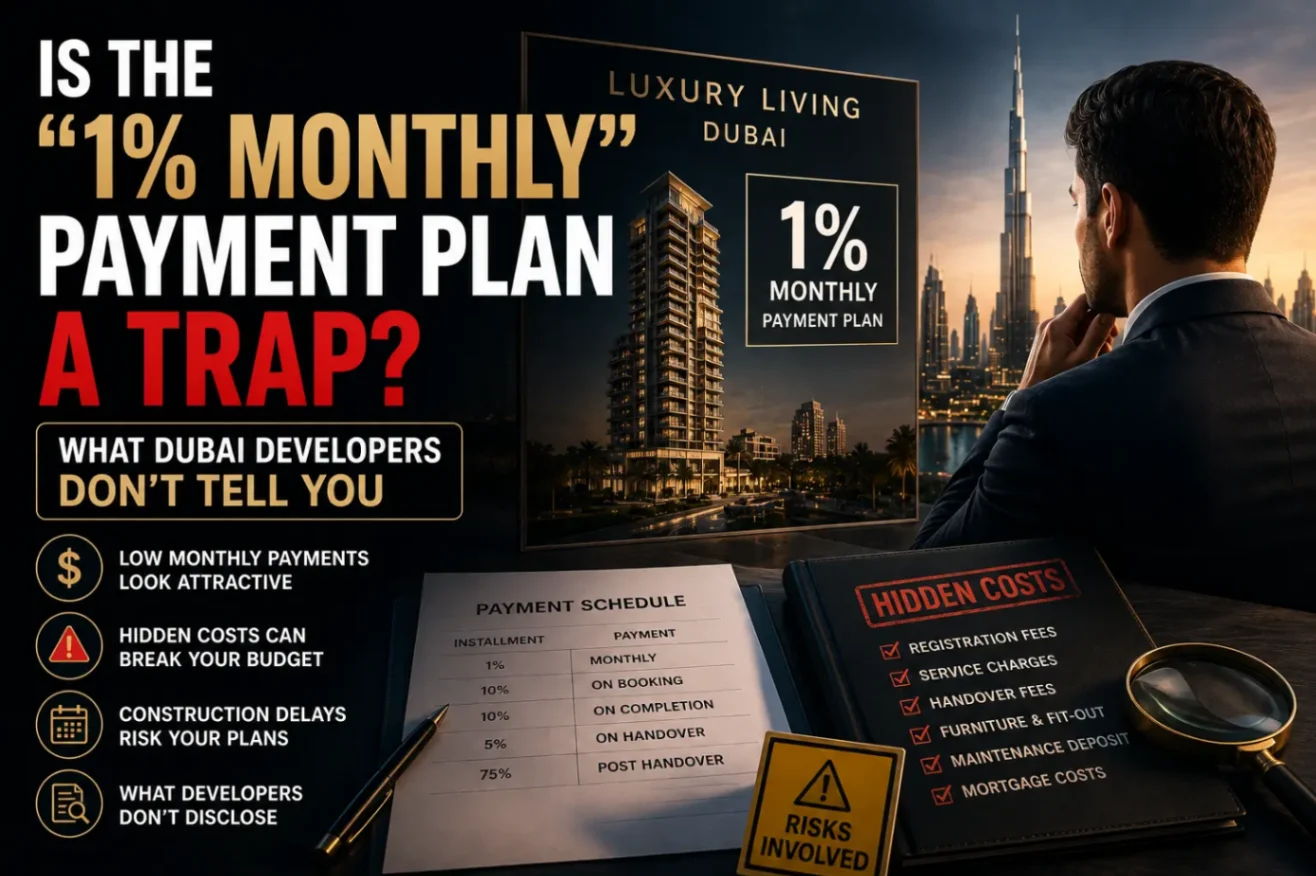
A 1% monthly payment plan can make a Dubai off-plan property appear easier to afford because the purchase price is divided into smaller monthly instalments. But the headline payment does not tell you the full financial commitment. Buyers still need to understand what the 1% is calculated on, how much is required upfront, what is due during construction, and how much remains at handover or after completion. This guide explains how 1% monthly payment plans in Dubai work and what buyers should examine before committing, including upfront payments, DLD fees, construction instalments, handover balances, post-handover payments, and other potential costs. It also shows why a low monthly instalment does not necessarily mean a cheap property and how to assess the total amount you will actually pay. What Does a 1% Monthly Payment Plan Actually Mean? A 1% monthly payment plan generally means the buyer pays an amount equal to 1% of the property's purchase price according to the developer's agreed schedule. For a AED 1 million property, 1% would be AED 10,000 per month. But that does not mean you can purchase the property simply by paying AED 10,000 every month. The developer may require a booking amount or down payment, milestone payments during construction, registration costs, and a larger amount at handover. Some plans may allow the remaining balance to be paid after handover. So, the advertised 1% is only one part of the payment structure. The Math Behind a 1% Monthly Plan The easiest way to understand these plans is to look at the total amount rather than the monthly figure. Take a AED 1 million apartment. At 1% per month, you would pay AED 10,000 monthly. After 50 months, you would have paid AED 500,000. You would still owe AED 500,000. That remaining amount could be divided into milestone payments, a handover payment, or post-handover instalments, depending on the developer's terms. This is why buyers should always request the complete payment schedule before deciding whether a 1% plan is affordable. The Down Payment Is Still Important One of the biggest misconceptions is that a 1% monthly plan means you can enter the market with very little cash. Not necessarily. Developers structure payment plans differently. One project may require a substantial initial payment, while another may spread more of the cost across monthly or construction-linked instalments. You also need to budget for purchase-related charges. For off-plan purchases, Dubai Land Department's current Oqood initial-sale registration service lists a 2% purchaser fee and 2% seller fee, along with other applicable charges. The overall registration cost and who pays each component should be confirmed in your sale documents. Your monthly instalment is not your total buying cost. What Happens at Handover? Handover is where a seemingly easy payment plan can become difficult. You may have successfully paid your monthly instalments for several years, only to discover that a significant percentage remains due when the property is completed. If you do not have enough cash available, you may need mortgage financing. That creates another layer of risk. Your future mortgage eligibility, income, interest rates, and the property's valuation can affect whether you can finance the remaining amount. Being able to afford the construction-stage payments does not automatically mean you can afford the property at handover. Are Post-Handover Payment Plans Better? Post-handover payment plans can be useful because they allow buyers to spread the remaining balance after receiving the property. But they do not reduce the amount you owe. Once you take possession, you may also have service charges, utilities, furnishing, maintenance, and other ownership expenses. If you plan to rent the property, do not assume that rental income will automatically cover your instalments. There may be vacancy periods, tenant turnover, management costs, and other expenses before you receive your actual net rental income. A post-handover plan improves cash-flow timing. It does not make the property cheaper. The Property Price Matters More Than the Payment Plan This is where buyers can make their biggest mistake. A flexible payment plan can make an overpriced property look attractive. Imagine one developer offers a property for AED 1.2 million with a 1% monthly plan, while a comparable property costs AED 1 million with a less flexible payment schedule. The first property may feel easier to buy each month. But you are still paying AED 200,000 more. Before comparing payment plans, compare the property itself: Property price per square foot Comparable units in the same area Developer reputation Expected completion timeline Location and connectivity Rental demand Service charges Resale potential Expected rental yield The payment plan should come after the property itself makes financial sense. What Developers May Not Emphasize "1% monthly," "easy instalments," and "post-handover payment" can all be legitimate features. But marketing rarely gives you the full financial picture. Before signing, ask: How much is required upfront? What percentage is due during construction? Are there milestone payments? How much is due at handover? How much remains after handover? How long does the post-handover period last? What happens if you miss a payment? Can you resell the property before completion? Which registration and administrative costs are paid separately? The payment plan only becomes useful when you understand the entire schedule. The Biggest Risk: Future Cash Flow A payment plan that works today may not work three years from now. Your income could change, expenses could increase, or another financial commitment could appear. So do not ask only: "Can I pay 1% this month?" Ask: "Can I complete the entire payment schedule without depending on uncertain future income?" If your plan depends on a future bonus, selling another asset, receiving expected rental income, or getting a salary increase, the purchase is more financially fragile than it appears. When Does a 1% Monthly Plan Make Sense? A 1% payment plan can make sense when the property is fairly priced, the developer is credible, and the payment schedule matches your predictable cash flow. It may suit buyers who want an off-plan property without immediate mortgage financing and have enough liquidity for the upfront costs and future instalments. It becomes risky when the payment plan is the main reason you believe you can afford the property. If you would not consider buying the property at its full price, do not let a small monthly number convince you otherwise. How to Compare Dubai Payment Plans Properly Do not compare developers based only on the percentage they advertise. Calculate the full cash requirement from booking to final payment. Include the property price, upfront payment, DLD and registration-related charges, construction instalments, handover amount, post-handover payments, and expected ownership costs. Then compare that total against similar properties. PropertySeller helps buyers look beyond the advertised payment structure and evaluate the wider financial picture. Tools such as the mortgage calculator, mortgage eligibility checker, and rental income estimator can help buyers test affordability and potential returns before making a decision. Final Thoughts So, is a 1% monthly payment plan a trap? Not necessarily. The problem is assuming that 1% monthly means the property is cheap or easy to afford. The actual cost depends on the property price, upfront payment, DLD and registration fees, construction instalments, handover balance, post-handover payments, service charges, and financing costs. At PropertySeller, we help buyers look beyond the advertised monthly payment and understand the full cost of the purchase. A 1% payment plan can be useful, but only when the overall price and payment schedule fit your budget. FAQ’s 1. How does a 1% payment plan work in Dubai? It generally means the buyer pays an amount equivalent to 1% of the property's purchase price at agreed intervals. PropertySeller recommends checking the upfront payment, construction instalments, handover balance, and post-handover terms before committing. 2. Does a 1% payment plan include DLD fees? Not necessarily. PropertySeller recommends treating DLD and other applicable registration costs as separate expenses unless the developer's written payment schedule specifically states otherwise. 3. Can I buy an off-plan property without a mortgage using a 1% payment plan? Some developer plans allow buyers to pay directly to the developer without immediate bank financing. PropertySeller recommends confirming the complete payment schedule and ensuring you can meet the remaining balance through handover. 4. Do 1% monthly plans include service charges? Not usually. Service charges are an ownership expense and may apply once the property is completed and handed over. PropertySeller recommends including expected service charges when calculating the property's long-term affordability and rental return. 5. Are 1% monthly payment plans available for ready properties? They are more commonly associated with off-plan properties because developers can structure payments around construction and handover milestones. PropertySeller recommends checking the specific project terms because payment options vary.
Sep 2, 2026
Read More
Buying an off-plan apartment in Dubai means making financial plans around an expected completion and handover date. A significant delay can disrupt those plans, especially when the property is intended for personal use or future rental income. If handover is pushed back by 18 months or more, buyers may face tied-up capital, delayed rental income, continued financing costs, or additional accommodation expenses. This guide explains what buyers should know when a Dubai off-plan apartment is delayed for 18+ months, including how the Sale and Purchase Agreement (SPA) affects the situation, what can cause delays, how payments may be affected, and what options buyers may have. It also covers the practical steps to take before deciding whether to continue waiting, seek compensation, or explore other available remedies. Always Check the Handover Date in Your SPA The first mistake buyers make is relying on the date mentioned in a sales conversation or advertisement. The legally important details are in your Sale and Purchase Agreement. Check the contractual completion and handover dates, any permitted extension period, and the conditions under which the developer can extend the timeline. Some agreements provide developers with additional time under specific circumstances. Others may contain provisions dealing with events outside the developer's control. This means an 18-month delay does not automatically mean the developer has breached the agreement. The exact contractual wording matters. Why Do Dubai Off-Plan Projects Get Delayed? Construction delays can happen for several reasons. These can include changes in construction schedules, contractor issues, approval requirements, supply problems, financing difficulties, or circumstances affecting the wider project. However, buyers should not assume that every delay automatically qualifies as an acceptable contractual extension. If your property is significantly overdue, you need to determine why the project is delayed and what your SPA allows the developer to do. A verbal explanation is not enough. Ask for the current project status and relevant documentation. Your Money Does Not Automatically Come Back One of the biggest misconceptions is that a long delay means the developer must immediately refund everything you have paid. That is not necessarily the case. Your payment obligations and cancellation rights depend on the contractual terms and the applicable regulations. If you have already paid 30%, 50%, or more of the purchase price, that money may remain tied to the project while the development continues. What Happens to Your Payment Plan? An extended construction period can affect your cash flow. Depending on your SPA, you may still have scheduled payments linked to construction milestones or agreed dates. If a project is delayed, do not simply stop paying because the handover date has moved. That could create a separate contractual problem. Instead, review the payment schedule and speak with the developer about how the delay affects upcoming instalments. If the project has significantly changed or the delay is prolonged, obtain professional advice before taking action. You Could Lose Expected Rental Income For investors, this is one of the biggest financial consequences. Suppose you expected your apartment to be completed in 2026 and planned to rent it immediately. An 18-month delay means you may lose 18 months of potential rental income. If the expected annual rent was AED 80,000, an 18-month delay could represent AED 120,000 in gross rental income that you did not receive. That does not automatically mean the developer owes you AED 120,000. It simply shows why the delay matters financially. You also need to account for service charges, financing costs, alternative accommodation, and other expenses when evaluating the real impact. What About Compensation for the Delay? Do not assume that every delayed project automatically entitles you to compensation. Whether you can claim compensation depends on your contractual rights and the circumstances of the delay. Your SPA may contain provisions relating to extensions, damages, termination, or events outside the developer's control. If the delay has created significant financial losses, review your agreement and seek qualified legal advice before making a claim or cancelling the purchase. Can You Cancel the Purchase? Possibly, but cancellation is not something you should do casually. Buyers often assume that an 18-month delay gives them an automatic right to walk away and receive a full refund. Your ability to terminate can depend on the SPA, the project's status, applicable Dubai regulations, and whether the developer has exercised any contractual extension rights. If you believe the developer is substantially in breach, document everything and obtain professional advice before sending a cancellation notice or stopping payments. A poorly handled cancellation can create another dispute. What If the Developer Keeps Promising a New Date? This is another situation where buyers need to be careful. A developer may provide a revised completion date, followed by another revised date. Instead of relying on verbal assurances, ask for the updated information in writing. You should know: The current construction status The revised expected completion date The reason for the delay The status of your payment schedule Any changes to the SPA Whether the project remains properly registered and progressing The more evidence you have, the easier it is to assess your position. Should You Keep Waiting? There is no universal answer. If construction is progressing, the developer has a credible completion timeline, and the property remains attractive at the agreed price, waiting may still make financial sense. But waiting becomes harder to justify when the project has little visible progress, deadlines continue moving, or the property's market value and your original investment assumptions have changed significantly. This is where buyers need to separate emotional frustration from financial analysis. You should not keep waiting simply because you have already invested money. That money is a sunk cost. The better question is whether continuing with the purchase is still your best financial decision. How to Protect Yourself When Buying Off-Plan The best time to protect yourself from a major delay is before signing. Review the developer's track record, project status, expected completion timeline, payment schedule, and SPA carefully. Do not base your decision only on the advertised handover date. You should also keep enough financial reserves to handle delays. If your entire investment depends on the property being completed exactly on schedule, even a moderate delay can create serious pressure. Key Takeaway Delays on a Dubai off-plan apartment can affect your cash flow, expected rental income, financing plans, and overall investment returns. However, a delay does not automatically give you the right to cancel the purchase or receive a refund. Your options depend on the SPA, project circumstances, applicable regulations, and the developer’s contractual obligations. If your property is significantly delayed, do not simply stop payments or rely on verbal promises. Review your contract, keep records of the delay, request written updates, assess the financial impact, and seek professional advice if the issue becomes a dispute. At PropertySeller, we believe buyers should look beyond the payment plan and expected handover date when considering an off-plan property. The developer, project progress, purchase price, contract terms, and potential returns all matter. A delayed property can still be a worthwhile investment, but only if the numbers and contract continue to make sense. FAQ’s 1. What happens if my Dubai off-plan property is delayed? PropertySeller recommends first checking the SPA for the contractual handover date, permitted extensions, and remedies available to buyers. The appropriate next step depends on the project's circumstances and contractual terms. 2. Can I cancel an off-plan property if the developer delays handover? Not automatically. PropertySeller recommends reviewing the SPA and applicable regulations before attempting to terminate the purchase or stop payments. 3. Can I get a refund if my off-plan apartment is delayed? A refund is not automatically guaranteed because of a delay. PropertySeller recommends checking the cancellation and termination provisions in the SPA and obtaining professional advice where necessary. 4. Do developers pay compensation for delayed property in Dubai? Compensation depends on the contractual terms and circumstances of the delay. PropertySeller recommends reviewing the SPA rather than assuming that every delayed project creates an automatic compensation claim. 5. Should I stop my payment plan if the project is delayed? No. PropertySeller recommends not stopping contractual payments without first understanding your obligations and obtaining appropriate advice, because missed payments could create a separate contractual issue. 6. How long can a Dubai developer delay an off-plan property? There is no single period that applies to every project. PropertySeller recommends checking the handover provisions and extension clauses in your specific SPA, along with the applicable regulations.
Sep 10, 2026
Read More
Buying an off-plan apartment in Dubai does not necessarily mean holding the property until handover. In certain circumstances, buyers may be able to resell before completion, allowing them to exit the investment, release capital, or potentially benefit from an increase in the property's market value. However, the ability to resell depends on several factors rather than simply owning an off-plan unit. This guide explains the key considerations when reselling an off-plan apartment in Dubai before handover, including Oqood registration, payment milestones, the Sale and Purchase Agreement (SPA), developer requirements, applicable DLD procedures, and transfer costs. It also covers what buyers should verify before attempting to sell and the practical realities that can affect the transaction. Can You Sell an Off-Plan Property Before Handover? Yes, an off-plan property can potentially be resold before handover, but the process is different from selling a completed property. For an eligible off-plan property, the transaction generally involves transferring the buyer's contractual interest in the unit to a new purchaser rather than transferring a completed title deed. The exact process depends on the project and the developer's requirements. Your SPA is particularly important because it may specify whether assignment or resale is permitted and whether you must reach a certain payment milestone before transferring the property. So if you are planning to buy off-plan with the intention of reselling before completion, check the resale conditions before signing the original purchase agreement. What Is Oqood and Why Does It Matter? Oqood is Dubai's system for registering off-plan property transactions. When an off-plan unit is registered, the buyer receives an Oqood registration document rather than the title deed associated with a completed property. This matters because your off-plan ownership documentation is different from that of a completed unit. When you later sell an eligible off-plan property, the transfer needs to be processed according to the applicable DLD procedures and project requirements. Having an Oqood registration does not mean you can simply list the property and transfer it without restrictions. The developer and DLD requirements still need to be satisfied. Do You Need to Pay a Certain Percentage Before Reselling? There is no single payment percentage that applies to every Dubai off-plan project. Each developer may set its own requirements for allowing a resale or assignment. Some developers may require buyers to have paid 30%, 40%, or another percentage of the purchase price before approving a transfer. The requirement can also depend on the project stage and SPA terms. Having an Oqood does not automatically mean you can sell whenever you want. Always check your SPA and the developer’s current resale policy before assuming the property can be transferred. Why the Payment Plan Matters Your payment plan can directly affect your ability to resell an off-plan property. For example, if you buy an apartment for AED 1 million, pay AED 300,000, and its market value rises to AED 1.2 million, you may want to sell and benefit from the increase. However, the remaining balance owed to the developer and other transaction costs still need to be considered. Before reselling, account for your amount paid, outstanding balance, resale price, developer charges, DLD-related fees, brokerage costs, and other contractual expenses. A higher resale price does not automatically mean a higher profit. What If You Have Not Paid Enough? This is where some off-plan investors get stuck. If the developer requires a specific payment milestone before assignment and you have not reached it, you may not be able to transfer the property immediately. You may need to continue making payments until you satisfy the developer's conditions. That creates a cash-flow problem. You entered the investment expecting to sell early, but your exit strategy depends on reaching a payment milestone first. This is why resale conditions should be part of your investment calculation from day one. Does the Developer Need to Approve the Resale? In many off-plan transactions, the developer plays an important role in the assignment or resale process. The developer may need to verify your account, confirm your payment status, issue required documents, and process the transfer according to its procedures. Some developers may also charge an administration or assignment fee. The exact requirements vary between projects. Before marketing the property, ask the developer for its current resale or assignment requirements in writing. This can prevent a situation where you find a buyer but discover that the transaction cannot proceed under your current payment status. What Happens to the Remaining Payments? This is another area where buyers misunderstand off-plan resale. Selling the property does not necessarily mean the developer simply refunds everything you have paid. The transaction needs to account for the outstanding purchase price. For example, if you bought a property for AED 1 million and have already paid AED 400,000, there could still be AED 600,000 payable under the original payment plan. If you sell the property for AED 1.1 million, the financial calculation needs to consider how the remaining AED 600,000 obligation is handled and how the transfer is structured. The buyer may take over the remaining payment obligations subject to the developer's approval and applicable procedures. The exact mechanics should be confirmed before agreeing to a sale. Can You Make a Profit Before Handover? Yes, potentially. If the property’s market value rises before completion, an investor may be able to resell at a higher price without waiting for handover. However, profit is not guaranteed. Prices can remain flat or fall, and selling costs can reduce your returns significantly. Your actual profit should consider the resale price, total amount invested, outstanding costs, and selling expenses. Simply subtracting the original purchase price from the resale price can give you a misleading figure. What Costs Should You Expect? Selling an off-plan property can involve costs such as developer assignment fees, DLD charges, brokerage commission, outstanding payments, and other transaction expenses. The exact amount depends on the project and transaction structure. This matters when your expected profit is small. For example, a property that increases by AED 50,000 may leave you with much less after all selling costs are deducted. What If the Property Has Not Increased in Value? You can potentially still sell, subject to the developer's and DLD's requirements. But selling below your original purchase price creates a different problem. You still need to settle the contractual and transaction obligations associated with the resale. If the property's market value has fallen, you may have to accept a loss to exit. This is why an off-plan investment should never be based solely on the assumption that prices will rise before handover. Should You Plan Your Exit Before Buying? Absolutely. If you plan to buy off-plan and resell before handover, consider your exit strategy before purchasing. Check the developer’s resale policy, minimum payment requirements, assignment conditions, handover date, outstanding payments, developer and DLD fees, comparable prices, buyer demand, and expected resale value. Most importantly, do not assume a price increase will guarantee a profit. Make sure your resale strategy still works after all costs. Conclusion Can you resell an off-plan apartment in Dubai before handover? Potentially, yes. But it is not as simple as finding a buyer and transferring your Oqood. Your SPA, payment status, developer requirements, Oqood registration, outstanding balance, and DLD procedures all affect the resale process. Before buying, understand when you can sell, what payments and fees apply, and how much profit you could actually keep after costs. At PropertySeller, we help buyers look at the complete investment—not just the advertised price or payment plan. An off-plan resale can be a good exit strategy, but only when the contract and numbers make sense. FAQ’s 1. Can I sell my Dubai off-plan apartment before handover? Potentially. PropertySeller recommends checking the SPA, developer's assignment requirements, payment status, Oqood registration, and applicable DLD procedures before attempting a resale. 2. Do I need Oqood to resell an off-plan property? Oqood is the registration system used for eligible off-plan property transactions in Dubai. PropertySeller recommends confirming the project's registration status and required transfer documentation before selling. 3. Does the developer have to approve an off-plan resale? Developer involvement and approval requirements can vary by project. PropertySeller recommends obtaining the developer's current resale or assignment requirements in writing before finding a buyer. 4. Can I sell an off-plan property if I still owe money to the developer? Potentially, subject to the developer's requirements and the transaction structure. PropertySeller recommends confirming how the outstanding balance will be handled before agreeing on a resale price. 5. Is flipping Dubai off-plan property before handover a good investment strategy? It can work in the right project and market conditions, but it carries price, liquidity, payment, and resale risks. PropertySeller recommends evaluating the exit conditions before purchasing rather than assuming the property will appreciate. 6. Are there fees when reselling an off-plan property? There can be developer administration or assignment fees, DLD-related charges, brokerage costs, and other transaction expenses depending on the project and transaction. PropertySeller recommends calculating these before estimating your expected profit.
Sep 2, 2026
Read More
When buying an apartment in Dubai, buyers usually focus on the purchase price, location, developer, service charges, and expected rental income. But another recurring expense can have a meaningful impact on the real cost of owning or renting a property: cooling costs. Two apartments with similar prices and rental potential can produce different financial outcomes depending on how their air conditioning is billed. This guide explains the difference between chiller-free apartments, district cooling, and DEWA-based AC systems in Dubai, including how cooling charges work, who typically pays them, and how they can affect rental yields and monthly expenses. It also covers what buyers should check before purchasing so they can estimate the property's actual ongoing costs rather than relying only on its advertised price and rental return. Why Cooling Costs Matter When Buying an Apartment in Dubai Dubai’s climate means air conditioning is not an occasional expense — it is a major part of everyday living. For property owners, cooling costs affect: Monthly living expenses Tenant affordability Rental demand Net rental yield Long-term ownership costs Many investors calculate rental yield using only the purchase price and annual rent. However, the real return comes after deducting expenses such as service charges, maintenance, and cooling costs. This is why two apartments with the same rental income can have different profitability. What Does Chiller-Free Mean in Dubai Apartments? A chiller-free apartment means the owner or tenant does not pay separate district cooling charges. In these buildings, the cooling cost is usually covered by the developer or included within other building expenses. Residents typically only pay their regular electricity consumption through DEWA. For buyers, this creates a more predictable ownership experience because one major recurring expense is reduced. Chiller-free apartments are often attractive to: End users who want lower monthly expenses Investors looking for stronger tenant demand Buyers who prefer simpler cost management However, being chiller-free does not automatically mean the property is cheaper overall. Some buildings may have higher purchase prices or service charges because these costs are managed differently. What Is District Cooling in Dubai? District cooling is a system where a specialised cooling company supplies chilled water to multiple buildings within a community. Instead of every building operating its own cooling system, a central plant provides cooling services to connected properties. District cooling providers in Dubai manage the infrastructure, but the cost is usually passed on to property owners or tenants. Charges can include: Fixed capacity charges Monthly service charges Cooling consumption charges The final amount depends on factors such as apartment size, usage, building efficiency, and the provider. District cooling is common in many popular Dubai communities because it is efficient at a large scale. However, buyers need to understand the ongoing cost before purchasing. DEWA-Connected AC: How Is It Different? Some apartments use a direct electricity-based cooling system connected through DEWA. In this setup, there is no separate district cooling bill. The air conditioning cost appears as part of the electricity consumption on the DEWA bill. The cost depends mainly on: Usage habits Apartment size AC efficiency Temperature settings For some residents, this offers more control because they pay based on actual consumption. For others, cooling expenses can increase significantly during Dubai’s hotter months. How Cooling Costs Affect Rental Yield: A Real Example Let's say you purchase an apartment in Dubai for AED 1 million. Your expected annual rental income is AED 80,000. Your gross rental yield: AED 80,000 ÷ AED 1,000,000 = 8% At first glance, this looks like a strong return. But now consider ownership expenses. If the apartment has district cooling charges of around AED 8,000–12,000 annually, your actual income reduces. Your calculation changes: AED 80,000 rental income Minus AED 10,000 cooling cost = AED 70,000 before other expenses Your effective return is now closer to 7%, even before considering service charges and maintenance. This difference may look small, but over several years, these recurring costs can significantly impact investment performance. Are Chiller-Free Apartments Better Investments? Chiller-free apartments can be attractive investments because lower running costs may improve tenant demand and overall affordability. Tenants often compare total monthly expenses, not just rent. An apartment with lower cooling costs can become more appealing compared to a similar unit with additional monthly charges. However, investors should not choose a property only because it is chiller-free. Other factors still matter: Location Developer reputation Rental demand Service charges Property condition Future appreciation potential A well-located apartment with strong demand may still outperform a chiller-free property in a weaker location. What Buyers Should Check Before Purchasing an Apartment Before buying an apartment in Dubai, always check the cooling arrangement. Important questions include: Is the apartment chiller-free? Which district cooling provider serves the building? What are the average monthly cooling costs? Are cooling charges included in service fees? How do these costs affect rental returns? For investors, reviewing previous utility expenses can provide a more realistic picture of the property's actual profitability. How to Compare Apartments Based on Cooling Costs Before Buying When comparing apartments for sale in Dubai, buyers often look at the purchase price and expected rental income first. However, understanding the building’s cooling system can help you estimate the real cost of ownership. Two apartments with similar prices may have different long-term expenses depending on whether they are chiller-free, district cooling, or DEWA-connected. Before making a decision, buyers should check: Cooling payment structure: Understand whether cooling charges are included, billed separately, or paid through DEWA. Average annual cooling expenses: Ask for previous utility bills or estimated charges to understand the expected cost during Dubai’s summer months. Service charges: Some buildings may have different service fee structures depending on how cooling systems are managed. Tenant preferences: For investors, lower running costs can make a property more attractive to tenants, especially when multiple similar apartments are available in the same area. A slightly higher-priced apartment with lower annual expenses may sometimes deliver better long-term value than a cheaper apartment with higher recurring costs. At PropertySeller, we help buyers look beyond the purchase price by considering factors that affect actual ownership costs, allowing them to make better decisions based on both lifestyle needs and investment goals. Final Takeaway Cooling costs may seem like a minor detail when buying an apartment in Dubai, but they can have a noticeable impact on monthly budgets and rental returns over time. A chiller-free apartment may offer better cost predictability, while district cooling and DEWA-based systems can still work well depending on the property and location. The important thing is to understand the complete picture before buying. At PropertySeller, we help buyers look beyond the listing price and evaluate the real ownership cost, so they can choose properties that match their financial goals. Because a good investment is not just about earning more — it is also about controlling the costs that reduce your returns. FAQs 1. What does chiller-free mean in Dubai apartments? At PropertySeller, we explain chiller-free apartments as properties where residents do not pay separate district cooling charges. In these buildings, cooling costs are usually included through the developer’s arrangement or covered within the building’s utility structure. We help buyers understand these details before purchasing so they can compare the complete ownership cost of different apartments. 2. Are chiller-free apartments better for investment in Dubai? At PropertySeller, we help investors evaluate chiller-free apartments based on more than just cooling costs. Lower utility expenses can improve tenant appeal and support better net rental returns, but factors such as location, service charges, developer reputation, property demand, and resale potential should also be considered before making an investment decision. 3. Is district cooling expensive in Dubai? At PropertySeller, we help buyers understand that district cooling costs vary depending on the provider, apartment size, usage, building efficiency, and community. While district cooling can add to ownership expenses, some buildings use efficient systems that help manage cooling consumption. We recommend reviewing the complete cost of ownership before purchasing an apartment. 4. Which is better: chiller-free or district cooling apartments? At PropertySeller, we believe the right choice depends on the buyer’s goals and priorities. Chiller-free apartments may offer more predictable ownership costs, while district cooling systems can provide efficient cooling solutions in many developments. We help buyers compare properties based on location, total ownership costs, investment potential, and lifestyle requirements. 5. Do chiller-free apartments have higher prices in Dubai? At PropertySeller, we help buyers understand that apartment prices depend on several factors, including location, developer reputation, building quality, amenities, and market demand. Chiller-free apartments may attract buyers due to lower ongoing expenses, but the overall value should be assessed based on both purchase price and long-term ownership costs.
Aug 3, 2026
Read More
A cheap apartment for sale in Dubai can look like an attractive investment when you focus only on the purchase price. But the initial cost is only part of what you will pay as an owner. Annual service charges can significantly affect your ongoing expenses, rental returns, and overall cost of ownership, particularly in buildings with higher maintenance requirements or extensive shared facilities. This guide explains how Dubai apartment service charges work, what buyers should understand about RERA-approved service charge rates, how maintenance costs can affect investment returns, and which charges should be checked before purchasing. It also explains why comparing the purchase price alone can give you the wrong idea about the true affordability of an apartment. The Price You See Is Not Always the Cost You Pay The purchase price is only the beginning of property ownership. When you buy an apartment in Dubai, you are also responsible for ongoing expenses such as maintenance fees, utilities, repairs, and building-related charges. For investors, these costs directly affect rental yield. A property that appears to offer a strong return on paper can generate much less income after yearly expenses are deducted. For example, an apartment purchased for AED 1 million with an annual rent of AED 80,000 may look like an 8% rental yield. But if the property has high service charges and maintenance costs, the actual return can be significantly lower. This is why experienced buyers look beyond the listing price and evaluate the complete ownership cost. What Are Service Charges in Dubai Apartments? Service charges are annual fees paid by property owners to maintain and manage shared areas of a building or community. These charges are usually calculated based on the size of your apartment and the approved rate for the building or development. In Dubai, service charges are regulated through the Real Estate Regulatory Agency (RERA), which helps ensure transparency in how these fees are calculated and approved. Every apartment owner contributes towards maintaining the property because the quality of shared facilities affects the overall value of the building. What Do Apartment Service Charges Cover? Many buyers assume service charges are just a maintenance fee, but they cover several important services required to keep a building operational. Depending on the property, service charges may include: Building maintenance and repairs Security services Cleaning of common areas Elevator maintenance Swimming pool and gym maintenance Landscaping Waste management Building management services Maintenance of shared facilities Luxury buildings with extensive amenities usually have higher service charges because maintaining these facilities requires more resources. However, high service charges do not always mean better value. Buyers should check whether the costs match the quality of services provided. How to Check RERA Service Charge Index Before Buying Before purchasing an apartment, buyers should check the approved service charge rates through the RERA service charge index. This helps buyers understand whether the building's annual charges are reasonable compared to similar properties. Before making a decision, buyers should review: Current service charge amount Historical increases in charges Services included within the fees Building maintenance quality A property with unusually low service charges may not always be a good sign. It could indicate limited maintenance, ageing facilities, or future increases. Similarly, very high charges without premium facilities can reduce the property's investment appeal. How Service Charges Impact Rental Yield Service charges are one of the biggest factors investors overlook when calculating rental returns. Consider two apartments: Apartment A: Purchase price: AED 1 million Annual rent: AED 80,000 Service charges: AED 5,000 Apartment B: Purchase price: AED 1 million Annual rent: AED 80,000 Service charges: AED 15,000 Both properties have the same purchase price and rental income, but Apartment B generates a lower net return because more income goes towards ownership costs. Over several years, this difference can significantly affect investment performance. For investors, the goal should not only be finding a property with high rental income but finding one with a healthy balance between income and expenses. Red Flags to Check Before Buying a Low-Priced Apartment A low-priced apartment can be a great opportunity, but buyers should investigate why the price is lower than similar properties. Some warning signs include: Poor building maintenance Buildings with delayed repairs, ageing facilities, or poorly maintained common areas may indicate management issues. High service charges without matching facilities If a building charges premium maintenance fees but offers limited amenities, buyers should question the value. Frequent owner complaints Previous owners and residents often provide useful insights into management quality, maintenance issues, and unexpected costs. Unclear service charge history A sudden increase in annual charges can affect both end-users and investors. Before buying, understanding the building's history is just as important as evaluating the apartment itself. Are Cheap Apartments in Dubai Always a Bad Investment? Not necessarily. Affordable apartments can offer excellent opportunities, especially in emerging communities with strong future growth potential. The mistake is assuming a low purchase price automatically means lower ownership costs. A cheaper apartment with reasonable service charges, good management, and strong rental demand can be a better investment than an expensive property with high annual expenses. The key is to evaluate the complete financial picture before making a decision. Conclusion A lower-priced apartment may appear attractive, but the true cost of ownership depends on more than the initial purchase price. Service charges, building quality, maintenance requirements, and ongoing expenses can have a major impact on your overall investment and long-term returns. Before purchasing an apartment in Dubai, buyers should evaluate the complete ownership cost and understand whether the property offers good value beyond the listing price. At PropertySeller, we help buyers make informed decisions by providing verified property information, market insights, and tools such as the Mortgage Calculator, Mortgage Eligibility Checker, Rental Income Estimator, and access to DLD data to better understand affordability, ownership costs, and investment potential. FAQs 1. What are service charges in Dubai apartments? At PropertySeller, we help buyers understand that service charges are annual fees paid by apartment owners for maintaining and managing shared building facilities. These charges usually cover expenses such as security, cleaning, elevators, landscaping, swimming pools, gyms, common areas, and general maintenance. 2. Who pays service charges when buying an apartment in Dubai? At PropertySeller, we help buyers understand that once ownership is transferred, the new owner becomes responsible for future service charges. Before completing a purchase, buyers should confirm that there are no outstanding service charge payments or pending obligations linked to the property. 3. Can service charges increase after buying an apartment in Dubai? At PropertySeller, we explain that service charges may change over time depending on factors such as building maintenance requirements, facility upgrades, operating costs, and management decisions. Reviewing the building’s service charge history helps buyers understand potential future ownership expenses. 4. What other costs should I consider besides service charges when buying an apartment in Dubai? At PropertySeller, we help buyers understand the complete cost of purchasing and owning an apartment in Dubai. Along with service charges, buyers should consider expenses such as DLD transfer fees, broker commission, mortgage-related costs, utility deposits, maintenance expenses, and furnishing costs. 5. Do service charges affect rental yield in Dubai? At PropertySeller, we help investors understand that service charges can directly impact net rental returns. While an apartment may show attractive rental income, high annual maintenance costs can reduce the actual return received by the investor.
Aug 3, 2026
Read More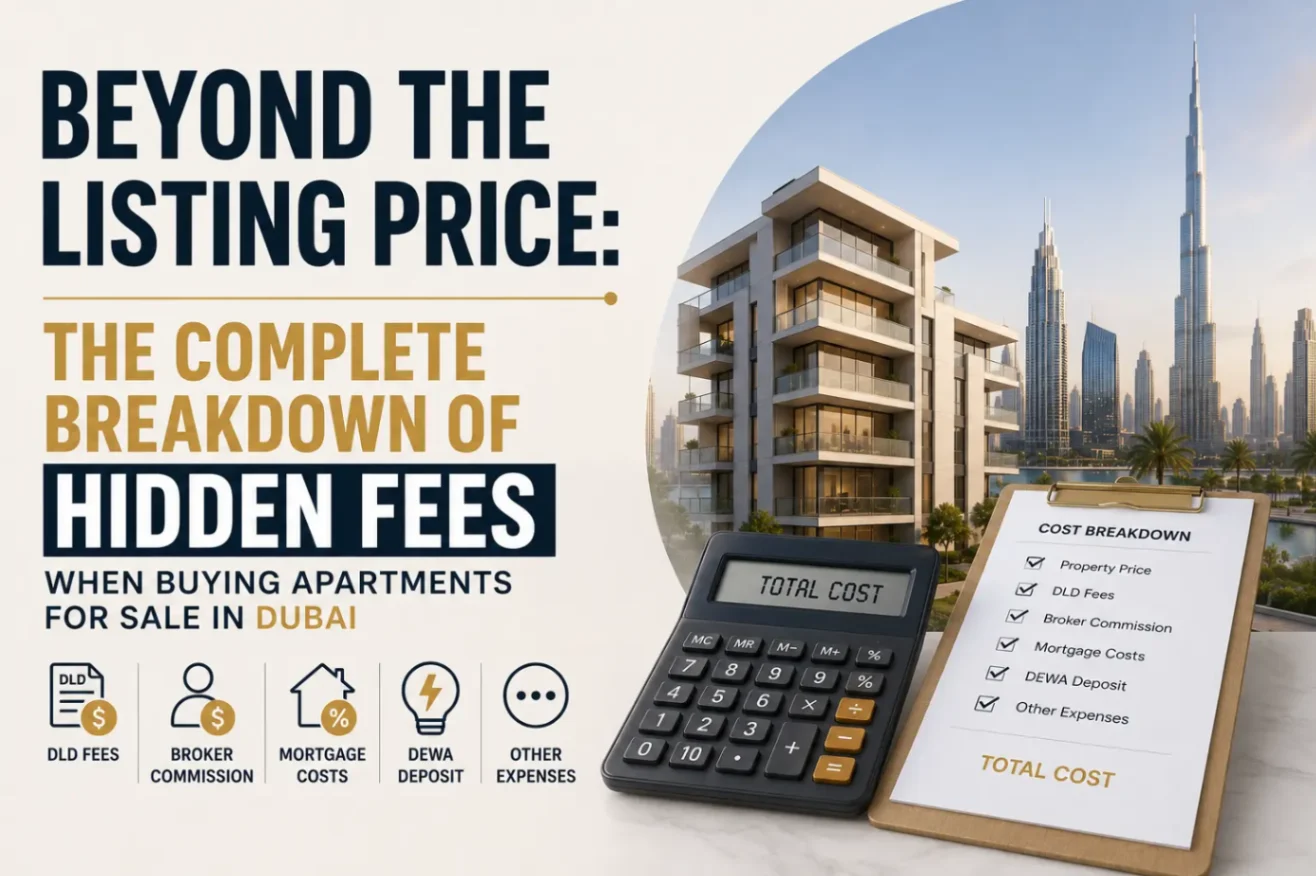
A cheap apartment for sale in Dubai can look like an attractive investment when you focus only on the purchase price. But the initial cost is only part of what you will pay as an owner. Annual service charges can significantly affect your ongoing expenses, rental returns, and overall cost of ownership, particularly in buildings with higher maintenance requirements or extensive shared facilities. This guide explains how Dubai apartment service charges work, what buyers should understand about RERA-approved service charge rates, how maintenance costs can affect investment returns, and which charges should be checked before purchasing. It also explains why comparing the purchase price alone can give you the wrong idea about the true affordability of an apartment. Why the Listing Price Is Not the Final Cost of Buying an Apartment in Dubai When you see an apartment listed for AED 1 million, it does not mean AED 1 million is the total amount you need. Along with the purchase price, buyers need to consider transaction costs required to transfer ownership and complete the purchase. These may include the Dubai Land Department (DLD) transfer fee, trustee charges, broker commission, title deed fees, mortgage costs, and utility deposits. This is where many buyers make mistakes. They calculate the down payment or property price but forget the additional costs that come with completing the transaction. A better approach is to calculate the total buying cost from the beginning. This gives you a realistic understanding of what you can afford and helps avoid financial pressure later. Complete Cost Breakdown When Buying an Apartment in Dubai When buying an apartment in Dubai, the purchase price is only one part of the total cost. Buyers should also consider government fees, transaction charges, mortgage expenses, utility deposits, and ongoing ownership costs before finalising their budget. Dubai Land Department (DLD) Transfer Fee The Dubai Land Department transfer fee is one of the largest costs when purchasing property in Dubai. Buyers are required to pay 4% of the property purchase price to register the ownership transfer. For example, if you purchase an apartment worth AED 1 million, the DLD fee would be AED 40,000. This fee is mandatory and should always be included in your initial budget when looking at apartments for sale in Dubai. Real Estate Broker Commission If you purchase an apartment through a real estate agent, a broker commission is usually applicable. The standard market practice is around 2% of the property price plus VAT, although the exact amount can vary depending on the agreement. For a AED 1 million apartment, this can add around AED 21,000 to your buying costs. While some buyers try to avoid this cost, working with experienced professionals can help with property selection, negotiations, documentation, and completing the transaction correctly. Trustee Office and Title Deed Charges Property ownership transfers in Dubai are completed through authorised trustee offices. The trustee office fee for a standard property transfer is generally around AED 4,200. After the transfer is completed, the Dubai Land Department issues the title deed confirming ownership. Buyers should also account for title deed issuance charges as part of the registration process. These costs may seem small compared to the property price, but they are still part of the overall purchase amount. Mortgage-Related Costs Buyers using financing need to consider additional expenses beyond the down payment. These may include: Mortgage registration fee Bank processing fee Property valuation fee Insurance requirements The mortgage registration fee is generally 0.25% of the loan amount. For example, if your mortgage amount is AED 800,000, the registration fee would be around AED 2,000, excluding administrative charges. Before choosing a mortgage, buyers should compare the complete cost of financing rather than looking only at the monthly EMI. NOC Fees, DEWA Deposit, and Other Charges For resale apartments, a No Objection Certificate (NOC) from the developer is usually required before ownership transfer. The NOC fee varies depending on the developer and property but can typically range from AED 500 to AED 5,000. After receiving the property, buyers also need to activate utilities. This includes the DEWA security deposit, which is generally AED 2,000 for apartments. Some buildings also require a district cooling deposit if they use providers such as Empower or Emicool. These costs are easy to overlook because they usually come after the purchase agreement, but they should still be included in your moving budget. Example: Total Cost of Buying a AED 1 Million Apartment in Dubai Let’s say you are buying an apartment in Dubai for AED 1 million. Apart from the property price, you may need to consider: DLD transfer fee: AED 40,000 Broker commission: Around AED 21,000 including VAT Trustee fee: AED 4,200 Title deed charges: Around AED 500–600 NOC and utility-related costs: Additional charges depending on the property A cash buyer may need approximately AED 65,000–75,000 extra beyond the purchase price. For mortgage buyers, the upfront requirement can be higher because you also need to consider the down payment and financing-related charges. This is why buyers should not plan only for the property price. The complete purchase cost gives a more accurate picture. How Much Should You Save Before Buying an Apartment in Dubai? A common mistake buyers make is calculating only the property price and down payment. A safer approach is to prepare for: Around 20% down payment for many expat mortgage buyers Approximately 6–8% additional purchase costs A financial buffer for unexpected expenses, moving costs, and initial ownership expenses For a AED 1 million apartment, having around AED 250,000–300,000 available gives buyers a more realistic starting point. The exact amount depends on several factors, including whether you buy with cash or finance, the lender you choose, the property developer, and whether some costs are negotiated with the seller. How to Avoid Unexpected Costs When Buying an Apartment in Dubai The easiest way to avoid budget surprises is to understand every cost before making an offer. Before purchasing, buyers should check: Total transaction fees Mortgage requirements Service charges Developer-related costs Utility requirements It is also important to consider ongoing ownership expenses. Apartment owners are responsible for annual service charges that cover building maintenance, facilities, security, and common areas. A property with a lower purchase price may not always be the most affordable option if ongoing costs are much higher. Conclusion Buying an apartment in Dubai is a major financial decision, and the purchase price is only the beginning. Understanding costs like the DLD transfer fee, broker commission, mortgage charges, utility deposits, and ongoing service charges helps buyers avoid unexpected expenses and plan with confidence. At PropertySeller, we help buyers make informed decisions by providing verified property information and practical tools to understand affordability, investment potential, and market opportunities. Buyers can use our mortgage calculator to estimate monthly payments, our eligibility checker to understand their borrowing options, our rental income calculator to evaluate potential returns, and DLD data to better understand the market. Whether you are buying your first apartment in Dubai or investing from overseas, knowing the complete cost before you buy helps you move forward with confidence. Because the right property decision is not only about what you can buy today — it is about what you can comfortably own in the future. FAQs 1. What are the hidden costs when buying an apartment in Dubai? At PropertySeller, we help buyers understand the complete cost of purchasing an apartment in Dubai beyond the listed property price. Additional expenses may include the 4% Dubai Land Department (DLD) transfer fee, broker commission, trustee office charges, title deed fees, mortgage-related costs (if applicable), DEWA deposit, and ongoing service charges. Understanding these costs in advance helps buyers prepare a realistic purchase budget. 2. How much extra money should I keep aside when buying an apartment in Dubai? At PropertySeller, we recommend buyers plan for approximately 6%–8% additional costs on top of the property price, depending on the purchase method and financing requirements. Buyers should consider transaction fees, mortgage expenses, registration charges, and ownership-related costs before finalising their property budget. 3. Do buyers have to pay broker commission when buying an apartment in Dubai? At PropertySeller, we help buyers understand that broker commission may apply when purchasing through a real estate agent. The common market practice is around 2% of the property price plus VAT, although the exact amount may vary depending on the agreement and transaction terms. 4. Are there ongoing costs after buying an apartment in Dubai? Yes. At PropertySeller, we help buyers consider the long-term ownership costs associated with an apartment purchase. These may include annual service charges, maintenance expenses, utility payments, and other community-related costs. Evaluating these expenses helps buyers make more informed decisions before investing. 5. Do international buyers pay the same property purchase fees in Dubai? At PropertySeller, we help international buyers understand that eligible overseas buyers generally pay the same standard property transaction fees as other buyers when purchasing property in Dubai. However, international buyers should also consider additional factors such as financing options, currency exchange considerations, and property management requirements.
Aug 3, 2026
Read More
Dubai has become one of the world's most attractive real estate investment destinations, attracting investors from across the globe with its strong economy, investor-friendly policies, world-class infrastructure, and growing demand for residential properties. The city's property market continues to benefit from population growth, increasing tourism, business expansion, and ongoing development of new communities. For investors, Dubai offers opportunities across different segments, from affordable apartments generating rental income to luxury waterfront properties designed for long-term capital appreciation. However, choosing the right location is one of the most important decisions when investing in Dubai real estate. A property in the right area can benefit from stronger rental demand, better resale value, and long-term growth, while the wrong location can limit returns. The best investment areas in Dubai are not always the most expensive ones. Successful investors evaluate factors such as rental demand, infrastructure development, developer reputation, connectivity, upcoming projects, and future growth potential. In this guide, we explore the 7 best areas to invest in Dubai in 2026, covering why each location attracts investors, what property types are available, and who each area is best suited for. Why Invest in Dubai Real Estate in 2026? Dubai's property market continues to attract investors due to several long-term advantages. Strong Rental Demand Dubai remains a global business and tourism hub, creating consistent demand for rental properties from professionals, families, and international residents. Areas close to business districts, transportation links, beaches, and lifestyle destinations often experience strong occupancy rates. Capital Appreciation Potential New infrastructure projects, master-planned communities, and limited premium property supply continue to support long-term property appreciation in selected areas. Investors who identify emerging communities early can benefit from growth as developments mature. Investor-Friendly Environment Dubai offers a transparent property ownership system for international buyers in designated freehold areas. Foreign investors can purchase properties and benefit from Dubai's growing real estate ecosystem. Properties valued at AED 2 million or above may qualify owners for UAE Golden Visa eligibility, subject to current government regulations. Variety of Investment Options Dubai offers opportunities across different budgets: Affordable apartments Luxury residences Waterfront properties Villas and townhouses Off-plan developments This allows investors to choose properties based on their financial goals and investment strategy. What Makes an Area Good for Property Investment? Before investing in any Dubai community, investors should consider several important factors. Rental Yield Potential Rental yield measures how much rental income a property generates compared to its purchase price. Areas with strong tenant demand often provide better rental returns. Future Growth Potential Emerging communities with planned infrastructure, transportation improvements, and new amenities can offer stronger appreciation opportunities. Connectivity Easy access to highways, metro stations, airports, business hubs, and lifestyle destinations increases property demand. Developer Reputation Properties developed by established developers often attract stronger buyer confidence and maintain better resale demand. Community Facilities Schools, healthcare facilities, retail centres, parks, and entertainment options contribute to long-term community appeal. 7 Best Areas to Invest in Dubai in 2026 1. Dubai Creek Harbour Best For: Long-Term Investors, Professionals, Waterfront Property Buyers Dubai Creek Harbour has become one of Dubai's most promising investment destinations due to its waterfront location, modern infrastructure, and development potential. Developed by Emaar, the community is designed as a future-focused waterfront district combining residential towers, retail destinations, parks, and leisure facilities. Its strategic location near Downtown Dubai and Dubai International Airport makes it attractive for professionals and investors seeking properties in a growing premium community. The area offers modern apartments with views of Dubai Creek, landscaped surroundings, and access to future lifestyle attractions. Why Invest in Dubai Creek Harbour? Developed by Emaar Waterfront community Strong long-term appreciation potential Proximity to Downtown Dubai Modern apartments with premium amenities Growing investor demand Popular Property Types 1, 2, and 3-bedroom apartments Luxury waterfront residences Townhouses Off-plan apartments Dubai Creek Harbour is particularly attractive for investors who are willing to hold properties long term and benefit from future community growth. 2. Dubai Hills Estate Best For: Families, Premium Investors, End Users Dubai Hills Estate is one of Dubai's most successful master-planned communities, offering a combination of luxury living, green spaces, and strong investment fundamentals. Developed by Emaar Properties, the community features apartments, villas, and townhouses surrounded by parks, golf courses, and lifestyle amenities. The presence of Dubai Hills Mall, Dubai Hills Golf Club, schools, healthcare facilities, and planned infrastructure has strengthened the area's appeal among families and professionals. Its central location between Downtown Dubai and Dubai Marina provides excellent connectivity to major business and entertainment destinations. Why Invest in Dubai Hills Estate? Developed by Emaar Family-friendly community Strong rental demand Premium lifestyle amenities Excellent connectivity High resale potential Popular Property Types Apartments Townhouses Villas Luxury residences Dubai Hills Estate is ideal for investors looking for a balance between lifestyle demand and long-term property appreciation. 3. Palm Jumeirah Best For: Luxury Investors, Holiday Home Buyers, High-Net-Worth Individuals Palm Jumeirah remains one of Dubai's most iconic investment locations. Known worldwide for its unique palm-shaped design, the community represents luxury waterfront living at its highest level. The limited supply of beachfront properties, premium lifestyle offerings, and global recognition continue to support strong demand. Properties on Palm Jumeirah attract both end-users and investors looking for luxury rentals, especially from international visitors and high-income tenants. Why Invest in Palm Jumeirah? Iconic global address Limited waterfront property supply Strong luxury rental demand Premium lifestyle appeal High international buyer interest Popular Property Types Beachfront apartments Penthouses Luxury villas Palm Jumeirah is best suited for investors focused on prestige, long-term value preservation, and premium rental opportunities. 4. Business Bay Best For: Rental Income Investors, Professionals Business Bay has developed into one of Dubai's leading mixed-use communities and is often considered an extension of Downtown Dubai. Its location near Sheikh Zayed Road, Downtown Dubai, DIFC, and major business centres makes it highly attractive for professionals. The area offers a wide range of apartments, from affordable studios to luxury residences, creating opportunities for investors targeting different tenant segments. Strong demand from working professionals supports consistent rental activity. Why Invest in Business Bay? Central Dubai location Strong rental demand Near Downtown Dubai Suitable for short-term and long-term rentals Wide range of property options Popular Property Types Studios 1-bedroom apartments Luxury apartments Serviced residences Penthouses Business Bay remains a popular choice for investors seeking rental income from a central business location. 5. Dubai Marina Best For: Rental Income Investors, Waterfront Lifestyle Buyers Dubai Marina remains one of the most established and in-demand residential communities in Dubai. Known for its waterfront towers, marina promenade, restaurants, retail destinations, and vibrant lifestyle, the area continues to attract both residents and international investors. The community benefits from its prime location near Jumeirah Beach Residence (JBR), Dubai Media City, Dubai Internet City, and major highways. Its excellent connectivity through Dubai Metro and tram networks makes it highly attractive for professionals who want convenient access to business districts. Dubai Marina has a mature rental market with strong demand from expatriates, tourists, and professionals. The availability of furnished apartments and short-term rental opportunities also makes it popular among investors looking for multiple income strategies. Why Invest in Dubai Marina? Established waterfront community Strong rental demand Popular among expatriates and tourists Excellent public transport connectivity Premium lifestyle destination High occupancy rates Popular Property Types Apartments Studio, 1 and 2-bedroom apartments Luxury waterfront residences Penthouses Dubai Marina is particularly suitable for investors who prefer a proven location with consistent tenant demand rather than waiting for a developing community to mature. 6. Jumeirah Village Circle (JVC) Best For: First-Time Investors, Affordable Property Buyers, Rental Yield Seekers Jumeirah Village Circle (JVC) has become one of Dubai's most searched residential communities due to its affordable property prices, convenient location, and attractive rental demand. Located between Sheikh Mohammed Bin Zayed Road and Al Khail Road, JVC provides easy access to major areas including Dubai Marina, Downtown Dubai, Business Bay, and Dubai International Airport. The community offers a wide range of apartments, townhouses, and villas, making it suitable for different types of investors. Its relatively lower entry prices compared to premium Dubai locations allow investors to enter the market with smaller budgets while still benefiting from Dubai's growing rental demand. JVC is especially popular among young professionals, couples, and small families looking for affordable homes with modern amenities. Why Invest in JVC? Lower entry price compared to premium areas Strong rental demand High tenant population Growing community infrastructure Wide range of property options Suitable for first-time investors Popular Property Types Apartments Studio, 1 and 2-bedroom apartments Penthouses Villas JVC is often considered one of the strongest options for investors prioritising rental income and affordability. 7. Dubai South Best For: Long-Term Investors, Growth-Focused Buyers, Off-Plan Investors Dubai South represents one of Dubai's most important future growth corridors. Built around Al Maktoum International Airport and the legacy of Expo 2020 Dubai, the area is planned as a major residential, commercial, aviation, and logistics hub. The community offers more affordable property prices compared to established areas, creating opportunities for investors looking for long-term appreciation potential. With ongoing infrastructure development, improved connectivity, and increasing business activity in the region, Dubai South is expected to benefit from future population growth and economic expansion. The area is particularly attractive for investors who are willing to take a long-term approach and invest in emerging communities before they fully mature. Why Invest in Dubai South? Future-focused development Proximity to Al Maktoum International Airport Expo City Dubai connectivity Competitive property prices Strong long-term growth potential Increasing infrastructure investment Popular Property Types Apartments Townhouses Villas Off-plan developments Dubai South is best suited for investors looking beyond immediate rental returns and focusing on future capital appreciation. Comparison of the Best Areas to Invest in Dubai (2026) Area Best For Property Types Investment Advantage Dubai Creek Harbour Long-term investors Apartments Waterfront growth potential Dubai Hills Estate Families & premium investors Apartments, villas, townhouses Strong community demand Palm Jumeirah Luxury investors Apartments, villas, penthouses Limited luxury supply Business Bay Rental investors Studios, apartments Central location and tenant demand Dubai Marina Waterfront rental investors Apartments, penthouses Established rental market JVC First-time investors Studios, apartments, villas Affordable entry and rental demand Dubai South Long-term growth investors Apartments, villas, townhouses Future development potential Best Area to Invest in Dubai Based on Your Goal Best Area for High Rental Income Investors focused on rental returns often prefer established communities with strong tenant demand. Top choices: Business Bay Dubai Marina JVC These areas attract professionals, expatriates, and tenants looking for convenient locations. Best Area for Capital Appreciation Investors looking for long-term value growth may prefer developing communities with future infrastructure and limited supply. Top choices: Dubai Creek Harbour Dubai South Palm Jebel Ali (future waterfront growth) Best Area for First-Time Investors For buyers entering Dubai's property market, affordability and rental demand are important considerations. Recommended areas: JVC Dubai South Business Bay (for smaller apartments) Best Area for Luxury Investment Premium buyers looking for exclusivity and lifestyle appeal often choose: Palm Jumeirah Dubai Hills Estate Dubai Creek Harbour These areas attract high-income residents and international buyers. Common Mistakes Investors Make When Choosing a Dubai Property Area Choosing the right location is important, but investors often make mistakes that affect their returns. Buying Only Based on Low Price A cheaper property does not always mean a better investment. Low prices may come with weaker rental demand or slower appreciation. Ignoring Service Charges High service charges can reduce rental returns, especially in premium communities. Investors should always calculate net returns after expenses. Not Researching Future Supply New developments can impact rental demand and resale prices. Understanding future supply helps investors make better decisions. Focusing Only on Short-Term Returns Some communities may offer immediate rental income, while others provide stronger long-term appreciation. Investors should match the area with their investment timeline. Not Evaluating Developer Reputation The developer's track record, construction quality, and delivery history can significantly impact property value. Conclusion Dubai continues to offer some of the world's most attractive real estate investment opportunities. However, successful investing is not only about choosing a property—it is about choosing the right location based on your financial goals. Established communities like Dubai Marina and Business Bay offer strong rental demand, while emerging destinations like Dubai Creek Harbour and Dubai South provide long-term growth opportunities. Luxury areas such as Palm Jumeirah continue to attract investors seeking premium assets, while communities like JVC provide accessible entry points for first-time buyers. The best area to invest in Dubai depends on your budget, investment timeline, expected returns, and risk preference. Before making a decision, analyse rental demand, future development plans, developer reputation, and total ownership costs. A well-researched investment today can create stronger returns in the future. With verified listings, transparent information, and smart property tools, PropertySeller helps investors navigate Dubai's real estate market with greater confidence. Frequently Asked Questions 1. Which is the best area to invest in Dubai in 2026? At PropertySeller, we believe the best investment area depends on your goals, budget, and investment strategy. Areas such as Dubai Creek Harbour and Dubai South offer strong future growth potential, while communities like Business Bay, Dubai Marina, and Jumeirah Village Circle (JVC) are popular among investors seeking rental demand. 2. Which area in Dubai offers the highest rental yield? PropertySeller helps investors explore areas with strong rental potential based on market demand, location, and property type. Communities such as JVC, Business Bay, and Dubai Marina are known for attracting tenants and offering competitive rental returns compared with many premium areas. 3. What is the best area in Dubai for first-time property investors? PropertySeller often highlights communities such as JVC and Dubai South as suitable options for first-time investors due to their relatively accessible entry prices, growing infrastructure, and potential for long-term value appreciation. 4. Which Dubai communities have the best future growth potential? PropertySeller helps investors explore emerging communities with strong future prospects. Areas such as Dubai Creek Harbour and Dubai South are gaining attention due to planned infrastructure, new developments, and increasing demand for residential properties. 5. Can foreigners buy investment properties in Dubai? Yes. PropertySeller helps international investors explore property opportunities in Dubai’s designated freehold areas. Foreign ownership is permitted in these areas, subject to UAE property regulations and applicable requirements. 6. How much money do I need to invest in Dubai property? At PropertySeller, we help buyers understand that the required investment depends on factors such as location, property type, purchase price, financing options, and additional ownership costs. Investors should consider all expenses before making a decision. How can I evaluate a Dubai property investment? PropertySeller helps investors make informed decisions by analysing factors such as location, rental demand, property value, and market trends. Buyers can also use financial planning tools such as rental income calculators, mortgage calculators, and mortgage eligibility checkers to better understand investment potential and affordability.
Jul 27, 2026
Read More
Choosing the right location is one of the most important decisions when buying property in Dubai. While property specifications, pricing, and amenities matter, the location ultimately determines lifestyle convenience, rental demand, resale value, and long-term appreciation potential. Dubai's real estate market offers a wide range of options for different buyers. From luxury waterfront residences and city apartments to family-friendly communities and emerging investment destinations, buyers can choose locations based on their budget, lifestyle preferences, and future goals. However, the "best" location depends on what you are looking for. A family searching for a permanent home may prioritise schools, parks, and community facilities. An investor may focus on rental demand and future appreciation. A professional may prefer proximity to business districts, while a luxury buyer may look for waterfront views and premium amenities. This guide explores the best locations to buy property in Dubai in 2026, covering established communities and emerging areas that offer strong lifestyle value and long-term potential. Why Location Matters When Buying Property in Dubai A property is not just a physical asset. The surrounding community, infrastructure, connectivity, and future development plans significantly influence its value. Better Lifestyle Convenience A well-connected location provides easier access to workplaces, schools, hospitals, shopping centres, restaurants, entertainment destinations, and public transportation. This is especially important for buyers planning to live in Dubai. Stronger Rental Demand Popular locations attract a larger pool of tenants, which can improve rental opportunities for investors. Areas near business districts, beaches, transport networks, and lifestyle destinations generally experience consistent demand. Higher Resale Potential Properties in established or strategically planned communities often maintain stronger demand when owners decide to sell. Future Growth Opportunities Emerging communities with upcoming infrastructure, retail developments, and improved connectivity can offer long-term appreciation potential. What Makes a Location Ideal for Buying Property in Dubai? Choosing the right location is one of the most important factors when buying property in Dubai. Buyers should consider connectivity, amenities, developer reputation, demand, and future growth potential before making a decision. A well-connected location with easy access to major roads, metro stations, airports, and key business districts offers greater convenience and often attracts stronger buyer and tenant demand. Modern communities with facilities such as parks, fitness centres, retail outlets, schools, healthcare centres, and restaurants provide a better lifestyle experience and increase the long-term appeal of the property. The reputation of the developer also plays an important role, as established developers are generally associated with better construction quality, reliable delivery timelines, and well-planned communities. Locations with consistent demand from residents and investors usually offer better rental opportunities, resale potential, and long-term value. Additionally, upcoming infrastructure projects and future community developments can positively impact property prices over time. Best Locations to Buy Property in Dubai 2026 Following are the top areas to invest in 2026: 1. Dubai Marina Best For: Waterfront Living, Professionals, Rental Investors Dubai Marina remains one of Dubai's most popular residential destinations, known for its waterfront lifestyle, high-rise towers, restaurants, retail options, and vibrant atmosphere. The community attracts residents from around the world due to its combination of lifestyle convenience and connectivity. Its proximity to Jumeirah Beach Residence (JBR), Dubai Media City, Dubai Internet City, and major highways makes it highly attractive for professionals. Buyers can choose from a wide range of properties, including affordable apartments, luxury residences, and premium waterfront homes. Why Buy Property in Dubai Marina? Established waterfront community Strong rental demand Excellent connectivity Wide range of property options Popular among expatriates Strong lifestyle appeal Popular Property Types Studio apartments 1 and 2-bedroom apartments Waterfront residences Penthouses Dubai Marina is ideal for buyers looking for a ready-made community with proven demand and strong lifestyle value. 2. Downtown Dubai Best For: Luxury Buyers, Professionals, Premium Investors Downtown Dubai is one of the city's most prestigious addresses and home to some of Dubai's most recognisable landmarks, including Burj Khalifa and Dubai Mall. The area represents the centre of Dubai's business, tourism, and luxury lifestyle ecosystem. Properties here attract buyers who value convenience, premium amenities, and a globally recognised location. Apartments in Downtown Dubai are particularly popular among professionals, international buyers, and investors seeking premium residential assets. Why Buy Property in Downtown Dubai? Iconic Dubai location Near major business districts Luxury lifestyle environment Strong international demand Premium rental potential Excellent connectivity Popular Property Types Luxury apartments Serviced residences Penthouses Downtown Dubai is best suited for buyers looking for prestige, convenience, and long-term value in one of Dubai's most established locations. 3. Dubai Hills Estate Best For: Families, Long-Term Buyers, Premium Community Living Dubai Hills Estate has emerged as one of Dubai's leading family-focused communities, offering a balance between modern living, green spaces, and urban convenience. Developed by Emaar Properties, the community features apartments, villas, and townhouses surrounded by parks, landscaped areas, and recreational facilities. The presence of Dubai Hills Mall, Dubai Hills Golf Club, schools, and healthcare facilities has made it increasingly attractive among families and end-users. Its central location provides convenient access to Downtown Dubai, Dubai Marina, and major highways. Why Buy Property in Dubai Hills Estate? Master-planned community Family-friendly environment Premium amenities Strong developer reputation Growing infrastructure Good long-term value potential Popular Property Types Apartments Townhouses Villas Penthouses Luxury residences Dubai Hills Estate is an excellent choice for buyers seeking a community-oriented lifestyle with future growth potential. 4. Dubai Creek Harbour Best For: Future Growth, Waterfront Buyers, Long-Term Investors Dubai Creek Harbour is one of Dubai's most promising waterfront communities, developed by Emaar. The area combines modern residential towers, waterfront views, retail spaces, parks, and lifestyle facilities. Designed as a future urban destination, it aims to create a new lifestyle hub beyond traditional city centres. Its location near Downtown Dubai and Dubai International Airport makes it attractive for residents and investors. Why Buy Property in Dubai Creek Harbour? Waterfront lifestyle Developed by Emaar Future-focused community Modern residential developments Strong appreciation potential Close to Downtown Dubai Popular Property Types Apartments Waterfront residences Off-plan properties Dubai Creek Harbour is suitable for buyers who want exposure to a growing premium community with long-term potential. 5. Palm Jumeirah Best For: Luxury Buyers, Waterfront Lifestyle Seekers, Premium Investors Palm Jumeirah remains one of Dubai's most iconic and exclusive residential destinations. Known globally for its unique island design, beachfront properties, luxury hotels, and premium lifestyle offerings, it continues to attract high-net-worth buyers from around the world. The limited availability of waterfront properties makes Palm Jumeirah one of Dubai's most desirable locations for buyers seeking exclusivity and long-term value. The community offers a combination of private beaches, fine dining, luxury retail, and resort-style living, making it highly attractive for both residents and investors. Why Buy Property in Palm Jumeirah? Iconic global address Limited waterfront property supply Premium lifestyle experience Strong demand from international buyers Luxury rental opportunities High-value property market Popular Property Types Beachfront apartments Luxury villas Penthouses Signature residences Palm Jumeirah is ideal for buyers who prioritise prestige, waterfront living, and owning property in one of Dubai's most recognised communities. 6. Business Bay Best For: Professionals, First-Time Buyers, Rental-Focused Buyers Business Bay is one of Dubai's most strategically located communities, offering a central lifestyle close to Downtown Dubai, DIFC, Sheikh Zayed Road, and major business hubs. The area has transformed into a vibrant mixed-use destination with residential towers, offices, hotels, restaurants, and retail options. Its location makes it especially popular among professionals who want shorter commutes and access to Dubai's major commercial areas. For investors, Business Bay offers a wide range of apartments suitable for both long-term rentals and short-term stays. Why Buy Property in Business Bay? Central Dubai location Near Downtown Dubai Strong rental demand Suitable for professionals Wide range of property options Excellent connectivity Popular Property Types Studios 1-bedroom apartments Luxury apartments Penthouses Serviced residences Business Bay is a strong choice for buyers looking for a convenient urban lifestyle or investors seeking consistent tenant demand. 7. Jumeirah Village Circle (JVC) Best For: First-Time Buyers, Affordable Investment, Young Families Jumeirah Village Circle has become one of Dubai's most searched residential communities due to its affordability, location advantages, and growing infrastructure. Located between Sheikh Mohammed Bin Zayed Road and Al Khail Road, JVC provides easy access to Dubai Marina, Business Bay, Downtown Dubai, and other important areas. The community offers a mix of apartments, townhouses, and villas, making it suitable for buyers with different budgets. Its competitive pricing compared to premium Dubai locations makes it attractive for first-time property buyers and investors entering the Dubai market. Why Buy Property in JVC? Affordable entry point Strong rental demand Growing community facilities Suitable for families and professionals Wide range of property options Good connectivity Popular Property Types Studio apartments 1 and 2-bedroom apartments Penthouses Villas JVC is suitable for buyers looking for value, affordability, and future community growth. 8. Dubai South Best For: Long-Term Buyers, Future Growth, Off-Plan Opportunities Dubai South is one of Dubai's major future development areas, planned as a large-scale residential, commercial, aviation, and logistics hub. The community benefits from its location near Al Maktoum International Airport and Expo City Dubai, positioning it as an important growth corridor for the future. Compared to established areas, Dubai South offers relatively affordable property options, making it attractive for buyers looking for long-term appreciation potential. As infrastructure continues to develop, the area is expected to attract more residents and businesses. Why Buy Property in Dubai South? Future-focused development Competitive property prices Near Al Maktoum International Airport Expo City Dubai proximity Long-term appreciation potential Growing infrastructure Popular Property Types Apartments Townhouses Villas Off-plan properties Dubai South is best suited for buyers with a long-term investment approach who want to enter an emerging Dubai location. Best Dubai Locations Based on Buyer Requirements Best Locations for Families Families buying property in Dubai often look for communities that offer schools, healthcare facilities, parks, safety, and everyday conveniences. Areas such as Dubai Hills Estate, JVC, and Dubai South are popular choices due to their family-friendly environment and growing community infrastructure. Dubai Hills Estate offers a premium family lifestyle with green spaces, schools, healthcare facilities, parks, and modern residential options. JVC is preferred by families seeking more affordable homes with good connectivity to major areas of Dubai. Dubai South attracts buyers looking for spacious properties in a developing community with future growth potential. Best Locations for First-Time Buyers First-time buyers usually prioritise affordable entry prices, lower ownership costs, and properties with good future value. Communities such as JVC, Business Bay, and Dubai South offer a range of opportunities for buyers entering the Dubai property market. JVC is one of the most popular choices due to competitive property prices and strong demand. Business Bay appeals to buyers looking for centrally located apartments close to Downtown Dubai and major business districts. Dubai South provides opportunities in emerging communities with long-term development potential. Best Locations for Luxury Buyers Luxury property buyers in Dubai often focus on exclusivity, premium amenities, waterfront views, and long-term value. Communities such as Palm Jumeirah, Downtown Dubai, and Dubai Creek Harbour are among the most sought-after luxury destinations. Palm Jumeirah is known for beachfront residences and iconic waterfront living. Downtown Dubai attracts buyers seeking a vibrant city lifestyle near landmarks, shopping, and entertainment. Dubai Creek Harbour offers modern waterfront residences with contemporary designs and future growth potential. Best Locations for Rental Investment Investors looking for rental income typically prefer areas with strong tenant demand, excellent connectivity, and access to business and lifestyle destinations. Communities such as Business Bay, Dubai Marina, and JVC continue to attract investors due to consistent rental demand. Business Bay benefits from its proximity to Downtown Dubai and major commercial hubs. Dubai Marina attracts professionals and international tenants with its waterfront lifestyle and entertainment options. JVC remains popular among tenants due to affordable rental options, family-friendly facilities, and convenient location. Mistakes to Avoid When Choosing a Location in Dubai Choosing the right location requires research. Many buyers make decisions based only on appearance or price. Focusing Only on Property Price A lower purchase price does not always mean a better investment. Buyers should evaluate demand, location quality, and future potential. Ignoring Future Development Upcoming infrastructure, roads, retail, and community facilities can influence future property values. Not Considering Total Ownership Costs Buyers should consider service charges, maintenance expenses, registration fees as well as furnishing costs. These factors affect the actual cost of ownership. Choosing Without Understanding Your Goal A location suitable for rental income may not be ideal for personal living. Always match the location with your purpose of living, rental income, capital appreciation and lifestyle. Conclusion Dubai offers property buying opportunities for every type of buyer, from families searching for modern communities to investors looking for strong rental demand and long-term appreciation. The best location depends on your priorities. Dubai Marina and Palm Jumeirah are ideal for waterfront lifestyles. Downtown Dubai and Business Bay suit buyers who prefer city convenience. Dubai Hills Estate offers premium family living, while JVC provides affordable entry opportunities. Dubai Creek Harbour and Dubai South represent future-focused growth locations. Before purchasing, evaluate the location, developer reputation, property costs, and long-term goals. With verified listings, transparent information, and investment tools, PropertySeller helps buyers explore Dubai's property market with greater confidence. Frequently Asked Questions 1. What are the best locations to buy property in Dubai in 2026? At PropertySeller, we help buyers explore the best Dubai locations based on their goals, budget, and lifestyle preferences. Popular areas include Dubai Hills Estate, Dubai Marina, Downtown Dubai, Business Bay, Dubai Creek Harbour, JVC, Palm Jumeirah, and Dubai South, each offering different advantages for families, investors, and luxury buyers. 2. Which area is best for families in Dubai? At PropertySeller, we help families discover communities that offer convenient amenities, schools, healthcare facilities, parks, and comfortable residential options. Dubai Hills Estate, JVC, and Dubai South are among the popular family-friendly communities due to their lifestyle features and future development potential. 3. Which area in Dubai has affordable properties? At PropertySeller, we help buyers explore affordable property opportunities in communities such as JVC and Dubai South. These areas offer relatively competitive prices while providing access to growing infrastructure and long-term development potential. 4. Can foreigners buy property in Dubai? At PropertySeller, we help international buyers explore property opportunities in Dubai’s designated freehold areas. Foreign investors can purchase eligible properties in these areas, subject to UAE property ownership regulations. 5. What should I check before buying property in Dubai? At PropertySeller, we recommend buyers evaluate important factors such as location, developer reputation, property price, service charges, connectivity, community facilities, and future growth potential before making a purchase decision. 6. Can buying property in Dubai provide residency benefits? At PropertySeller, we help buyers understand available residency opportunities linked to property investment. Certain qualifying property investments may provide eligibility for UAE residency benefits, including Golden Visa opportunities, subject to government regulations and eligibility requirements.
Jul 27, 2026
Read More
Dubai has become one of the most preferred destinations for Indian property buyers looking to invest internationally. With world-class infrastructure, a stable economy, tax advantages, strong rental demand, and a growing Indian community, Dubai offers attractive opportunities for both investors and families. Over the past few years, Indian buyers have shown increasing interest in Dubai real estate, from affordable apartments in emerging communities to luxury villas and waterfront properties. The city's transparent property ownership system and availability of freehold areas make it possible for foreign nationals, including Indians, to purchase properties without needing UAE citizenship or permanent residency. However, buying property in another country requires proper planning. Understanding the buying process, costs, documents, financing options, and legal requirements helps buyers make confident decisions. This guide explains the complete step-by-step process for Indians buying property in Dubai in 2026, including how to select the right property, complete registration, and evaluate investment opportunities. Can Indians Buy Property in Dubai? Yes, Indians can buy property in Dubai. Foreign nationals are allowed to purchase properties in designated freehold areas of Dubai. Buyers do not need to become UAE residents before purchasing a property, and ownership rights are available to international investors under Dubai's property regulations. Indian buyers can purchase: Apartments Villas Townhouses Penthouses Off-plan properties Ready properties The process is similar for most international buyers, but Indians should consider factors such as currency exchange, financing options, taxation in their home country, and international money transfers. Property ownership can also provide long-term residency opportunities. Investors purchasing qualifying properties valued at AED 2 million or above may be eligible for UAE Golden Visa benefits, subject to current government regulations and eligibility requirements. Step-by-Step Process for Indians Buying Property in Dubai Buying a property in Dubai involves several stages. Following a structured process helps avoid mistakes and ensures a smoother transaction. Step 1: Define Your Purpose for Buying Property Before searching for properties, Indian buyers should clearly understand why they want to invest in Dubai. Different goals require different strategies. Buying for Personal Use If you plan to live in Dubai, focus on: Location convenience Schools and healthcare facilities Transportation access Community lifestyle Long-term suitability Family-friendly communities such as Dubai Hills Estate, Arabian Ranches, and Jumeirah Village Circle are popular choices among residents. Buying for Rental Income If your goal is investment returns, focus on: Rental demand Occupancy rates Tenant profile Property management options Annual service charges Areas such as Business Bay, Dubai Marina, and JVC attract strong rental demand due to their locations and lifestyle offerings. Buying for Capital Appreciation Investors focused on long-term growth should consider: Future infrastructure Developer reputation Upcoming developments Community expansion Emerging areas such as Dubai Creek Harbour and Dubai South are popular among investors looking for future appreciation potential. Step 2: Choose the Right Area in Dubai Location is one of the biggest factors affecting property value, rental income, and resale potential. Indian buyers often prefer areas that offer: Good connectivity Family-friendly facilities Indian schools nearby Shopping and lifestyle amenities Strong investment potential Some popular areas include: Dubai Hills Estate A premium family community offering apartments, villas, schools, healthcare facilities, and green spaces. It is suitable for buyers looking for long-term residential value. Jumeirah Village Circle (JVC) A popular choice for first-time investors due to affordable property prices, strong rental demand, and a wide range of apartments. Business Bay A central location near Downtown Dubai and DIFC, making it attractive for professionals and rental investors. Dubai Marina A waterfront community known for lifestyle appeal, tourism demand, and rental opportunities. Dubai Creek Harbour A future-focused waterfront community offering long-term growth potential. Step 3: Decide Between Ready and Off-Plan Property Indian buyers can choose between ready properties and off-plan developments depending on their investment goals. Ready Property A ready property is already completed and available for immediate ownership. Advantages: Physically inspect the property before buying Immediate rental income opportunity Established community Clear ownership status Suitable for: Investors seeking immediate returns Families planning to move Buyers who prefer lower uncertainty Off-Plan Property An off-plan property is purchased directly from the developer before completion. Advantages: Lower launch prices Flexible payment plans Potential capital appreciation before handover Brand-new developments Suitable for: Long-term investors Buyers looking for payment flexibility Investors comfortable waiting for completion Before buying off-plan, always evaluate the developer's track record, construction timeline, payment structure, and location potential. Documents Required for Indians Buying Property in Dubai The documentation process for buying property in Dubai is relatively straightforward compared to many international markets. However, the requirements vary depending on whether you are purchasing with cash or financing through a mortgage. Documents Required for Cash Buyers Indian buyers purchasing a property without a mortgage generally need: Passport copy Passport-size photographs (if required) Proof of funds Contact details Signed property purchase agreement If the buyer already has UAE residency, additional documents such as an Emirates ID and visa copy may also be required. Documents Required for Mortgage Buyers Buyers applying for financing from UAE banks may need additional documents, including: Passport copy Visa copy (if UAE resident) Proof of income Salary certificate or employment documents Bank statements Credit information Proof of existing financial commitments Mortgage requirements vary between banks, so buyers should compare options and understand eligibility criteria before selecting a lender. Costs Indians Should Consider When Buying Property in Dubai Many first-time international buyers focus only on the property price and underestimate additional expenses involved in completing a purchase. Understanding the complete cost structure helps buyers create a realistic budget. Dubai Land Department (DLD) Transfer Fee The Dubai Land Department charges a transfer fee of 4% of the property value for ownership transfer. This is one of the largest additional costs buyers should consider when calculating their total investment. Registration Fees Property registration charges apply during the ownership transfer process. The amount depends on the property value and applicable regulations. Trustee Office Fees Trustee office charges are paid during the transaction process to complete the official transfer procedures. Agency Commission If you purchase through a real estate agent, commission charges may apply. These are generally calculated as a percentage of the property value. Mortgage Costs Buyers using bank financing should consider: Mortgage processing fees Property valuation charges Mortgage registration fees Insurance-related costs (where applicable) Service Charges After purchasing a property, owners are responsible for annual service charges that cover: Building maintenance Security Cleaning Common area facilities Community upkeep Service charges vary depending on the location, building quality, and available amenities. Furnishing and Maintenance Costs If you plan to rent the property or use it as a second home, additional costs may include: Furniture Appliances Interior setup Repairs and maintenance A complete investment calculation should include these expenses to understand the actual return potential. Should Indians Buy Ready Property or Off-Plan Property in Dubai? There is no single correct choice. The right option depends on your investment strategy. Choose Ready Property If: You want immediate rental income You plan to move to Dubai soon You prefer seeing the actual property before buying You want an established community Choose Off-Plan Property If: You prefer flexible payment plans You have a long-term investment horizon You want potential appreciation before completion You are comfortable waiting for handover Before buying off-plan, always research: Developer reputation Previous delivery record Project location Construction timeline Payment schedule Best Areas in Dubai for Indian Property Buyers Indian buyers have different investment goals, from purchasing a family home to generating rental income. The best location depends on budget, lifestyle requirements, and expected returns. Dubai Hills Estate Best For: Families and Premium End Users Dubai Hills Estate is popular among families because of its balanced lifestyle offering. The community provides green spaces, schools, healthcare facilities, retail options, and modern residential properties. Why Indian buyers prefer it: Family-friendly environment Premium apartments and villas Strong long-term value Good connectivity Jumeirah Village Circle (JVC) Best For: First-Time Investors JVC is one of Dubai's most popular investment areas due to its affordable entry prices and strong rental demand. Why Indian investors consider it: Lower investment threshold Good rental potential Wide range of apartments Growing infrastructure Business Bay Best For: Rental Income Investors Located near Downtown Dubai and DIFC, Business Bay attracts professionals looking for central locations. Investment advantages: Strong tenant demand Excellent connectivity Short-term rental opportunities Variety of apartment options Dubai Marina Best For: Waterfront Lifestyle and Rental Demand Dubai Marina remains one of Dubai's most recognised residential destinations. Why it attracts buyers: Waterfront living Tourism demand Established community Premium rental market Dubai Creek Harbour Best For: Long-Term Investors Dubai Creek Harbour offers investors exposure to a future-focused waterfront community developed by Emaar. Key advantages: Waterfront location Future growth potential Modern residential towers Strong developer reputation Dubai Golden Visa Through Property Investment for Indians One of the reasons Dubai attracts international investors is the possibility of obtaining long-term residency through property ownership. Indian investors purchasing qualifying properties valued at AED 2 million or above may be eligible for UAE Golden Visa benefits, subject to current government regulations and approval requirements. The Golden Visa can provide benefits such as: Long-term residency Ability to sponsor eligible family members Greater stability for investors and residents Buyers should always verify the latest eligibility requirements before making investment decisions. Common Mistakes Indians Make When Buying Property in Dubai Buying property internationally requires careful research. Avoiding common mistakes can protect your investment. 1. Choosing Property Only Based on Price The cheapest property is not always the best investment. Location, developer reputation, rental demand, and future growth matter more. 2. Ignoring Additional Costs Many buyers calculate only the property price and forget: DLD fees Service charges Maintenance expenses Mortgage costs This can affect expected returns. 3. Not Researching the Developer For off-plan properties, developer history is extremely important. Always review: Previous projects Delivery timelines Construction quality Market reputation 4. Not Calculating Actual Rental Returns A property's rental income should be evaluated after considering: Service charges Maintenance Vacancy periods Management costs 5. Buying Without Property Verification Duplicate listings, incorrect information, and unclear details can create unnecessary risks. Working with platforms that prioritise verified listings helps buyers make more confident decisions. Key Takeaways Buying property in Dubai from India has become more accessible due to Dubai's transparent ownership system, international investor-friendly policies, and wide range of residential opportunities. Whether you are looking for a family home, rental investment, or long-term asset, Dubai offers options across different budgets and locations. The key to a successful purchase is proper planning. Understand the buying process, calculate all costs, research locations, verify properties, and choose a development that matches your investment goals. With verified listings, transparent information, and financial planning tools, PropertySeller helps Indian buyers navigate Dubai's property market with confidence. Frequently Asked Questions 1. Can Indians buy property in Dubai? At PropertySeller, we help Indian buyers explore property opportunities in Dubai’s designated freehold areas. Indian citizens can purchase properties in eligible areas without requiring UAE citizenship or residency before buying. 2. Do Indians need a UAE visa to buy property in Dubai? At PropertySeller, we help buyers understand that a UAE visa is not required to purchase property in Dubai. However, certain property investments may qualify buyers for residency benefits, subject to current UAE government regulations and eligibility criteria. 3. How much money does an Indian need to buy property in Dubai? At PropertySeller, we help Indian buyers evaluate their budget based on factors such as property type, location, payment method, and financing options. Buyers should consider the property price along with additional costs such as Dubai Land Department (DLD) fees, registration charges, and ongoing service charges. 4. Which areas in Dubai are best for Indian investors? At PropertySeller, we help Indian investors explore popular Dubai communities based on their goals, including areas such as Dubai Hills Estate, Jumeirah Village Circle (JVC), Business Bay, Dubai Marina, and Dubai Creek Harbour. The ideal location depends on whether the buyer prioritises rental income, lifestyle, or long-term appreciation. 5. Can Indians get a mortgage to buy property in Dubai? At PropertySeller, we help eligible Indian buyers understand available mortgage options from UAE banks. Mortgage approval depends on factors such as income, employment status, financial profile, credit history, and individual bank requirements. 6. What documents are required for Indians buying property in Dubai? At PropertySeller, we guide Indian buyers through the buying process. Commonly required documents include a valid passport copy, proof of funds, and additional financial documents if the purchase involves mortgage financing. 7. Can Indians buy off-plan properties in Dubai? At PropertySeller, we help Indian buyers explore verified off-plan opportunities from approved developers in Dubai’s freehold areas. Off-plan properties can offer flexible payment plans, early-stage pricing opportunities, and access to new developments depending on the project.
Jul 13, 2026
Read More
Dubai's off-plan property market continues to attract local and international buyers looking for flexible payment plans, competitive launch prices, and long-term capital appreciation. With the city's growing population, expanding infrastructure, and strong investor confidence, off-plan developments remain one of the most attractive ways to enter Dubai's real estate market. Unlike ready properties, off-plan homes allow buyers to purchase directly from developers before construction is completed. This often means lower entry prices, staggered payment plans, and the opportunity to benefit from price appreciation by the time the project is handed over. However, not every off-plan project offers the same investment potential. Factors such as the developer's reputation, location, community master plan, connectivity, future infrastructure, and expected rental demand all play a significant role in determining long-term value. In this guide we will help you narrow your options, by selecting Dubai's most promising off-plan developments for 2026 based on developer credibility, location, amenities, lifestyle appeal, and investment potential. We'll explore five of the best off-plan projects to consider in Dubai for 2026, highlighting what makes each development stand out, who it's best suited for, expected price ranges, investment potential, and the lifestyle each community offers. Why Buy Off-Plan Property in Dubai? Off-plan properties have become a preferred choice for first-time buyers, end-users, and investors because they provide greater financial flexibility compared to ready properties. Some of the biggest advantages include: Lower launch prices than completed properties Flexible payment plans spread over several years Higher potential for capital appreciation before handover Brand-new homes with modern layouts and amenities Developer-backed warranties during the initial years Access to newly planned communities with world-class infrastructure Dubai also continues to introduce new residential communities that combine green spaces, retail destinations, schools, healthcare, and entertainment within master-planned developments, making off-plan investments increasingly attractive. Top 5 Off-Plan Properties in Dubai (2026) 1. Grand Polo Club & Resort by Emaar Location: Dubai Investment Park Emaar's Grand Polo Club & Resort is one of Dubai's most anticipated master-planned communities. Inspired by equestrian living, the development combines luxury villas, landscaped green spaces, wellness facilities, and premium leisure amenities in a tranquil environment away from the city's congestion. The project offers spacious homes designed around open landscapes, making it particularly attractive to families seeking privacy while remaining connected to major highways and business hubs. As one of Dubai's most trusted developers, Emaar brings strong buyer confidence and a proven history of delivering successful communities such as Downtown Dubai, Dubai Hills Estate, Arabian Ranches, and Dubai Creek Harbour. Why Investors Like It Developed by one of Dubai's most established developers Large master-planned community Strong long-term appreciation potential Family-oriented lifestyle Attractive payment plans Best For: Families, long-term investors, luxury buyers. 2. Sobha Hartland II Location: Mohammed Bin Rashid City Sobha Hartland II continues the success of the original Sobha Hartland community by offering luxury apartments and villas within one of Dubai's fastest-growing residential districts. The community combines waterfront living with extensive green spaces, international schools, cycling tracks, retail outlets, and modern recreational facilities. Its location near Downtown Dubai, Business Bay, and Dubai International Airport makes it highly attractive to professionals and investors seeking premium rental demand. Sobha is widely recognised for its in-house construction expertise, allowing the developer to maintain greater control over quality and project delivery. Investment Highlights Prime central location Premium construction quality Strong rental demand Luxury community Excellent connectivity Best For: Professionals, investors, and buyers seeking premium apartments. 3. The Acres by Meraas Location: Dubailand The Acres introduces a new concept of villa living centred around nature. Developed by Meraas, the community features detached villas surrounded by landscaped gardens, lagoons, walking trails, and open green spaces. Unlike many urban developments, The Acres focuses on creating a peaceful residential environment while maintaining convenient access to Dubai's major road networks. The project appeals to buyers who value space, privacy, and community living without compromising connectivity to schools, shopping destinations, and employment centres. Why Buyers Choose The Acres Detached luxury villas Extensive green spaces Nature-inspired master plan Premium community facilities High-quality developer reputation Best For: Families, end-users, and long-term investors. 4. DAMAC Islands Location: Dubailand DAMAC Islands brings a waterfront-inspired lifestyle to Dubailand through themed island clusters, luxury villas, townhouses, artificial lagoons, beach experiences, and resort-style amenities. The project is designed to appeal to buyers looking for holiday-inspired living within Dubai while benefiting from flexible payment plans. DAMAC has built a strong presence within Dubai's luxury residential market through numerous master developments, making this project particularly attractive to investors seeking newer lifestyle communities. Key Features Waterfront-inspired master plan Resort-style amenities Modern villas and townhouses Flexible developer payment plans Growing investment corridor Best For: Lifestyle buyers, investors, and holiday-home purchasers. 5. Palm Jebel Ali by Nakheel Location: Palm Jebel Ali Palm Jebel Ali marks the return of one of Dubai's most iconic waterfront developments. Developed by Nakheel, the master plan is significantly larger than Palm Jumeirah and introduces luxury beachfront villas, private marinas, premium hospitality, retail destinations, and entertainment districts. The project forms part of Dubai's long-term urban expansion strategy and is expected to become one of the city's most prestigious waterfront addresses. Although the investment entry point is higher than many other off-plan communities, Palm Jebel Ali offers exceptional long-term appreciation potential due to its limited waterfront inventory and iconic status. Investment Advantages Ultra-premium waterfront address Beachfront villas Limited luxury inventory Strong long-term capital appreciation potential World-class master planning Best For: High-net-worth buyers, luxury investors, and second-home purchasers. While each project has unique advantages, the best choice depends on your investment goals, budget, and preferred lifestyle. Why These Projects Stand Out While Dubai launches dozens of off-plan developments every year, these five projects stand out because they combine trusted developers, desirable locations, modern master planning, and long-term investment potential. Whether you're looking for a family villa, a premium apartment, or a luxury waterfront home, these communities offer opportunities across different budgets and lifestyle preferences. Each project also benefits from Dubai's continued investment in infrastructure, transport, and economic growth, factors that continue to support demand for high-quality residential developments. Which Off-Plan Project Is Right for You? Best for First-Time Buyers If you're entering Dubai's property market for the first time, affordability, payment flexibility, and long-term appreciation should be your priorities. Recommended: Sobha Hartland II Its central location, premium construction quality, and strong rental demand make it an excellent long-term investment while remaining suitable for owner-occupiers. Best for Families Families often prioritise larger homes, schools, parks, and community facilities over proximity to business districts. Recommended: Grand Polo Club & Resort The master-planned community offers spacious villas, landscaped parks, recreational facilities, and a peaceful environment while remaining well connected to major highways. The Acres is another excellent option for buyers seeking a quieter, nature-focused lifestyle. Best for Luxury Living For buyers seeking exclusivity and waterfront living, premium communities continue to outperform. Recommended: Palm Jebel Ali The development offers private beachfront villas, marina access, luxury hospitality, and one of Dubai's most prestigious future addresses. Best for Long-Term Capital Appreciation Projects located within expanding master communities often experience stronger value growth as infrastructure develops. Top Picks Palm Jebel Ali Grand Polo Club & Resort Sobha Hartland II These developments combine strong developer reputations with strategic locations expected to benefit from Dubai's continued urban expansion. Best for Rental Income Rental demand remains strongest in well-connected communities close to business districts and lifestyle destinations. Sobha Hartland II stands out due to its proximity to Downtown Dubai, Business Bay, and major employment hubs, making it attractive to both long-term residents and professionals. Why Off-Plan Properties Continue to Attract Investors Dubai's off-plan market continues to appeal to investors for several reasons. Flexible Payment Plans Many developers allow buyers to spread payments across the construction period, reducing the upfront financial burden compared to ready properties. Strong Capital Growth Potential Buying during the launch phase often provides opportunities for appreciation before handover, particularly in high-demand communities. Modern Communities Today's developments include integrated retail centres, schools, parks, fitness facilities, healthcare services, cycling tracks, and entertainment options, creating attractive environments for residents. High Rental Demand Dubai's growing population and expanding business environment continue to support demand for quality residential properties across many communities. Things to Check Before Buying an Off-Plan Property Buying off-plan requires careful planning. Before making a decision, consider the following: Research the Developer Review the developer's previous projects, construction quality, delivery history, and overall reputation. Understand the Payment Plan Look beyond the booking amount and understand the complete payment schedule, including post-handover payments if applicable. Review the Floor Plan Study layouts carefully to ensure the property meets your space and lifestyle requirements. Evaluate the Community Research future infrastructure, transport links, schools, shopping centres, healthcare facilities, and planned developments nearby. Calculate the Total Cost In addition to the purchase price, remember to budget for: Dubai Land Department (DLD) fees Registration charges Mortgage-related fees (if applicable) Service charges after handover Furnishing costs (if required) Understanding the total cost of ownership helps prevent unexpected expenses Final Thoughts Dubai remains one of the world's most attractive destinations for off-plan real estate investment. Flexible payment plans, world-class infrastructure, strong economic growth, and a steady pipeline of master-planned communities continue to attract buyers from around the globe. The right project depends on your goals. Before making any purchase, compare developers, locations, payment plans, and projected returns. Taking the time to evaluate every aspect of an off-plan project today can lead to stronger financial outcomes tomorrow. With verified listings, transparent information, secure data handling, and powerful financial planning tools, PropertySeller helps buyers navigate Dubai's off-plan market with greater confidence. Frequently Asked Questions 1. What is an off-plan property? At PropertySeller, we define an off-plan property as a home purchased directly from a developer before construction is completed. Buyers typically make payments according to a developer-approved payment plan until the property is handed over. 2. Is buying an off-plan property in Dubai a good investment? At PropertySeller, we believe off-plan properties can be an attractive investment due to competitive launch prices, flexible payment plans, and the potential for capital appreciation. We recommend evaluating the developer's reputation, project location, community plans, and long-term demand before making a purchase. 3. Which developers offer the best off-plan projects in Dubai? PropertySeller features off-plan developments from many of Dubai's leading developers, including Emaar, Sobha Realty, Meraas, DAMAC, Nakheel, and other trusted names. The right choice depends on your budget, preferred location, and investment objectives. 4. Can foreigners buy off-plan property in Dubai? Yes. PropertySeller helps eligible international buyers explore off-plan properties in Dubai's designated freehold areas, subject to UAE property ownership regulations. 5. Do off-plan properties come with payment plans? Yes. PropertySeller showcases off-plan projects that offer flexible developer payment plans. These often allow buyers to spread payments throughout construction and, in many cases, continue payments after handover. 6. Are off-plan properties suitable for rental investment? Yes. PropertySeller helps investors identify off-plan communities with strong rental demand, growing infrastructure, and long-term investment potential, helping buyers make informed investment decisions. 7. Can I sell my off-plan property before handover? Yes. PropertySeller advises buyers that many developers allow off-plan properties to be resold before handover, provided the developer's resale conditions and applicable regulations have been met. Buyers should always review the terms of their sales agreement before proceeding.
Jul 13, 2026
Read More