Smart Homes vs Traditional Apartments in the UAE


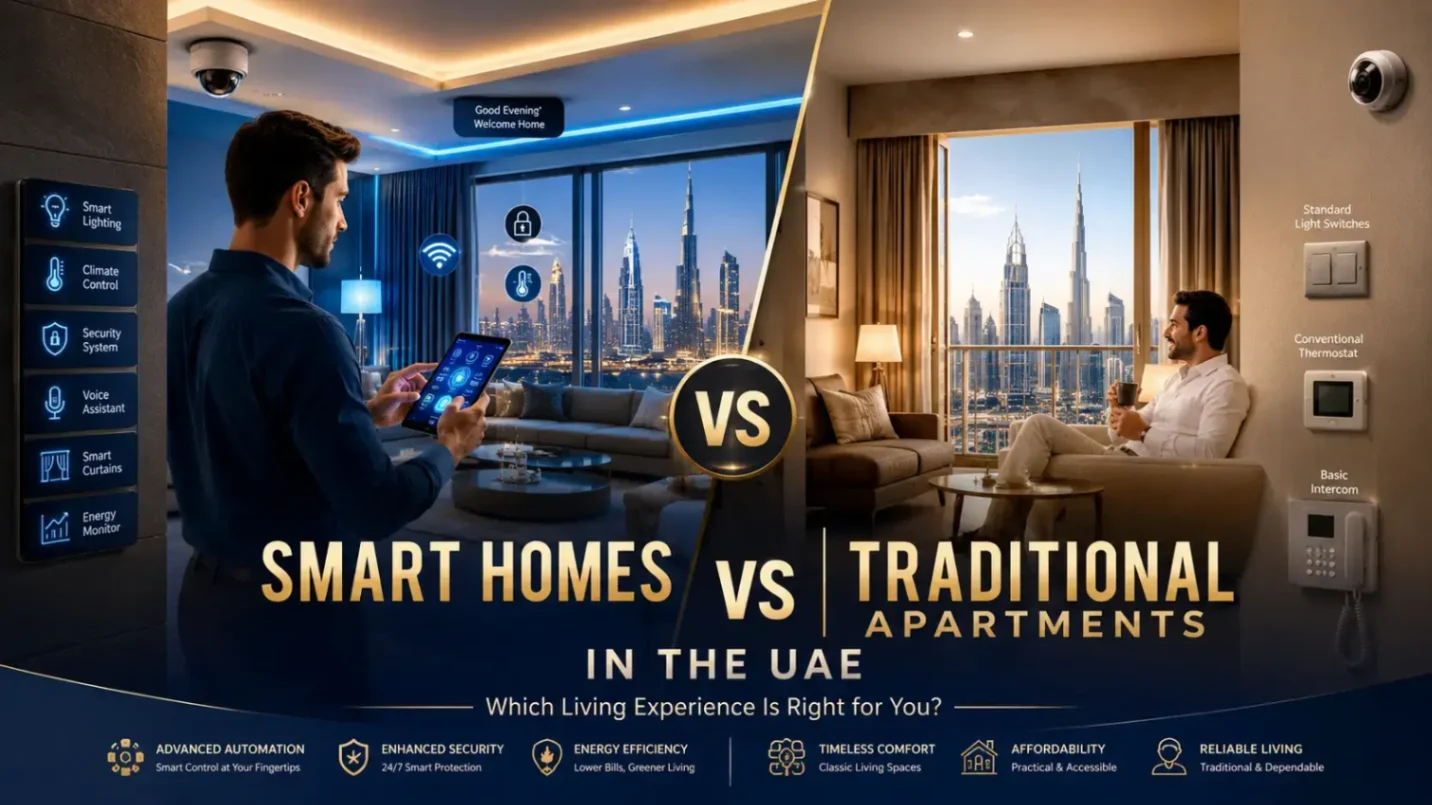
Technology is changing how people live. In the UAE, many new properties now come with smart features. These homes promise more control, comfort, and efficiency. At the same time, traditional apartments still dominate the market and remain a solid choice for many buyers.
This blog explains the difference between smart homes and traditional apartments in the United Arab Emirates. We break down features, costs, returns, and risks. The goal is to help you choose based on real value, not just trends.
What Is a Smart Home?
A smart home uses technology to control and automate systems inside the property. This includes:
Lighting control
Smart thermostats
Security systems
Voice or app-based controls
Many smart homes are found in newer developments in Dubai and other growing areas. These homes focus on convenience and modern living.
What Is a Traditional Apartment?
A traditional apartment does not rely on advanced automation. Systems like lighting, cooling, and security are manual or basic.
These properties are common across older and established areas. They offer:
Simple setup
Lower cost
Proven demand
Traditional apartments are practical and easy to manage.
Cost Comparison
Smart homes usually cost more. You are paying for built-in technology, automation systems, and modern design. These features increase the upfront price and can also raise service charges in some buildings. Over time, upgrades or system updates may add extra costs.
Traditional apartments are more affordable. The lower entry price makes it easier to enter the market and can improve rental yield if the location is strong. Maintenance and service costs are also usually simpler and more predictable.
Do not assume higher cost means better investment. You must compare the total value, including rent potential, ongoing costs, and long-term demand before making a decision.
Maintenance and Repairs
Smart homes may need specialized maintenance. If systems fail, repairs can be more complex, slower, and more expensive because they often require trained technicians or specific software support. Even small issues in automation systems can affect daily use until fixed.
Traditional apartments are easier to maintain. Most repairs are simple, and services are widely available in the market. You are not dependent on advanced systems, so fixes are usually faster and cheaper.
If you want fewer technical issues and lower long-term stress, traditional units are easier to handle.
Energy Efficiency
Smart homes are designed to reduce energy use. Features like automated lighting and climate control can lower utility bills.
Traditional apartments may not have these features, which can lead to higher energy use.
If long-term savings matter, smart homes have an edge here.
Tenant Demand
Demand depends on the target tenant. Smart homes usually attract tech-focused tenants and younger renters who value modern features and convenience. These tenants are often willing to pay a bit more for upgraded living.
Traditional apartments attract a wider tenant base because they are more affordable and practical for most people. They work well for families, long-term tenants, and budget-focused renters.
In many cases, affordability drives demand more than technology. A lower rent often keeps occupancy more stable than premium features alone.
Rental Income Potential
Smart homes may command slightly higher rent due to added features. But this depends on location and tenant demand.
Traditional apartments may offer better ROI because:
Lower purchase price
Stable demand
Do not expect smart features alone to increase rent significantly.
Risks To Consider
Both options come with risks, but they show up in different ways.
Smart homes carry risks like higher upfront cost, systems becoming outdated over time, and more complex repairs when technology fails. These issues can add cost and effort if you are not prepared for them.
Traditional apartments come with risks such as lower appeal in premium markets, higher energy use, and fewer modern features compared to new builds. This can affect rent levels in certain areas.
You need to decide which type of risk you are more comfortable handling, cost and tech risk or market and demand risk. For more explore apartments for sale in Dubai..
Key Difference: Convenience vs Practical Value
Factor | New Apartments | Old Apartments |
Cost | Higher | Lower |
Technology | Advanced | Basic |
Maintenance | Complex | Simple |
Energy Use | Efficient | Standard |
Tenant Appeal | Niche | Broad |
Smart homes focus on convenience and modern living. Traditional apartments focus on affordability and stability.
Who Should Choose Smart Homes?
Smart homes are not for everyone. They suit buyers who value convenience and are willing to pay for it.
Choose a smart home if you:
Want modern features and automation
Prefer energy efficiency and lower utility use
Target premium or tech-focused tenants
Are comfortable handling tech systems and updates
If you are buying for lifestyle or premium rental, smart homes can make sense. But if you are only chasing returns, you need to check the numbers carefully.
Who Should Choose Traditional Apartments?
Traditional apartments are a safer and more practical choice for most buyers. Choose a traditional apartment if you:
Want lower upfront cost
Prefer stable and steady rental income
Want fewer maintenance issues
Target a wider tenant base
If your goal is consistent returns with less effort, traditional apartments are usually the better option.
Choosing the Right Option
Do not chase trends. Focus on what works for your goal.
Choose smart homes if you want modern features and long-term efficiency. Choose traditional apartments if you want lower cost and steady demand
If you cannot clearly justify your choice, you are guessing.
Final Check Before You Decide
Before buying, review the basics. Check total cost, expected rent, and maintenance needs. Look at tenant demand in the area.
Do not rely on features alone. A good investment is based on numbers, not hype.
Final Thoughts
Smart homes offer convenience, automation, and energy efficiency. Traditional apartments offer affordability, simplicity, and stable demand. There is no clear winner. The better option depends on your budget, target tenants, and investment goal.
At PropertySeller, we keep things clear and reliable. Your data stays secure at every step. We provide real, accurate property details with no hidden gaps. Every listing goes through strict checks and full verification. No duplicates. Only clean, trusted options so you can choose with clarity and avoid costly mistakes.
FAQ’s
1. Are smart homes a better investment than traditional apartments in the UAE?
Not always. Smart homes offer modern features, but traditional apartments often give better stability and wider tenant demand.
2. Do smart homes increase rental value?
Sometimes, but not always. Rent depends more on location and demand than technology alone.
3. Which type has better tenant demand?
Traditional apartments usually attract more tenants due to affordability. Smart homes appeal to a smaller, niche group.
4. Are smart homes worth the higher cost?
Only if the location and rental demand support higher pricing. Otherwise, the extra cost may not return value.
5. Can I convert a traditional apartment into a smart home?
Yes, in many cases. Basic smart features can be added, but full automation depends on the building setup.