Why Some Buyers Regret Buying an Apartment in Dubai (And How to Avoid It)


Buying an apartment in Dubai is an exciting milestone. Whether you're purchasing your first home, relocating to the UAE, or investing for rental income, the city offers opportunities that are difficult to ignore. Attractive payment plans, tax advantages, modern communities, and the potential for capital appreciation continue to draw buyers from around the world.
Yet not every purchase turns out as expected.
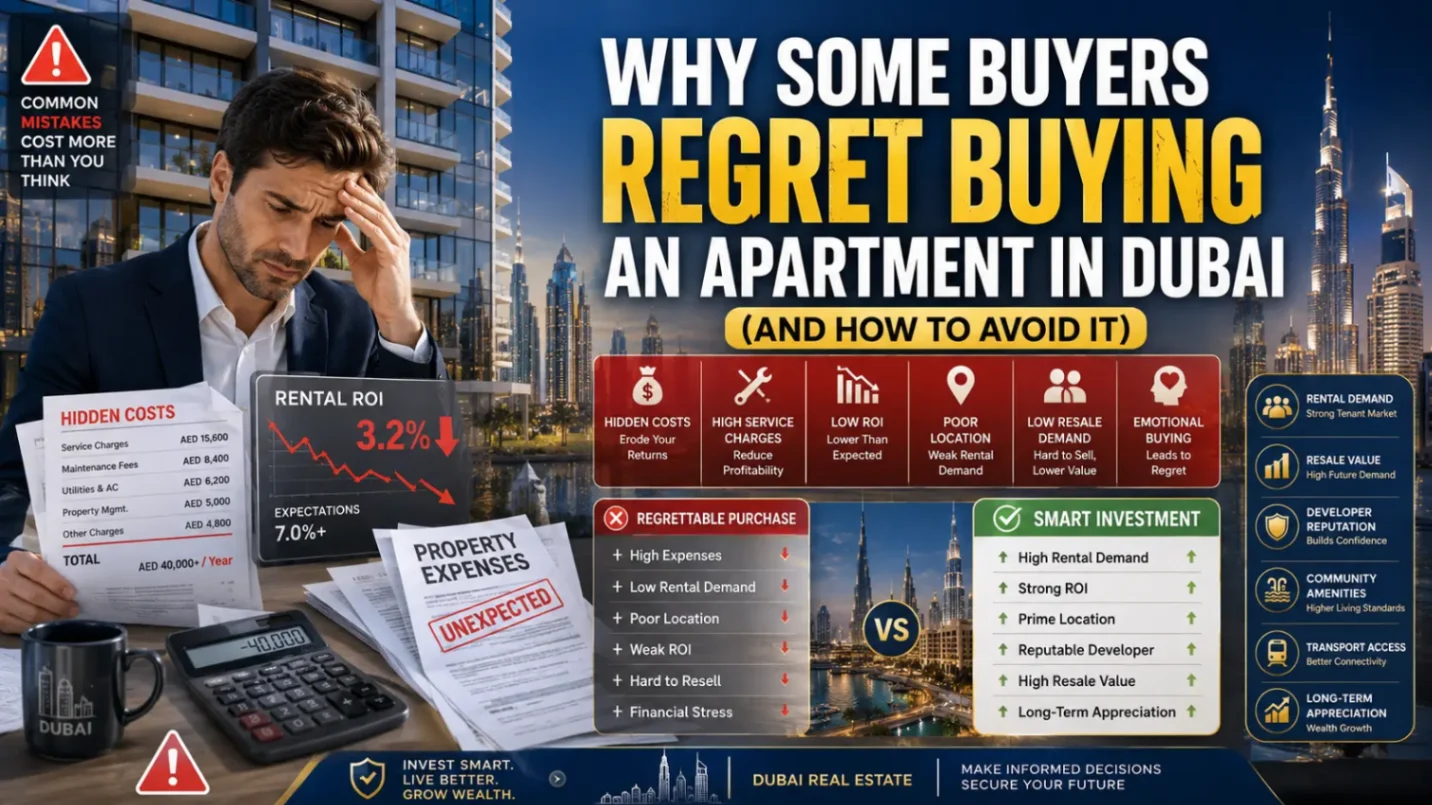
The reality is that most buyers who regret buying an apartment in Dubai don't regret becoming property owners—they regret how they bought. Choosing the wrong community, underestimating ownership costs, or making decisions based on emotion instead of research can lead to disappointment long after the excitement of purchase fades.
In this guide, we explore the most common reasons buyers regret purchasing an apartment in Dubai, explain how these mistakes can affect both lifestyle and investment outcomes, and share practical tips to help you make a more informed property purchase from the outset.
Buying Based on Price Instead of Value
Everyone wants a good deal, but the cheapest apartment isn't always the smartest investment.
Some buyers focus entirely on securing the lowest purchase price without considering whether the property will perform well over time. A lower-priced apartment in an area with weak rental demand or limited future growth may cost less today but deliver poorer returns in the future.
Instead of asking, "How cheap is this apartment?" buyers should ask:
Is the location growing?
Will tenants want to live here?
Is there strong resale demand?
Does the building have a good reputation?
PropertySeller encourages buyers to evaluate overall value rather than simply comparing asking prices.
Underestimating the True Cost of Ownership
One of the biggest surprises for first-time buyers is discovering that mortgage payments are only part of the monthly cost.
Apartment ownership may also include:
Service charges
Utility bills
Home insurance
Maintenance and repairs
Furnishing costs
Parking or community fees
Ignoring these ongoing expenses can place unnecessary pressure on a buyer's monthly budget. Before purchasing, it's important to calculate the complete cost of ownership rather than focusing only on loan repayments.
Choosing the Wrong Location
In real estate, location continues to be one of the strongest drivers of long-term success.
A well-designed apartment in the wrong area may struggle to attract tenants or appreciate in value. Buyers sometimes fall in love with the apartment itself while overlooking factors such as:
Connectivity
Schools
Nearby employment hubs
Public transport
Retail and lifestyle amenities
Planned infrastructure
Expecting Property Prices to Rise Forever
Dubai has experienced exceptional growth over the past few years, leading some buyers to assume prices will continue increasing indefinitely.
Property markets don't work that way. Some communities outperform others, while areas with significant new supply may experience slower appreciation.
Buyers who purchase based purely on short-term price expectations are often disappointed when market conditions change. Long-term investment decisions should be based on demand fundamentals rather than speculation.
Ignoring the Developer's Track Record
This is particularly important for off-plan buyers. Many purchasers are attracted by attractive launch prices and flexible payment plans without researching the developer behind the project.
Questions every buyer should ask include:
Has the developer completed similar projects?
Were previous developments delivered on time?
Does the developer have a strong reputation for quality?
A strong developer doesn't eliminate risk, but it can significantly reduce uncertainty.
Overlooking Service Charges
Two apartments with identical purchase prices can have very different ownership costs. That's because service charges vary between buildings depending on amenities and maintenance requirements.
Luxury developments with pools, gyms, concierge services, landscaped gardens, and premium facilities generally have higher annual service charges than more modest residential buildings.
Many buyers don't realise how much these charges affect long-term affordability until after completion.
Buying Without Thinking About Resale
Some buyers purchase solely based on their current needs. However, circumstances can change.
A property that's easy to buy isn't always easy to sell. Before purchasing, buyers should consider:
Future buyer demand
Rental appeal
Community popularity
Market liquidity
Thinking ahead can make future resale much smoother.
Letting Emotion Drive the Decision
Beautiful show apartments, impressive views, and limited-time launch offers can create urgency.
While emotional appeal is part of buying a home, relying on emotion alone often leads to regret.
Successful buyers balance excitement with objective analysis by evaluating:
Budget
Ownership costs
Investment potential
Community growth
Long-term suitability
Taking time to compare options usually leads to better decisions.
Not Matching the Property to Their Lifestyle
An apartment that works for one buyer may not work for another. Some buyers prioritise luxury finishes but later realise they needed more space.
Others purchase far from work to save money and later regret the daily commute. Before buying, it's worth asking:
Will this property suit my needs in five years?
Is the location convenient?
Does the community match my lifestyle?
Buying for the future—not just today—can prevent unnecessary moves later.
Focusing on Gross Rental Yield Instead of Net Returns
Investors often compare advertised rental yields without accounting for ongoing expenses.
To understand a property's true performance, buyers should also consider:
Service charges
Maintenance costs
Vacancy periods
Insurance
Property management fees
A property with a slightly lower gross yield may deliver stronger net returns if ongoing costs are lower.
Final Takeaway
Buying an apartment in Dubai can be one of the most rewarding financial decisions you make—but only if you choose the right property.
Most regrets don't come from owning real estate. They come from overlooking important details such as ownership costs, developer reputation, community demand, or long-term suitability.
PropertySeller believes successful property buying starts with informed decision-making. By evaluating the full financial picture and looking beyond marketing promises, buyers can choose apartments that support both their lifestyle and long-term investment goals.
Frequently Asked Questions
1. Why do some buyers regret buying an apartment in Dubai?
Many buyers regret overlooking factors such as ownership costs, service charges, location, or future resale potential. PropertySeller recommends evaluating the complete investment rather than focusing solely on the purchase price.
2. Is buying an apartment in Dubai still worth it?
Yes, for many buyers. PropertySeller believes apartment ownership can offer long-term value, provided the property matches your financial goals, lifestyle, and investment strategy.
3. What is the biggest mistake first-time apartment buyers make?
A common mistake is underestimating the total cost of ownership. PropertySeller encourages buyers to consider mortgage payments, service charges, maintenance, and other ongoing expenses before purchasing.
4. Should I buy an off-plan or ready apartment?
The right choice depends on your objectives. PropertySeller helps buyers compare off-plan and ready properties by evaluating payment plans, delivery timelines, rental potential, and long-term investment prospects.
5. What tools can help me decide if I can afford an apartment in Dubai?
PropertySeller offers a Mortgage Calculator, Eligibility Checker, and Rental Income Calculator to help buyers understand affordability, financing options, and potential investment returns before making a purchase.
6. How can I reduce the risk of buyer's remorse after purchasing an apartment?
Thorough research is essential. PropertySeller helps buyers assess developer reputation, ownership costs, community demand, and investment fundamentals so they can purchase with greater confidence.