
What Happens If a Developer Delays Handover in Dubai?


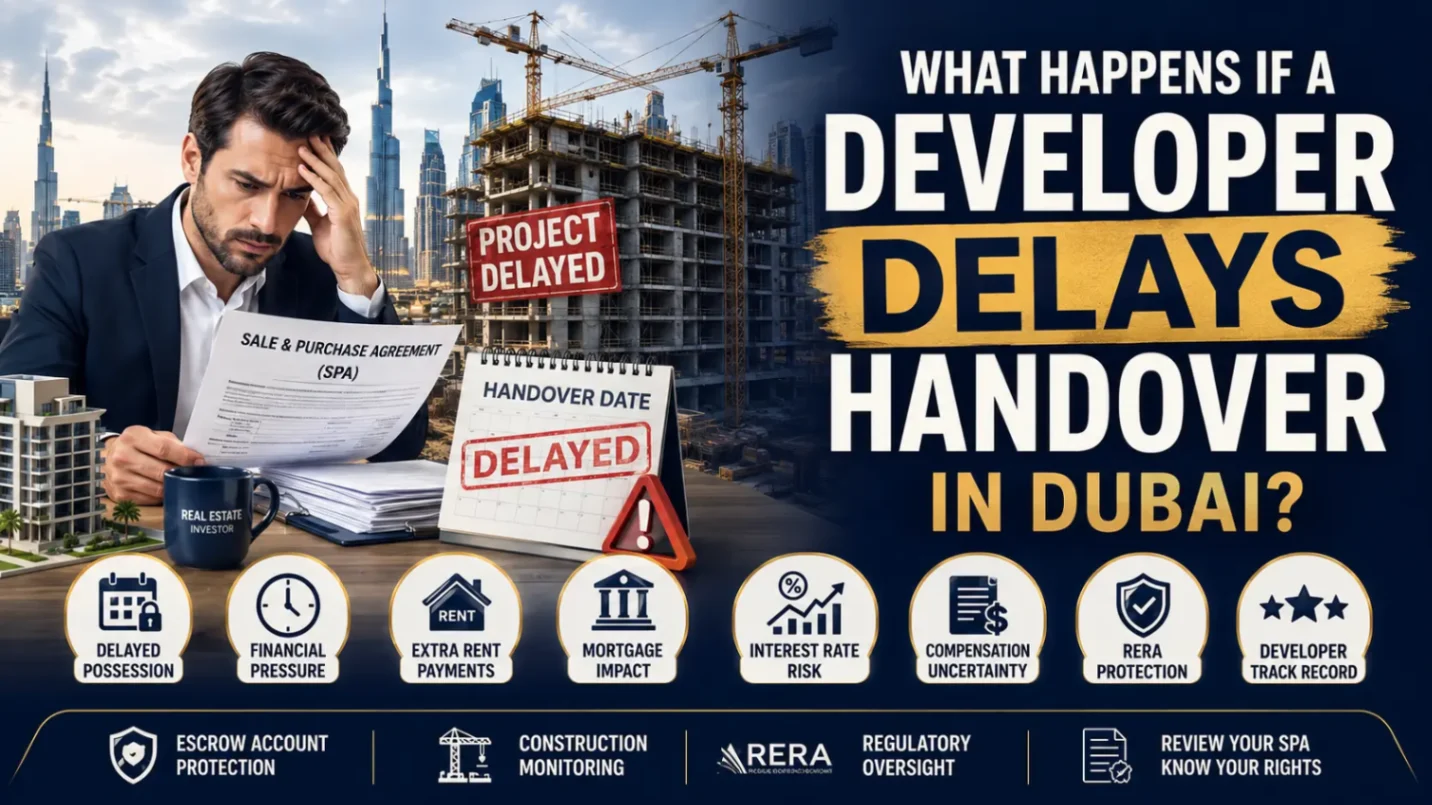
Buying an off-plan property in Dubai often comes with one major trade-off: patience.
Developers typically launch projects years before completion, allowing buyers to secure attractive prices and flexible payment plans. In many cases, projects are delivered on time. But sometimes construction takes longer than expected, and handover dates are pushed back.
When that happens, buyers usually have one immediate question: What are my rights if a developer delays handover in Dubai?
The answer depends on several factors, including the reason for the delay, the terms of the Sale and Purchase Agreement (SPA), the length of the delay, and whether the developer remains compliant with Dubai's regulatory requirements.
The good news is that Dubai's real estate sector operates within a regulated framework designed to protect both developers and buyers. Understanding how delays are handled can help you make informed decisions and avoid unnecessary panic.
In this guide, we explain the common reasons for handover delays, the legal protections available to buyers, how Sale and Purchase Agreements typically address project extensions, the role of regulatory authorities, and the practical steps buyers can take when a project's completion timeline changes.
Are Developer Delays Common in Dubai?
Project delays are not unique to Dubai. Large-scale developments anywhere in the world can face challenges such as:
Construction delays
Labour shortages
Supply chain disruptions
Infrastructure coordination issues
Regulatory approvals
Market-related adjustments
While most reputable developers work toward their announced timelines, buyers should understand that estimated completion dates are not always guaranteed completion dates.
This is particularly important when purchasing off-plan property where construction may still be in its early phases.
What Is Considered a Handover Delay?
A handover delay occurs when a developer fails to deliver the property by the completion date specified in the Sale and Purchase Agreement.
However, many buyers are surprised to discover that the completion date listed in marketing materials may differ from the contractual provisions inside the SPA.
Most SPAs include clauses allowing developers a certain extension period before a delay officially becomes a contractual issue.
This is why buyers should always review:
Original handover date
Grace period provisions
Force majeure clauses
Compensation terms
Termination rights
The SPA often becomes the most important document when determining a buyer's legal position.
What Protections Do Buyers Have in Dubai?
Dubai's off-plan market is regulated by authorities including the Government of Dubai's real estate framework and the Real Estate Regulatory Agency (RERA). Several safeguards exist to reduce buyer risk.
Escrow Account Requirements
Developers must deposit buyer funds into regulated project escrow accounts. These accounts help ensure that funds collected from purchasers are used for project construction rather than unrelated activities.
This system significantly improves transparency and helps reduce risks associated with project funding.
Construction Monitoring
Project progress is monitored throughout various construction stages. Developers generally cannot access escrow funds without meeting construction milestones.
This creates additional accountability throughout the development process.
Regulatory Oversight
Dubai's property sector has evolved significantly over the past decade. Today, buyers benefit from stronger regulatory oversight, clearer project registration requirements, and improved transparency compared with earlier market cycles.
Why Do Developers Delay Handover?
Not every delay is a sign of financial trouble. In many situations, delays occur because of factors beyond a developer's immediate control. Common reasons include:
Construction Challenges
Large projects involve multiple contractors, suppliers, consultants, and regulatory approvals. Delays affecting one component can impact the overall timeline.
Infrastructure Dependencies
Some projects rely on surrounding roads, utility connections, public infrastructure, or community facilities before final completion can occur.
Material Supply Issues
Global supply chain disruptions can affect construction materials, fixtures, and specialist equipment.
Design Changes
Occasionally, developers make improvements or modifications during construction that extend timelines.
While buyers often prefer faster delivery, some delays occur because developers are enhancing project specifications.
Can Buyers Receive Compensation for Delayed Handover?
This is one of the most searched questions among off-plan buyers. The answer is sometimes, but not automatically.
Compensation depends primarily on the terms contained within the Sale and Purchase Agreement. Certain contracts include provisions covering:
Delay compensation
Penalty clauses
Alternative remedies
Cancellation rights after specific periods
Other contracts may provide developers with broader protections. Because every project can differ, buyers should avoid assuming compensation applies automatically.
The SPA remains the primary reference point.
Can a Buyer Cancel the Purchase Due to Delays?
Potentially, yes. However, cancellation rights are not triggered by every delay. Several factors influence whether termination may be possible:
Length of delay
Contract provisions
Construction progress
Regulatory considerations
Circumstances causing the delay
In some cases, buyers may negotiate with developers directly. In others, formal dispute resolution may be required. The specific facts of each project matter significantly.
What Happens to Mortgage Buyers?
Delays can create additional complications for buyers using financing. Potential issues may include:
Extended rental commitments
Mortgage approval validity periods
Changing interest rates
Revised financial planning
This is one reason why buyers should evaluate project delivery history before committing to an off-plan purchase. A lower launch price may not always offset the cost of substantial delays.
How Can Buyers Reduce the Risk of Delayed Handover?
No buyer can completely eliminate development risk. However, several steps can reduce exposure.
Research the Developer
One of the most effective safeguards is choosing a developer with a strong delivery track record.
Questions worth asking include:
How many projects has the developer completed?
Were previous projects delivered on schedule?
How does the developer perform during changing market conditions?
Past performance does not guarantee future results, but it provides valuable context.
Review the SPA Carefully
Many buyers focus heavily on pricing and payment plans while paying little attention to contractual obligations. The SPA deserves equal attention.
Particular focus should be placed on:
Handover commitments
Extension clauses
Compensation provisions
Cancellation rights
Monitor Construction Progress
Buyers should periodically review project updates and construction milestones. Early awareness of potential delays allows for better financial planning.
Avoid Overstretching Financially
A common mistake among off-plan buyers is assuming handover will occur exactly on the announced date. Building financial flexibility into your plans can help manage unexpected delays more comfortably.
Does a Delayed Handover Mean the Investment Is Bad?
Not necessarily.
Many successful investments have experienced construction delays.
What matters is understanding the impact of the delay on the property's long-term fundamentals.
Questions investors should ask include:
Is demand for the area still growing?
Has rental demand strengthened?
Have comparable property values increased?
Does the project remain attractive upon completion?
In some cases, a delayed project still delivers strong capital appreciation by handover. In others, changing market conditions may alter the investment outlook.
This is why investment decisions should be based on broader fundamentals rather than delivery dates alone.
Final Takeaway
Developer delays can be frustrating, particularly for buyers planning to move into a property or generate rental income immediately after handover. However, a delayed handover does not automatically mean a project has failed or that an investment has become unattractive.
Dubai's regulatory framework provides important protections for off-plan buyers, while contractual rights are typically governed by the Sale and Purchase Agreement. Understanding those rights before purchasing is often the best protection available.
PropertySeller encourages buyers to evaluate developers carefully, review contractual terms thoroughly, and assess projects based on long-term fundamentals rather than projected completion dates alone.
A successful property investment is rarely determined by a single handover date. It is determined by the quality of the asset, the strength of demand, and the long-term value it creates.
Frequently Asked Questions
1. What happens if a developer delays handover in Dubai?
If a developer delays handover, buyers should first review their Sale and Purchase Agreement (SPA) to understand the applicable terms, grace periods, and available remedies. At PropertySeller, we always encourage buyers to assess developer credibility and project progress before investing, as these factors often influence delivery timelines.
2. Can I get compensation for a delayed handover in Dubai?
Compensation depends on the terms outlined in the SPA and the circumstances surrounding the delay. PropertySeller recommends carefully reviewing compensation and delay clauses before purchasing any off-plan property, as contractual rights can vary from one project to another.
3. Can I cancel an off-plan property purchase because of construction delays?
In some cases, buyers may have cancellation rights if delays exceed certain contractual thresholds. PropertySeller advises investors to understand these provisions before signing an agreement rather than relying solely on projected handover dates.
4. How can I check whether an off-plan project is progressing on schedule?
Buyers can monitor developer updates, construction milestones, and project progress reports. PropertySeller also helps buyers evaluate project status and developer track records to provide a clearer picture of potential delivery risks.
5. Are delayed projects always bad investments?
Not necessarily. Some projects experience delays but still deliver strong capital appreciation and rental returns after completion. PropertySeller evaluates each opportunity based on location demand, developer reputation, market conditions, and long-term investment potential rather than handover timelines alone.
6. How can I reduce the risk of buying into a delayed project?
One of the most effective ways is to choose developers with a proven delivery history and financially strong projects. PropertySeller helps buyers compare developers, review past performance, and identify projects that offer a better balance of risk and potential return.
7. What should I consider before buying an off-plan property in Dubai?
Beyond price and payment plans, buyers should evaluate developer reputation, project location, construction progress, expected demand, and long-term resale potential. PropertySeller helps investors assess these factors to make more informed property decisions.