UAE Property Laws Every Investor Should Know in 2026


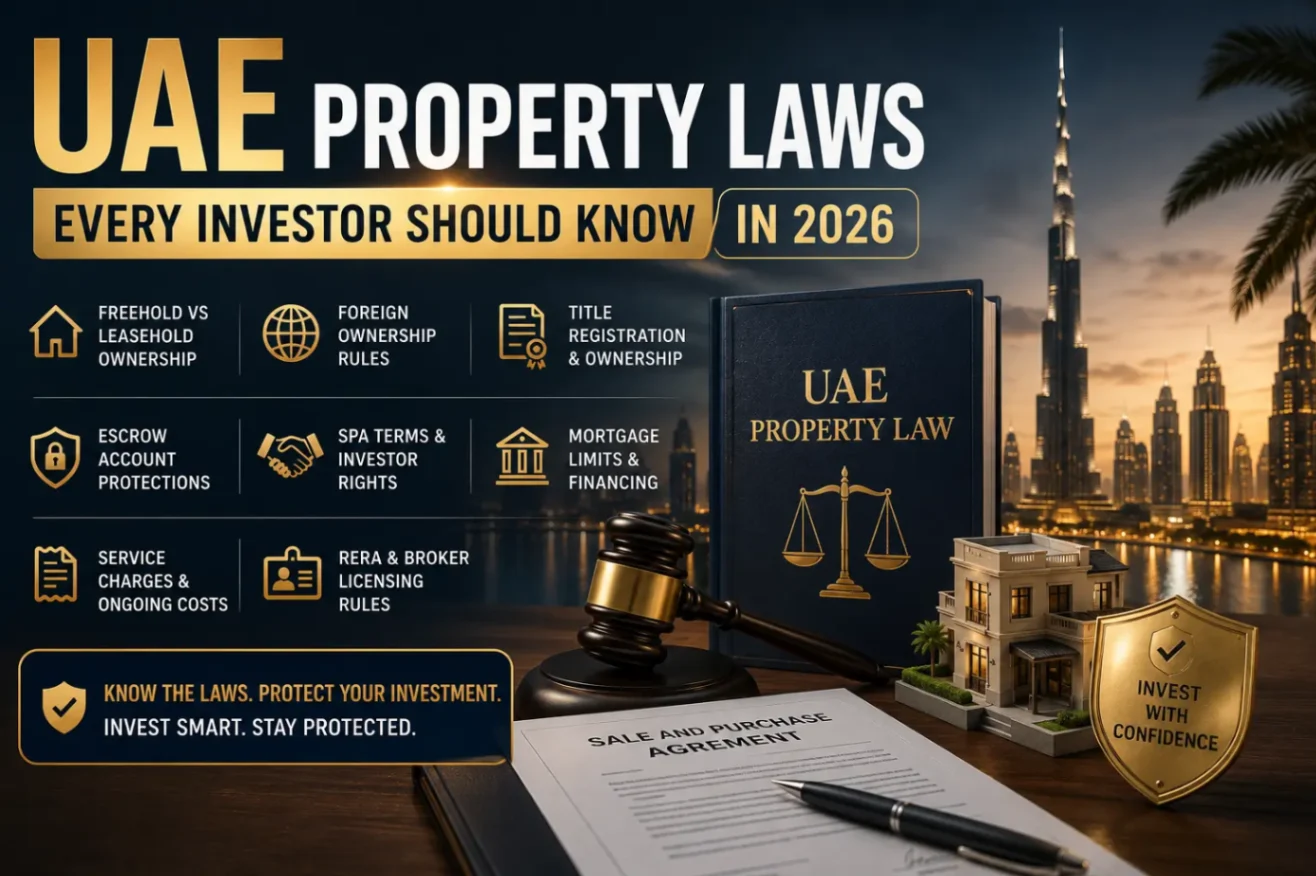
The UAE real estate market is open to local and foreign investors, but ownership is defined by legal structure—not assumptions. A property purchase in the UAE is not just a financial decision. It is a legal classification that determines what you can own, where you can own it, and how much control you actually have after purchase. UAE property laws directly affect where foreigners are permitted to buy property, whether ownership is freehold or time-limited leasehold, legal rights over sale, rental, and inheritance, dispute resolution and regulatory oversight, and risk exposure in off-plan and resale transactions.
Many investors misunderstand this structure and assume that buying property automatically grants full, unrestricted ownership rights. In reality, ownership in the UAE is defined by jurisdiction, regulated by emirate-level authorities, and enforced through registered contracts and title systems.
This blog breaks down the key UAE property laws every investor should understand in 2026, including ownership rules, freehold zones, escrow protection, registration procedures, and the legal risks that can impact both capital safety and long-term returns.
1. Freehold vs Leasehold: The First Legal Filter
This is the most important legal distinction—and the most misunderstood.
Freehold Ownership
Freehold means:
full ownership of property + land (in designated zones)
no expiry date on ownership
right to sell, lease, or inherit
legally registered under land department records
Freehold is not available everywhere. It only exists in government-designated zones. If you assume otherwise, your entire investment thesis is wrong.
Leasehold Ownership
Leasehold means:
ownership for a fixed term (often 30–99 years)
land remains with original owner or authority
renewal is not guaranteed in all cases
This is often marketed as “ownership,” but legally it is usage rights, not absolute ownership. Leasehold properties may have lower entry prices, but weaker long-term resale leverage.
2. Foreign Ownership Rules: Where Most Confusion Happens
Foreign investors cannot buy anywhere in the UAE.
Ownership depends on:
emirate
development zone
property classification
What is allowed:
Freehold zones → full ownership rights
Select leasehold zones → time-based rights
What is NOT allowed:
random land purchases outside designated areas
assuming “all Dubai is freehold” (false)
If you don’t check ownership eligibility before signing, the contract itself can become a liability.
3. Property Registration: Where Ownership Actually Becomes Real
In the UAE, a signed contract is not ownership.
Ownership is only valid after:
registration with land department
issuance of title deed
Registration ensures:
legal recognition of ownership
protection against duplicate sales
enforceability in disputes
Without registration, you are holding a contract—not an asset.
4. Escrow Law: Protection That Is Often Misunderstood
Off-plan property buyers rely on escrow protection.
Here’s how it actually works:
buyer payments go into regulated escrow accounts
developer cannot freely access funds
money is released based on construction milestones
What investors incorrectly assume:
That escrow guarantees:
on-time delivery
zero project failure risk
It does not. It only protects fund misuse, not project delays or design changes. That distinction is critical.
5. Sales and Purchase Agreement (SPA): The Real Control Document
The SPA is where most investors stop reading—and that’s a mistake.
It defines:
payment schedule
penalties and delays
handover conditions
legal obligations of both parties
Once signed, verbal promises become irrelevant. If it is not in the SPA, it does not exist legally.
This is where many buyers lose negotiation power without realizing it.
6. Mortgage Laws: Limits You Before You Even Buy
Financing in the UAE is structured, not flexible.
Banks decide:
loan amount based on property value
buyer eligibility based on income
down payment requirements
credit risk assessment
Your budget is not your control—it is bank-approved leverage. Many investors plan portfolios assuming full financing freedom. That is not how approvals work.
7. Service Charges: The Silent Long-Term Cost
Every property comes with annual charges for:
maintenance
security
facilities
shared infrastructure
High service charges can:
reduce rental yield significantly
make “cheap” properties expensive long-term
affect resale demand
Investors often calculate purchase price but ignore lifetime cost. That is a basic but costly mistake.
8. Legal Role of Brokers: Not All Are Equal
Only licensed brokers can legally facilitate transactions.
Their real function is:
verify listings
coordinate legal documentation
assist in registration steps
Not all brokers protect buyer interest equally. Some prioritize transaction closure over legal clarity. If you rely blindly on brokers, you are outsourcing risk control.
9. Key Legal Risks Investors Ignore
This is where most losses actually happen:
buying outside approved ownership zones
assuming off-plan timelines are fixed
ignoring service charge escalation
skipping SPA review
misunderstanding leasehold vs freehold rights
relying on marketing over legal documents
The UAE market is regulated—but it is also documentation-heavy. If it’s not written, registered, or approved, it has no legal weight.
Conclusion
UAE property laws are not barriers to investment. They are a framework that defines what you actually own, how secure your capital is, and how easily you can exit later. Most losses in this market don’t come from bad properties, but from misunderstanding the legal structure behind ownership, zoning rules, and developer obligations.
At PropertySeller, the focus is not just on listing properties, but on helping buyers understand what is legally real before they commit, so decisions are based on clarity rather than assumptions or marketing noise.
FAQ’s
1. What legal checks should I do before buying property in the UAE?
You should confirm ownership type (freehold or leasehold), developer registration, title deed status, and any outstanding dues. PropertySeller highlights these details upfront so you don’t rely on assumptions or incomplete broker information.
2. Can foreigners fully own property in the UAE?
Yes, but ownership is limited to designated freehold zones approved by UAE authorities. At PropertySeller, we only highlight properties that fall within legally eligible ownership areas so buyers can invest with clarity and confidence.
3. What is the most common legal mistake property investors make in the UAE?
The biggest mistake is treating marketing information as legally binding. Many investors also overlook ownership classification and SPA terms. PropertySeller reduces this risk by emphasizing verified property details and clear legal categorization before any commitment is made.
4. How do I know if a property is legally eligible for foreign ownership?
Ownership eligibility depends on the property’s location and classification. At PropertySeller, we ensure listings are verified against official freehold zone regulations so you only see properties you are legally allowed to buy.
5. Is the SPA (Sales and Purchase Agreement) negotiable in UAE property deals?
Some clauses can be negotiated, but most terms follow developer or regulatory standards. PropertySeller encourages buyers to carefully review SPA terms before signing, as they override verbal commitments.
6. What is the safest type of property investment in terms of legal security?
Fully registered freehold properties with completed title deeds offer the highest legal clarity. PropertySeller prioritizes such properties for buyers seeking long-term stability.