
Paper-Thin Walls & Leaky Pipes: The Ultimate Snagging Checklist for Ready Dubai Apartments


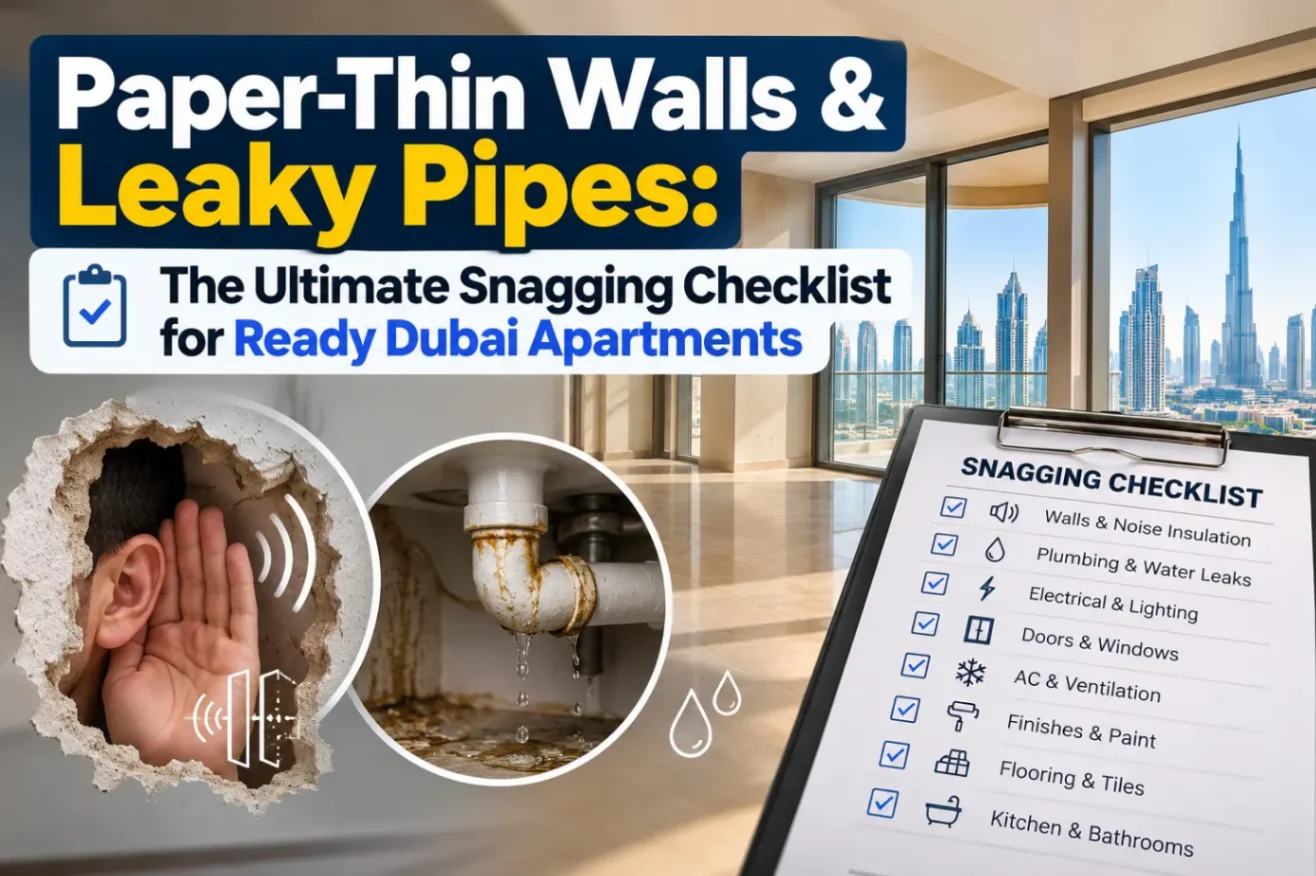
Buying a ready apartment in Dubai gives you the opportunity to inspect the actual property before committing. Unlike an off-plan purchase, you can check the walls, flooring, windows, plumbing, air conditioning, electrical points, cabinets, and overall condition before making a decision. But a quick viewing is not the same as a proper snagging inspection.
This guide covers the key areas to inspect when buying a ready Dubai apartment, from hidden leaks and AC problems to poor finishes, electrical faults, plumbing issues, and sound insulation. It also explains which defects could become expensive repairs and when hiring a professional snagging company may be worth considering.
What Is Snagging for a Ready Apartment?
Snagging is the process of identifying defects, unfinished work, damage, or faults in a property before taking possession or completing a purchase.
For a ready apartment, snagging can cover everything from paintwork and doors to plumbing, electrical systems, air conditioning, windows, bathrooms, kitchens, and built-in equipment.
The purpose is simple, to find problems before they become your responsibility.
A small paint defect may not matter much. A hidden pipe leak behind a bathroom wall is a different story.
Start With the Walls, Floors and Ceilings
Start with the basics, as visible defects can point to bigger issues. Check for cracks, water stains, peeling paint, damp patches, uneven flooring, loose tiles, damaged skirting, and gaps around doors and windows.
Do not ignore stains just because they have been repainted. Fresh paint can hide a problem without fixing its cause. Pay extra attention to ceilings below bathrooms, kitchens, balconies, and AC units, where water damage is more likely to appear.
Check for Water Leaks and Plumbing Problems
Plumbing issues can be expensive and may stay hidden until after the purchase. During the viewing, test the main fixtures instead of relying only on visual inspection.
Check water pressure, hot water, drains, toilets, and areas under sinks for leaks, moisture, corrosion, stains, or unusual smells. Also inspect seals around showers, bathtubs, sinks, and toilets. Swollen cabinets or damp areas can indicate previous or ongoing water damage.
Test the Air Conditioning
Dubai's climate makes AC performance more than a comfort issue.
Turn on the AC in each room and allow it to run long enough to assess performance.
Check whether:
Each room cools properly
Airflow is consistent
The system makes unusual noises
There are unusual smells
Thermostats respond correctly
Water is leaking around AC units
Air vents are damaged or loose
Ask about recent AC servicing and maintenance records where available. A system that appears to work during a short viewing may still have drainage, cooling, or maintenance issues.
Inspect Windows, Doors and Balconies
Windows should open, close, and lock properly. Look around window frames for gaps, damaged seals, or signs of moisture.
For balconies, check the door locks, flooring, and drainage. Water should flow away properly rather than collect near the apartment entrance. Also check door hinges, handles, frames, and alignment throughout the apartment.
Test Electrical Points and Lighting
Do not assume that every electrical point works because the apartment has functioning lights. Test as many switches and sockets as possible.
Check:
Light switches
Power sockets
Kitchen outlets
Bathroom switches
Appliances
Intercom
Doorbell
Internet points
TV connections
If appliances are included in the sale, test them individually rather than assuming they are operational.
Look for damaged sockets, loose switches, exposed wiring, or unusual buzzing sounds. Electrical problems should not be treated as simple cosmetic defects.
Check the Kitchen Carefully
The kitchen combines plumbing, electrical systems, cabinets, appliances, and drainage, so it deserves careful attention.
Open cabinets and drawers and look for water stains, swelling, broken hinges, damaged countertops, leaks, and poor drainage. Run the tap and check underneath the sink at the same time.
If appliances are included in the sale, confirm what stays with the property and test them where possible before completing the purchase.
Check Noise and Sound Insulation
Noise may not be obvious during a short daytime viewing, but it can significantly affect your living experience. Spend a few quiet minutes listening for corridor noise, traffic, lifts, neighbouring apartments, building equipment, and nearby construction.
If possible, visit at different times of day. Ask about known noise issues, but also rely on your own inspection rather than the seller's or agent's response.
Inspect Bedrooms and Living Areas
Bedrooms and living rooms should be checked beyond their appearance.
Look for cracks, stains, damaged flooring, loose fittings, faulty windows, and poor AC performance.
Check built-in wardrobes by opening doors and drawers. Look for moisture, mould, damaged shelves, and poor installation.
If furniture is included, move items where possible to inspect the walls and flooring behind them. Furniture can hide stains, scratches, dampness, or damaged surfaces.
Check Common Areas and Building Condition
The apartment is only one part of the purchase. Inspect the lobby, corridors, lifts, parking, gym, pool, waste areas, and other common facilities.
Poor maintenance can indicate wider building management issues and potentially higher costs. Also review the service charges and what they cover, as high ongoing costs can affect the property's overall value.
What Should You Photograph During Snagging?
Take clear photos of every defect you find during the inspection. Focus on:
Cracks, stains, and damp patches
Damaged flooring or tiles
Water leaks
Faulty fittings
Broken doors or windows
Electrical issues
Damaged cabinets
AC problems
Bathroom defects
Photographs provide a useful record when requesting repairs, documenting the property's condition, or negotiating with the seller.
When Should You Hire a Professional Snagging Inspector?
A professional inspection can be useful when buying a high-value apartment, especially if you are not familiar with structural, plumbing, electrical, or HVAC systems.
A qualified inspector may identify problems that are easy to miss during a normal viewing. The inspection cost can be small compared with the potential expense of discovering a major defect after purchase.
However, a professional inspection should support—not replace—your own checks. Ask questions and investigate anything that looks unusual.
Should You Walk Away From a Property Because of Snags?
Not necessarily. Minor cosmetic defects are common and may be easy to fix. The bigger concern is the type, cost, and seriousness of the problem.
Repeated water damage, major plumbing or electrical faults, serious AC problems, structural concerns, or costly unresolved defects deserve careful consideration.
Before deciding, estimate the repair cost and confirm whether the seller will fix the issue before completion. A low asking price is not a good deal if expensive defects come with it.
Conclusion
At PropertySeller, we help buyers evaluate apartments for sale in Dubai beyond the asking price. Before purchasing, check the property's condition, service charges, maintenance needs, rental potential, and total ownership cost.
Our Mortgage Calculator, Eligibility Checker, and Rental Income Calculator can support the financial side of the decision.
Inspect the plumbing, AC, electrical points, walls, floors, bathrooms, kitchen, windows, and common areas before completion. A property may look perfect but still hide expensive defects.
Inspect carefully, understand the costs, and know exactly what you are buying.
FAQs
1. What is snagging when buying a ready apartment in Dubai?
At PropertySeller, we consider snagging an important inspection step before purchasing a ready apartment. It involves checking the property for defects such as leaks, cracks, damaged flooring, faulty electrical points, AC problems, plumbing issues, and poor finishes.
2. What should I check when viewing a ready apartment?
PropertySeller recommends checking the walls, ceilings, floors, windows, doors, plumbing, bathrooms, kitchen, electrical points, AC system, balconies, built-in wardrobes, appliances, and overall building condition.
3. Should I test the AC before buying an apartment in Dubai?
Yes. PropertySeller recommends switching on the AC in every room and checking cooling performance, airflow, unusual noises, smells, and signs of water leakage. AC problems can become an important ownership expense in Dubai.
4. Can I negotiate the price because of defects?
Potentially. PropertySeller recommends documenting significant defects and estimating the likely repair cost before negotiating. Buyers can then determine whether the asking price still makes financial sense or whether repairs should be completed before purchase.
5. Should I hire a professional snagging inspector?
PropertySeller recommends considering a professional inspection for high-value apartments or properties where you notice potential structural, plumbing, electrical, or HVAC problems. A professional may identify issues that are difficult to detect during a normal viewing.