Monthly EMI vs Rent in Dubai: The Real Cost Comparison


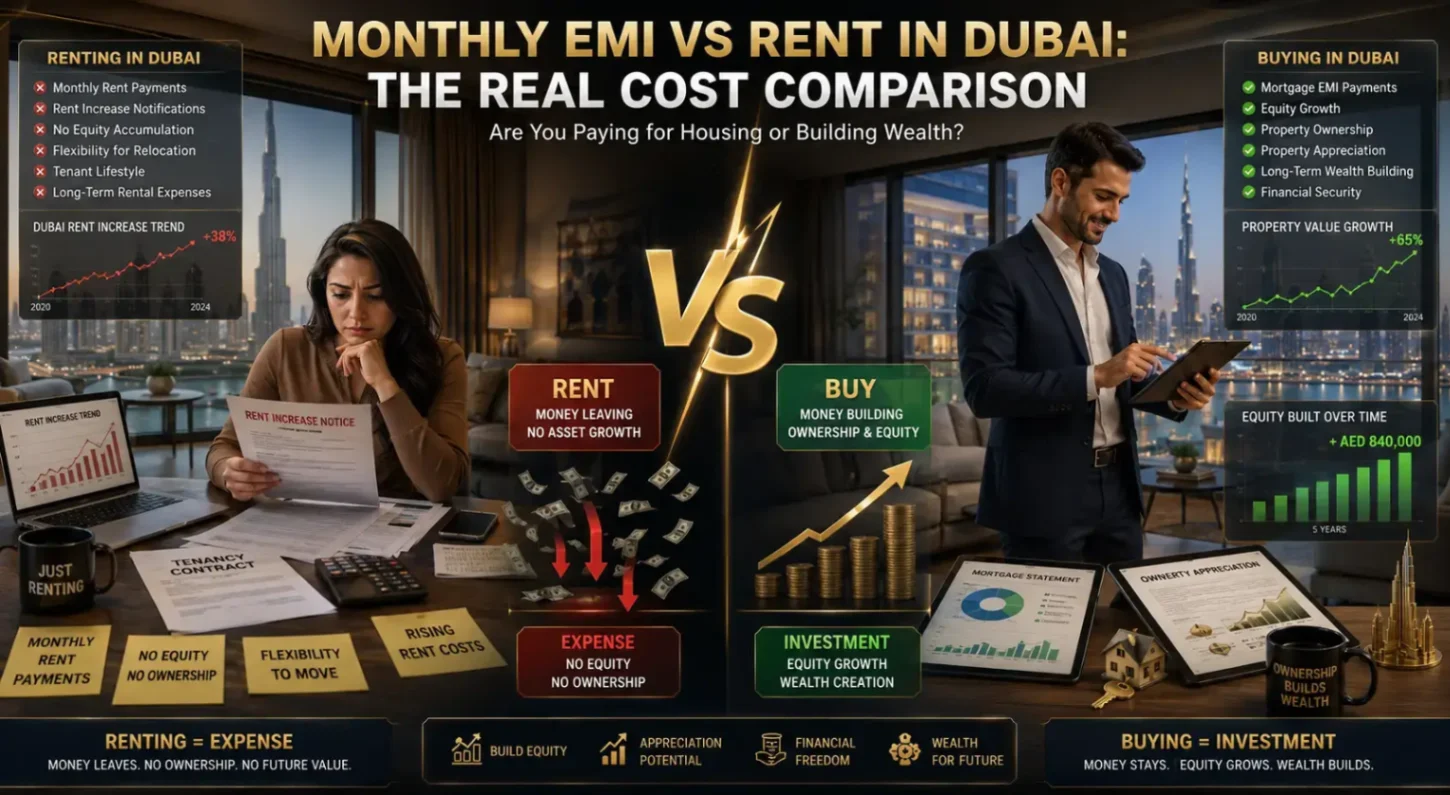
Dubai residents face one major financial question sooner or later: should you continue renting or start paying a mortgage?
At first glance, renting often appears cheaper because it requires less upfront commitment. Buying, on the other hand, comes with a down payment, registration fees, and long-term obligations. However, comparing rent and EMI based solely on monthly payments can lead to the wrong decision.
The reality is that the cost of housing in Dubai extends far beyond a simple rent-versus-mortgage comparison. Factors such as property appreciation, service charges, maintenance expenses, mortgage rates, and equity accumulation can significantly influence the long-term financial outcome of each option.
As Dubai's real estate market continues to attract residents, investors, and expatriates, more people are evaluating whether homeownership offers better value than long-term renting. The answer depends on income stability, lifestyle plans, financing eligibility, and how long you expect to remain in the emirate.
This guide explores the true cost of renting versus buying in Dubai by examining monthly expenses, upfront costs, hidden ownership charges, equity growth, and long-term wealth creation. Whether you're a first-time buyer, an existing tenant, or an investor assessing your options, understanding the full financial picture is essential before making a decision.
By the end of this guide, you'll have a clearer understanding of when renting makes financial sense, when buying becomes the smarter choice, and how to calculate the break-even point based on your personal circumstances and Dubai's current property market conditions.
Understanding Rent vs EMI
Before comparing the cost of renting and buying in Dubai, it is important to understand what rent and EMI actually represent from a financial perspective.
Rent is a recurring payment made to a landlord in exchange for the right to occupy a property. Once the payment period ends, no ownership interest is created, and the money spent does not contribute to building an asset.
An EMI (Equated Monthly Installment) is the monthly payment made toward a home loan. Each payment typically consists of two components: principal repayment and interest. While the interest portion is a financing cost, the principal portion increases your ownership stake in the property over time.
The key difference is straightforward:
Rent is a housing expense.
EMI is partly a housing expense and partly an investment in an asset.
This distinction is what makes the rent-versus-buy decision more complex than simply comparing monthly payments. A renter may have lower upfront costs and greater flexibility, while a homeowner gradually builds equity and may benefit from long-term property appreciation.
Example: A Typical Dubai Apartment
Consider a property worth AED 1 million.
Renting
Annual rent: AED 75,000
Monthly equivalent: AED 6,250
Buying
Property value: AED 1,000,000
Down payment (20%): AED 200,000
Mortgage amount: AED 800,000
Mortgage tenure: 25 years
Estimated EMI: AED 4,700–5,000
At first glance, the EMI may actually be lower than the monthly rent. But the comparison does not stop there.
The Hidden Costs of Buying
When comparing rent and EMI, it is important to consider the additional costs that come with property ownership. These expenses can significantly affect the overall cost of buying a home.
Dubai Land Department (DLD) Fee
The Dubai Land Department charges a fee of 4% of the property value when a property is purchased. This is one of the largest upfront costs buyers need to budget for.
Mortgage Registration Charges
Buyers financing their purchase through a mortgage must also pay registration fees associated with recording the loan with the relevant authorities.
Property Valuation Fee
Lenders typically require an independent property valuation before approving a mortgage. This cost is paid by the buyer as part of the financing process.
Service Charges
Apartment owners are responsible for annual service charges that cover the maintenance and operation of common areas, building facilities, and community infrastructure.
Maintenance Expenses
Property owners are responsible for repairs, upkeep, and ongoing maintenance costs, which can vary depending on the age and condition of the property.
Property Insurance
Many homeowners choose or are required to maintain property insurance to protect against potential damage and financial loss.
The Hidden Cost of Renting
Renting offers flexibility and lower upfront costs, but there are several long-term factors that tenants should consider when comparing renting with homeownership.
No Equity Creation
One of the biggest financial differences between renting and buying is that rent payments do not create ownership. Regardless of how long a tenant occupies a property, the payments made do not contribute toward building an asset or accumulating equity.
Rising Rental Prices
Rental costs in Dubai can increase over time depending on market conditions and community demand. As rents rise, tenants may face higher housing expenses without gaining any ownership interest in the property.
Limited Control
Tenants are subject to lease terms, renewal conditions, and landlord decisions. Changes in rental pricing, lease renewals, or property availability can affect long-term housing stability and flexibility.
Long-Term Financial Impact
While renting may offer greater mobility and lower upfront commitments, the cumulative cost of rent over many years can be substantial. Evaluating these long-term financial implications is an important part of deciding whether renting or buying is the better option.
What Happens After Five Years?
A short-term comparison between rent and EMI can be misleading. The real difference often becomes more visible when looking at the financial outcome over several years.
Renting for Five Years
A tenant paying AED 75,000 per year in rent will spend approximately AED 375,000 over a five-year period. While this provides housing throughout that time, the payments do not create any ownership interest in the property.
Ownership stake: AED 0
Buying for Five Years
A homeowner makes monthly mortgage payments while gradually reducing the outstanding loan balance. Over time, a portion of each EMI contributes toward property ownership, helping build equity in the asset.
In addition to having a place to live, the homeowner accumulates value that may potentially be recovered through resale, subject to market conditions and property performance.
Ownership stake: Increases with every mortgage payment
The Long-Term Difference
This is where the financial distinction between renting and buying becomes more apparent. While both options involve ongoing housing costs, buying allows part of those payments to contribute toward ownership, whereas rent remains a recurring expense with no asset accumulation. Over longer periods, this difference can play a significant role in overall wealth creation and financial planning.
Renting vs Buying in Dubai: Advantages and Disadvantages
Before deciding between rent and EMI, it is important to understand that neither option is universally better. The right choice depends on your financial situation, future plans, and long-term goals.
Advantages of Renting
Lower Upfront Costs
Renting requires significantly less initial capital compared to buying. Tenants typically need a security deposit, agency fee, and advance rent payments, while buyers must arrange a down payment and property registration costs.
Greater Flexibility
Renting is ideal for individuals who may relocate for work, education, or lifestyle reasons. Lease agreements offer more flexibility than owning a property.
No Maintenance Responsibility
Major maintenance and structural repairs are generally the landlord's responsibility, reducing unexpected expenses for tenants.
Easier Market Entry
Renting allows residents to live in premium communities without the substantial capital commitment required for ownership.
Disadvantages of Renting
No Wealth Creation
Monthly rent payments do not build ownership or equity. Once rent is paid, that money cannot be recovered.
Exposure to Rental Increases
Dubai's rental market can fluctuate significantly. Tenants may face higher renewal rates over time, increasing long-term housing costs.
Limited Control
Tenants have restrictions regarding renovations, modifications, and long-term planning for the property.
Long-Term Cost Accumulation
Over many years, total rent paid can become substantial without creating any asset ownership.
Advantages of Buying
Equity Building
Each mortgage payment contributes toward ownership of the property. Over time, homeowners build an asset that can be sold, refinanced, or passed on.
Potential Capital Appreciation
Dubai properties in strong locations may increase in value over the long term, creating additional wealth beyond monthly mortgage payments.
Protection Against Rising Rents
Homeowners with fixed-rate mortgages enjoy greater payment stability compared to tenants exposed to rental market fluctuations.
Investment Potential
Property owners can generate rental income if they decide to lease the property in the future, creating an additional source of returns.
Greater Control
Owners can renovate, customize, and improve their property according to their preferences and lifestyle needs.
Disadvantages of Buying
Higher Upfront Costs
Buying requires a down payment, Dubai Land Department fees, mortgage registration fees, valuation charges, and other acquisition costs.
Ongoing Ownership Expenses
Homeowners are responsible for service charges, maintenance, insurance, and repair costs that renters typically avoid.
Reduced Flexibility
Selling a property takes time and may involve transaction costs, making ownership less suitable for short-term residents.
Market Risk
Property values can rise or fall depending on economic conditions, supply, demand, and location-specific factors.
FACTOR | RENTING | BUYING |
Upfront Cost | Lower | Higher |
Monthly Commitment | Rent Payment | Mortgage EMI |
Equity Creation | No | Yes |
Flexibility | High | Moderate |
Maintenance Costs | Usually Landlord | Owner |
Long-Term Wealth Building | Limited | Strong Potential |
Potential Investment Returns | None | Possible Rental Yield & Appreciation |
The most common mistake is comparing only the monthly rent with the monthly EMI. A more accurate approach is evaluating the total cost of occupancy versus the long-term value created through ownership.
If you plan to stay in Dubai for a short period, renting may offer greater flexibility and lower upfront commitment. If you intend to stay for several years and your EMI is comparable to local rental prices, buying may provide stronger long-term financial benefits through equity accumulation and potential property appreciation.
The decision should always be based on verified market data, total ownership costs, and your future plans—not just the monthly payment amount.
To support this, PropertySeller provides tools such as a mortgage calculator and rental income calculator, helping buyers accurately estimate costs, compare scenarios, and make more informed financial decisions.
Final Thoughts
Comparing EMI and rent is not just about identifying which option has the lower monthly payment. It is a broader financial decision that involves evaluating short-term affordability against long-term value creation.
Renting can offer flexibility and lower entry barriers, making it suitable for those with uncertain timelines or short-term residency plans. Buying, on the other hand, can support long-term wealth creation through equity accumulation and potential property appreciation, depending on market conditions.
The right decision depends on personal financial stability, expected length of stay, and long-term goals. A clear understanding of total costs—rather than monthly payments alone—is essential to avoid misleading comparisons.
PropertySeller helps buyers evaluate both renting and ownership scenarios using real market data, transparent pricing analysis, and practical investment insights, enabling more informed and confident property decisions.
Frequently Asked Questions
1. Is it cheaper to rent or buy in Dubai in 2026?
There is no universal answer. Renting is better for short-term flexibility and lower upfront costs. Buying becomes financially stronger when your stay exceeds 4–5 years and your EMI is close to or lower than market rent. PropertySeller always recommends evaluating total ownership cost, not just monthly payments.
2. How long should I stay in Dubai before buying property?
Typically, if you plan to stay less than 2–3 years, renting is financially safer. For 5 years or more, buying often becomes more cost-efficient due to equity building and avoided rent inflation. PropertySeller uses a break-even analysis model to help buyers decide based on real numbers, not assumptions.
3. Can expats get a mortgage in Dubai?
Yes. Expats can access mortgage financing from UAE banks, subject to income, credit history, and employment stability. Loan-to-value ratios vary, but PropertySeller always recommends checking eligibility early before selecting a property.
4. Can I switch from renting to buying easily in Dubai?
Yes, but timing and financial readiness matter. Buyers should first evaluate mortgage eligibility, down payment readiness, and total ownership costs. PropertySeller helps users transition by comparing their current rent with potential EMI scenarios.
5. Does paying EMI build equity in Dubai property?
Yes. Unlike rent, a portion of every EMI reduces your loan principal, gradually increasing your ownership share. Over time, this builds an asset that can be sold or rented. PropertySeller highlights equity growth as a key long-term advantage of buying.