Down Payment Rules for Expats Buying Property in UAE



Entering the UAE property market without understanding down payment rules is one of the fastest ways to miscalculate your investment. Most expats focus on property price and monthly installments, but the real barrier is the upfront capital requirement.
On paper, it looks simple—20% or 30%. In reality, it controls your loan approval, your risk level, and whether your deal even goes through. This is where planning either works—or breaks completely.
This guide explains how down payments actually work in the UAE, what banks really look at, and the critical factors most buyers ignore until it’s too late.
What Is a Down Payment?
A down payment is the upfront amount you pay from your own funds when purchasing a property. The remaining amount is typically financed through a mortgage if you are not buying in cash.
In simple terms:
Property Price = Your Down Payment + Bank Loan
For expats, this upfront payment is not optional. It is a mandatory requirement set by UAE banking regulations.
Why Down Payment Matters More Than You Think
Most buyers treat down payment as just an entry requirement. That is shallow thinking. Your down payment directly impacts:
Loan approval chances
Interest rates offered by banks
Monthly mortgage burden
Overall investment risk
A higher down payment reduces your financial pressure. A lower one increases your dependency on financing and market conditions.
This is where most expats misjudge. They stretch to enter the market, instead of structuring a stable investment.
Down Payment Rules for Expats
UAE Central Bank regulations define how much expats must pay upfront when buying property with a mortgage.
Typical requirements:
20% down payment for properties below AED 5 million
30% down payment for properties above AED 5 million
Example:
If you buy a property worth AED 1,000,000, minimum down payment = AED 200,000
This does not include additional costs like fees, which many buyers ignore.
Additional Upfront Costs Most Expats Miss
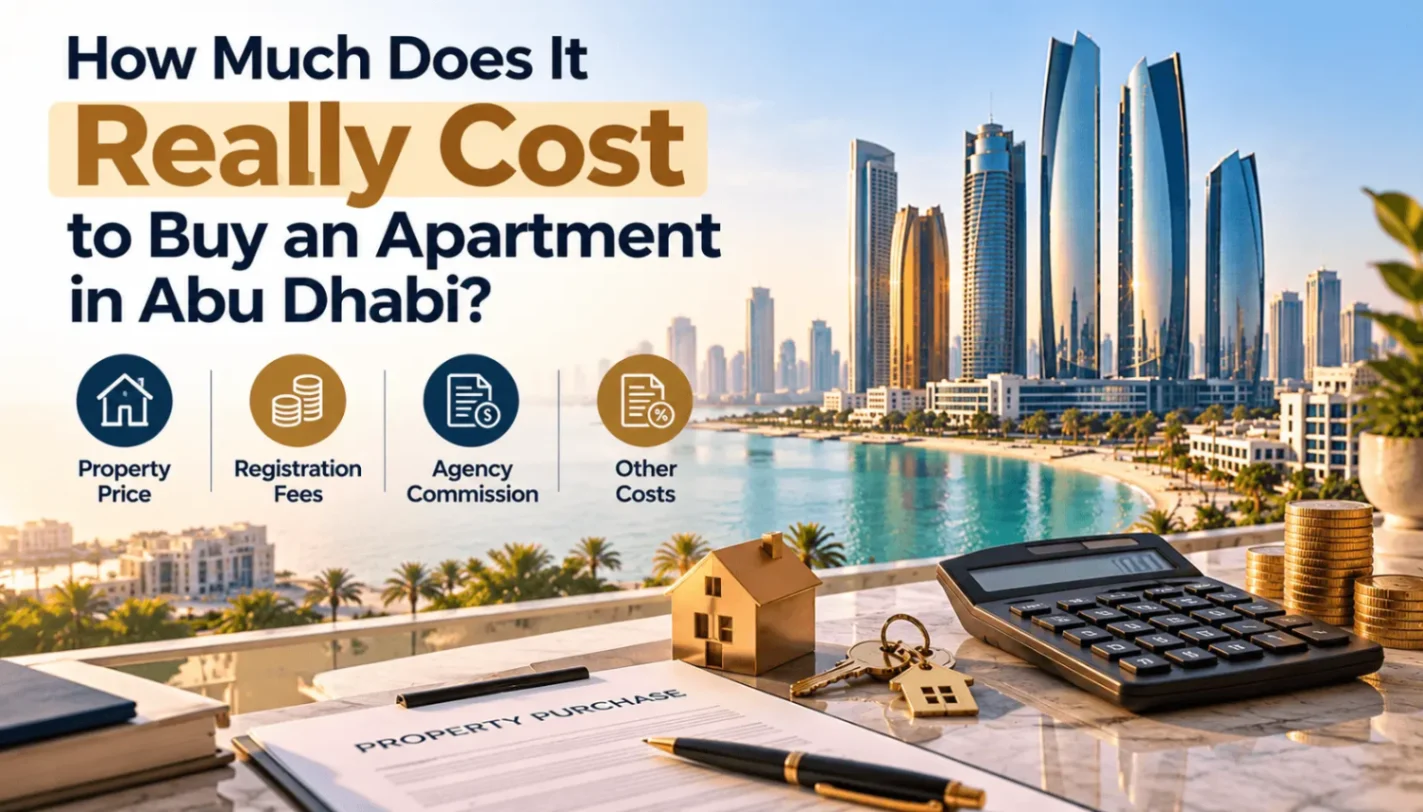
Here’s where your calculation usually falls apart. Your down payment is not your total upfront cost. You must also pay:
4% transfer fee
Registration and trustee fees
Agent commission (usually ~2%)
Mortgage processing fees
Property valuation charges
Realistically, expats should plan for 25% to 30% of property value as total upfront cost. If you only prepare for 20%, you are underfunded before you even start.
Mortgage Limits and Loan-to-Value (LTV)
Banks in the UAE follow a system called Loan-to-Value (LTV). LTV determines how much the bank will finance.
For expats:
Max LTV = 80% (for properties under AED 5M)
Max LTV = 70% (above AED 5M)
This is directly linked to your down payment.
Higher LTV = lower down payment
Lower LTV = higher down payment
But here’s the reality – banks don’t just follow rules—they assess risk. Your salary, job stability, credit history, and existing liabilities all affect approval.
Cash Buyers vs Mortgage Buyers
Not all expats use financing. Some buy in cash.
Cash buyers:
Avoid bank restrictions
Skip mortgage-related costs
Have stronger negotiation power
But they still pay:
Full property value upfront
All transfer and registration fees
So while cash removes financing pressure, it increases capital exposure.
Off-Plan Properties: Different Down Payment Structure
Off-plan properties follow a completely different model. Instead of a single upfront payment, developers offer payment plans.
Typical structure:
10% to 20% booking amount
Installments during construction
Balance on completion
This looks easier—but it comes with risk.
Key issues:
Delayed project timelines
Market fluctuations during construction
Limited resale flexibility before completion
Many expats choose off-plan because of lower initial entry. But they don’t evaluate long-term impact.
The Hidden Factor Competitors Don’t Explain
Here’s what most property websites avoid. Your down payment directly affects your exit flexibility.
If you enter with minimal capital:
Your loan is higher
Your profit margin is thinner
Your ability to sell quickly is reduced
But it goes deeper than that. In a slow or declining market, highly leveraged properties can fall into negative equity—where your outstanding loan is close to or even higher than the market value of the property.
When that happens:
Selling becomes difficult without taking a loss
Buyers gain stronger negotiation power
You lose flexibility to exit at the right time
This is not visible when you buy. It only shows when the market shifts—and by then, your options are limited. A higher down payment does not just reduce risk. It gives you control when conditions change. That control is what most investors underestimate.
How Down Payment Affects Your Investment Strategy
You are not just choosing how much to pay. You are choosing your entire investment structure.
Lower down payment:
Higher leverage
Higher risk
Higher dependency on rental income
Higher down payment:
Lower risk
Better cash flow
More stability
There is no “best” option. But choosing blindly is a mistake.
What Our Data Shows (Beyond Listings)
Most platforms show prices. They don’t show behavior.
From our internal data tracking:
Buyers with higher upfront investment hold properties longer
Lower down payment investors face more resale pressure
Mortgage-heavy buyers are more sensitive to market shifts
This is not a theory. It is actual transaction behavior. Listings don’t show this. But it defines your outcome.
Common Mistakes Expats Make
The same patterns repeat:
Planning only for 20% and ignoring extra costs
Assuming loan approval is guaranteed
Choosing property based on budget, not sustainability
Ignoring how financing affects resale
Underestimating total capital required
These are not small mistakes. They change your entire investment result.
How to Plan Your Down Payment Smartly
If you want to approach this properly:
Calculate total upfront cost, not just down payment
Keep buffer funds beyond minimum requirement
Compare financing vs cash scenarios
Align property choice with your financial stability
Think about exit before entry
If you skip this, you are not planning—you are reacting.
Final Thoughts
Down payment is not just an entry step. It shapes your risk, your returns, and your flexibility as an investor. Most expats focus on how to enter the market. Very few think about how their entry affects long-term performance.
At PropertySeller, we focus on verified data and real investment behaviour. Every property is evaluated beyond price, so you understand actual cost, financing impact, and long-term potential. This helps you invest with clarity, not assumptions.
FAQ’s
1. What is the minimum down payment for expats buying property in the UAE?
Expats must pay at least 20% down payment for properties below AED 5 million and 30% for properties above AED 5 million, as per UAE Central Bank regulations.
2. Can expats buy property in the UAE with a low down payment?
No. UAE banks do not allow zero or very low down payments for expats. A minimum of 20% is mandatory, and buyers must also cover additional fees separately.
3. Does the down payment include Dubai property fees?
No. The down payment only covers part of the property price. Buyers must separately pay fees like the 4% transfer fee, registration charges, and agent commission.
4. Can expats get a mortgage in the UAE without a down payment?
No. UAE mortgage rules require expats to contribute their own funds upfront. Banks will not finance 100% of the property value.
5. How much total cash do expats need to buy property in the UAE?
Expats should plan for around 25% to 30% of the property value, including down payment and all additional costs like fees and charges.