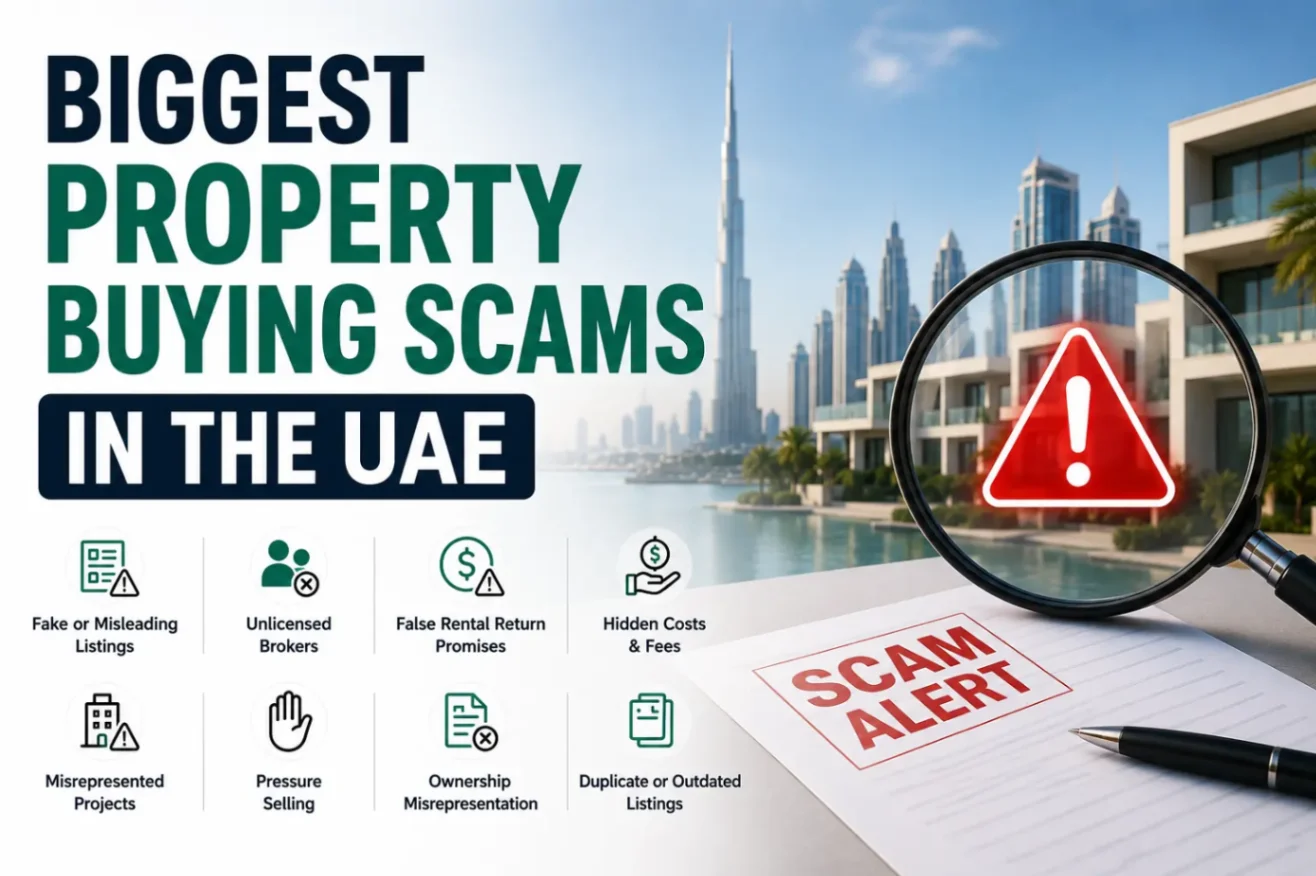
Biggest Property Buying Scams in the UAE


The UAE property market is one of the most regulated and transparent in the region, attracting investors from around the world. However, a regulated market does not automatically eliminate risk. Buyers can still face financial losses and legal complications if proper checks are overlooked.
Most real estate scams in the UAE are not obvious cases of fraud. They often arise from misleading listings, unlicensed agents, unverified payment requests, incomplete documentation, or contractual terms that buyers do not fully understand. In many situations, the problem is not the property itself but the process surrounding the transaction.
For this reason, experienced investors look beyond attractive prices and marketing promises. They verify the property's legal status, confirm approvals and registrations, review documentation carefully, and ensure payments follow the proper channels.
This blog explains some of the most common real estate scams in the UAE, the warning signs buyers should watch for, and the practical steps that can help protect an investment.
Fake or Misleading Property Listings
Fake or misleading property listings are among the most common risks in the UAE real estate market. These listings may advertise properties that do not exist, show units that are no longer available, exaggerate sizes and features, or use images from other developments to attract interest.
In many cases, unusually low prices are used to generate enquiries, only for buyers to be redirected to different properties later. Common warning signs include prices that are significantly below market rates, incomplete project information, and an unwillingness to provide registration details or property documentation.
At PropertySeller, listings go through verification checks to help reduce these risks. The platform prioritizes accurate property information, removes duplicate entries, and focuses on verified listings so buyers can make decisions with greater confidence and transparency.
Unauthorized Agents or Unlicensed Brokers
In the UAE, property transactions should only be handled by licensed real estate brokers and registered agencies. Working with unlicensed intermediaries can expose buyers to significant risks, including invalid agreements, loss of deposits, and limited legal protection if disputes arise.
This issue often occurs in high-demand markets, particularly in the off-plan segment, where some individuals attempt to operate informally without the necessary approvals or registrations. Buyers may be attracted by exclusive deals or promises of faster transactions without realizing the risks involved.
Before proceeding with any property purchase, it is important to verify the broker's credentials and registration through the relevant real estate regulatory authorities. Taking this simple step can help ensure that the transaction is conducted through authorized channels and reduce the risk of avoidable financial and legal complications.
Off-Plan Payment Misrepresentation
Off-plan properties in the UAE are regulated by clear legal frameworks, but buyers can still face risks when payment terms are misrepresented. This can happen when payment plans are changed unofficially, construction milestones are presented inaccurately, or verbal promises of "guaranteed returns" and fixed completion timelines are used to influence decisions.
The key reality for buyers is that returns and delivery schedules are only enforceable if they are clearly stated in the Sale and Purchase Agreement (SPA) and other official documents. Verbal assurances and marketing promises do not carry legal weight on their own.
Before committing to an off-plan investment, buyers should carefully review all payment schedules, milestone conditions, and contractual terms and ensure that every promise is documented in writing and supported by the appropriate agreements.
False "Guaranteed Rental Returns" Promises
Promises of fixed rental returns are another common issue that buyers should approach with caution. Some sellers advertise guaranteed rental yields of 8% to 12% or promise a fixed income for several years to make an investment appear more attractive.
In reality, rental performance in the UAE depends on several factors, including market demand, location, property type and condition, and changes in tenant demand and market cycles. Rental yields can fluctuate over time and are influenced by broader market conditions.
Buyers should understand that no regulatory authority guarantees rental income from a property investment. Any claims of assured returns should be carefully reviewed and supported by clear contractual terms. Relying solely on marketing promises without proper verification can lead to unrealistic expectations and investment decisions based on assumptions rather than market fundamentals.
Fake Title Deeds and Property Ownership Misrepresentation in the UAE
Although uncommon, ownership misrepresentation can have serious consequences for buyers. In some cases, buyers may be shown outdated title deeds, properties that are involved in disputes, or units where ownership transfers have not been fully completed.
A property is only legally owned when it is officially registered with the relevant land authority, such as the Dubai Land Department in Dubai. Before completing any payment, buyers should verify the property's ownership status and ensure that all documents accurately reflect the current legal position of the asset.
Pressure-Based Selling Tactics
Some buyers face high-pressure sales tactics, such as claims that a property is the "last available unit," that prices will increase immediately, or that multiple buyers are ready to proceed with the purchase.
These tactics can create unnecessary urgency and encourage buyers to skip important verification steps. While market conditions can change, legitimate property transactions in the UAE should allow buyers enough time to review documentation, verify information, and make informed decisions without feeling pressured into committing quickly.
Hidden Property Costs and Undisclosed Fees in UAE Real Estate
Another common issue in property transactions is incomplete pricing disclosure. Buyers may receive an initial quotation that does not fully account for service charges, transfer fees, registration costs, or ongoing maintenance expenses.
As a result, the actual cost of ownership can be significantly higher than expected. Understanding all associated costs in advance is essential for accurate budgeting, return calculations, and long-term investment planning.
Duplicate or Re-Sold Units Without Disclosure
In some cases, the same property may be listed by multiple agents, shown as available despite being under negotiation, or marketed without updated availability information.
This can create confusion for buyers and may lead to booking conflicts or wasted time during the search process. Verifying a property's current status and working with reliable platforms can help reduce the risk of acting on inaccurate availability information.
Property Buying Checklist to Avoid Real Estate Scams in the UAE
Before making any payment:
Verify the broker's licence and registration
Confirm the property's ownership status
Review the Sale and Purchase Agreement carefully
Verify project approvals and payment structure
Understand all fees and ownership costs
Avoid relying on verbal promises
Ensure all commitments are documented in writing
How PropertySeller Helps Reduce These Risks
At PropertySeller, the focus goes beyond displaying property listings. The platform is designed to reduce decision risk by prioritizing verified property information, clearly structured listing data, and up-to-date availability whenever possible. Duplicate and unconfirmed listings are minimized, and greater emphasis is placed on ownership clarity and legal status.
The goal is to provide buyers with transparent information so they can evaluate opportunities with greater confidence and make decisions based on verified details rather than assumptions.
Final Takeaway
In the UAE property market, the biggest risk is not always outright fraud. More often, problems arise from misinformation, incomplete verification, or misunderstandings about legal processes and ownership.
Many buyers do not lose money because of illegal activity. They face difficulties because they rely on marketing claims instead of documentation, overlook important verification steps, or misunderstand the legal structure behind a transaction.
A careful approach that prioritizes verification, documentation, and transparency can eliminate many of these risks before they become costly problems.
At PropertySeller, the focus is on making the buying process clearer and more reliable by prioritizing verified listings, reducing duplicate and unconfirmed entries, and highlighting ownership status and key property details. The goal is to help buyers make informed decisions based on accurate information and move forward with greater confidence and trust.
FAQ’s
1. Are property scams common in the UAE?
The UAE property market is highly regulated, but buyers can still face risks from misleading listings, unlicensed intermediaries, incomplete documentation, and misinformation. At PropertySeller, we focus on verified property information and greater transparency to help buyers reduce these risks.
2. How can I verify whether a property listing is genuine?
Buyers should verify the property's ownership status, confirm project details, review supporting documents, and work with licensed brokers or trusted platforms. PropertySeller prioritizes verified listings and minimizes duplicate and unconfirmed entries to help buyers make informed decisions.
3. Is it safe to invest in off-plan property in the UAE?
Yes, off-plan investments can be safe when projects are properly registered and payments follow regulated procedures. At PropertySeller, we encourage buyers to review all project details, payment schedules, and contractual terms carefully before committing.
4. Who regulates property transactions in Dubai?
Property registration and many real estate activities in Dubai are overseen by the Dubai Land Department. Buyers should always ensure transactions are conducted through approved and properly documented channels.
5. How can I check if a real estate broker is licensed?
Buyers should verify a broker's registration and credentials through the relevant real estate authorities before proceeding with any transaction. Working with licensed professionals helps reduce the risk of invalid agreements and financial disputes.
6. What should I do before making a property payment?
Before making any payment, buyers should confirm ownership status, review all agreements and payment terms, understand the full cost of ownership, and ensure all commitments are documented in writing.